Understanding George Eliot’s ‘Adam Bede
George Eliot’s Adam Bede, published in 1859, stands as a seminal work of Victorian literature, celebrated for its deep dive into the complexities of rural English life, moral philosophy, and the human conscience. As Eliot’s debut novel, it cemented her reputation for incisive psychological portraits and astute social commentary. The novel grapples with universal themes of sin, guilt, faith, and the inherent dignity found in ordinary lives, making it a crucial text for understanding the evolution of the English novel and the intellectual currents of the 19th century.
Adam Bede by George Eliot: Who This Is For
- Students and scholars of Victorian literature: Adam Bede is a canonical text, essential for grasping the era’s literary conventions, societal preoccupations, and the development of psychological realism.
- Readers interested in moral philosophy and character studies: The novel offers meticulous dissections of its characters’ inner lives, exploring their battles with temptation, the weight of guilt, and the lasting repercussions of their actions.
What to Check First
Before engaging with the world of Adam Bede, consider these foundational aspects:
- Authorial Context: George Eliot, the pseudonym of Mary Ann Evans, adopted a male pen name. This decision is significant, adding a layer to her insightful exploration of gender roles and societal constraints within the narrative.
- Victorian Social Norms: A foundational understanding of mid-19th century English society—its class structures, prevailing religious beliefs, and social expectations—is vital for comprehending character motivations and the novel’s plot intricacies.
- Literary Realism: Recognize Adam Bede as a key example of literary realism, a movement characterized by its authentic portrayal of everyday life, ordinary individuals, and believable psychological depth.
- Thematic Scope: The novel delves into themes of faith, doubt, sin, repentance, and the nature of good and evil, often through the lens of religious and social hypocrisy.
Step-by-Step Plan for Engaging with Adam Bede
To fully appreciate the depth and nuance of Adam Bede, a structured approach can be beneficial.
For those looking to dive into George Eliot’s masterpiece, securing a copy of ‘Adam Bede’ is the essential first step. This edition is a great starting point for understanding the novel’s rich themes.
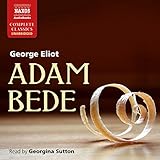
- Audible Audiobook
- George Eliot (Author) - Georgina Sutton (Narrator)
- English (Publication Language)
- 12/18/2014 (Publication Date) - Naxos AudioBooks (Publisher)
1. Familiarize yourself with the setting: Before reading, briefly research the historical and geographical context of Loamshire, the fictional rural setting.
- What to look for: Understand the agrarian economy, the role of the church (Methodist and Anglican), and the social hierarchy of a rural English parish in the early 19th century.
- Mistake to avoid: Assuming the social dynamics are universally applicable to any rural setting; the specific Victorian context is crucial.
2. Identify key character archetypes: Note the initial presentation of characters like Adam Bede (the upright craftsman), Arthur Donnithorne (the young squire), Dinah Morris (the Methodist preacher), and Hetty Sorrel (the village beauty).
- What to look for: Observe how Eliot establishes their initial moral compasses and social positions.
- Mistake to avoid: Judging characters solely on their initial appearances; Eliot excels at revealing hidden depths and complexities.
3. Trace the central moral conflicts: Pay close attention to the unfolding events that lead to Hetty’s downfall and the subsequent impact on Adam and others.
- What to look for: The consequences of impulsive actions, societal judgment, and the struggle for inner redemption.
- Mistake to avoid: Focusing only on the plot mechanics; the novel’s power lies in its exploration of the internal lives of its characters grappling with these conflicts.
4. Analyze the role of faith and doubt: Observe how characters navigate their religious beliefs, particularly Dinah Morris’s fervent Methodism and the established Anglican Church’s influence.
- What to look for: The tension between genuine spiritual conviction and outward religious observance, and how faith (or lack thereof) shapes moral choices.
- Mistake to avoid: Dismissing the religious elements as mere historical backdrop; they are central to the characters’ moral frameworks and societal pressures.
5. Consider Eliot’s narrative voice and authorial commentary: Eliot frequently intervenes with direct commentary on her characters’ thoughts and motivations, offering philosophical insights.
- What to look for: Instances where the narrator provides moral judgments or psychological analysis, guiding the reader’s interpretation.
- Mistake to avoid: Treating the narrative voice as purely objective; Eliot is a deliberate guide, shaping the reader’s understanding of morality and character.
6. Examine the theme of social hypocrisy: Note how the novel critiques societal pretenses and the gap between public reputation and private actions, especially concerning characters like Mr. Irwine and Arthur Donnithorne.
- What to look for: Situations where characters’ actions contradict their stated values or social standing.
- Mistake to avoid: Underestimating the critique of social structures; Eliot uses these instances to highlight the need for genuine moral integrity.
7. Reflect on the concept of Adam Bede’s moral development: Track Adam’s journey from a straightforward, honest craftsman to a man who must confront betrayal, loss, and his own capacity for judgment.
- What to look for: The evolution of his understanding of justice, forgiveness, and human fallibility.
- Mistake to avoid: Seeing Adam as a static hero; his growth is a significant arc, marked by profound personal challenges.
8. Engage with the novel’s ending: Consider the resolution of the various plot threads and the ultimate fates of the characters.
- What to look for: The sense of closure, the lessons learned, and the enduring impact of the events on the community.
- Mistake to avoid: Expecting a simplistic happy ending; Eliot’s resolutions are often earned through hardship and reflect a complex understanding of life.
Common Myths About Adam Bede
- Myth 1: Adam Bede is simply a pastoral romance about rural life.
- Why it matters: This view overlooks the novel’s profound engagement with complex moral and philosophical issues, including sin, guilt, and social hypocrisy.
- Correction: While set in a rural idyll, the novel uses this setting as a stage for exploring deep psychological and ethical dilemmas that were highly relevant to Victorian society and remain so today. The “pastoral” elements serve to highlight the contrast between outward appearances and inner realities.
- Myth 2: The character of Adam Bede is the sole focus and moral center of the novel.
- Why it matters: This perception diminishes the importance of other characters, particularly Hetty Sorrel and Dinah Morris, whose stories are equally central to the novel’s thematic concerns.
- Correction: While Adam Bede is a pivotal character and provides the novel’s title, George Eliot dedicates significant narrative space and psychological exploration to Hetty’s tragic trajectory and Dinah’s spiritual influence. The novel is a tapestry woven from multiple perspectives, each contributing to the overarching exploration of human nature and morality.
Expert Tips for Deeper Understanding
- Tip 1: Read with an eye for narrative structure. Eliot masterfully interweaves multiple plotlines and character perspectives.
- Actionable Step: Create a simple chart tracking the main characters (Adam, Arthur, Hetty, Dinah) and significant events related to each, noting how their stories intersect.
- Common Mistake to Avoid: Getting lost in the individual stories and failing to see how they comment on each other; look for thematic echoes and contrasts between characters.
- Tip 2: Pay attention to Eliot’s use of interior monologue and free indirect discourse. This technique allows deep access into characters’ minds.
- Actionable Step: When you encounter a passage describing a character’s thoughts or feelings, try to identify where the narrator’s voice ends and the character’s internal voice begins.
- Common Mistake to Avoid: Assuming all thoughts presented are objective facts; recognize that these are filtered through the character’s consciousness, which may be flawed or biased.
- Tip 3: Consider the novel’s engagement with different forms of religious belief. The contrast between Methodism and Anglicanism is a significant element.
- Actionable Step: Note the specific doctrines or practices mentioned for both Dinah’s Methodism and the services attended by other characters, and consider how these beliefs influence behavior and judgment.
- Common Mistake to Avoid: Treating all religion in the novel as monolithic; Eliot carefully distinguishes between genuine faith, ritualistic observance, and the social functions of religious institutions.
Adam Bede by George Eliot: A Contrarian Reading
While Adam Bede is widely lauded for its realism and moral depth, a contrarian perspective might question the extent to which its “realism” truly represents the complexities of human experience or if it ultimately serves a didactic purpose that simplifies moral choices.
The novel’s structure, which often guides the reader towards specific moral conclusions through Eliot’s authorial voice, could be seen not as pure realism, but as a carefully constructed argument for a particular ethical framework. For instance, while Hetty Sorrel’s descent into despair and crime is portrayed with psychological detail, the narrative’s ultimate framing of her actions and their consequences—particularly the emphasis on her repentance and Adam’s eventual forgiveness—might be interpreted as Eliot’s attempt to impose a specific, perhaps comforting, moral order onto chaotic human events.
The idealized portrayal of Adam Bede himself, while intentional, could be critiqued. Is he too perfect, too much of a moral compass? His unwavering integrity, while admirable, might function less as a realistic depiction of a complex individual and more as a literary device to highlight the failings of others. This perfection, from a contrarian viewpoint, risks making him less relatable and more of a symbol than a fully realized, flawed human being.
Furthermore, the novel’s resolution, while providing a sense of closure, might be seen as too neat. The intertwining of fates, the eventual happiness found by some characters, and the ultimate triumph of a certain kind of moral order could be viewed
Quick Comparison
| Option | Best for | Pros | Watch out |
|---|---|---|---|
| Who This Is For | General use | Students and scholars of Victorian literature: <em>Adam Bede</em> is a canonical tex… | Mistake to avoid: Assuming the social dynamics are universally applicable to… |
| What to Check First | General use | Readers interested in moral philosophy and character studies: The novel offer… | Mistake to avoid: Judging characters solely on their initial appearances; Eli… |
| Step-by-Step Plan for Engaging with Adam Bede | General use | Authorial Context: George Eliot, the pseudonym of Mary Ann Evans, adopted a m… | Mistake to avoid: Focusing only on the plot mechanics; the novel’s power lies… |
| Common Myths About Adam Bede | General use | Victorian Social Norms: A foundational understanding of mid-19th century Engl… | Mistake to avoid: Dismissing the religious elements as mere historical backdr… |
Decision Rules
- If reliability is your top priority for Adam Bede by George Eliot, choose the option with the strongest long-term track record and support.
- If value matters most, compare total ownership cost instead of headline price alone.
- If your use case is specific, prioritize fit-for-purpose features over generic ‘best overall’ claims.
How this list was curated
- We selected titles using clarity, practical usefulness, and long-term relevance.
- We balanced foundational picks with specialized options for different reader goals.
Structured Pick Cards
**Students and scholars of Victorian literature
- Best for: readers who want practical takeaways and clear progression.
- Skip if: you need only advanced theory with little implementation guidance.
- Trade-off: stronger depth can mean a slower pace in some chapters.
**Readers interested in moral philosophy and character studies
- Best for: readers who want practical takeaways and clear progression.
- Skip if: you need only advanced theory with little implementation guidance.
- Trade-off: stronger depth can mean a slower pace in some chapters.
**Authorial Context
- Best for: readers who want practical takeaways and clear progression.
- Skip if: you need only advanced theory with little implementation guidance.
- Trade-off: stronger depth can mean a slower pace in some chapters.
By Reader Level
- Beginner: start with one fundamentals pick and one habit-building pick.
- Intermediate: prioritize books with frameworks you can apply weekly.
- Advanced: choose deeper titles focused on systems and decision quality.
An under-the-radar pick worth considering is a less mainstream title that explains decision quality with unusually clear examples.
FAQ
Q: Where should I start?
A: Start with the clearest foundational pick, then add one practical framework-focused title.
Q: How many books should I read first?
A: Begin with 2–3 complementary books and apply one core idea from each before adding more.