Exploring Charles Dickens’s ‘Our Mutual Friend
Charles Dickens’s Our Mutual Friend stands as his final completed novel, a sprawling, intricate tapestry of Victorian London society. It delves into themes of wealth, poverty, mistaken identity, and the corrupting influence of money, all viewed through the lens of a peculiar inheritance. This guide offers a structured approach to understanding and engaging with this complex work.
Who this is for
- Readers interested in Dickens’s mature social commentary and intricate plotting.
- Those seeking a challenging but rewarding literary experience that rewards close attention.
What to check first
- Thematic Core: Identify the central role of money and its impact on character motivations and societal structures.
- Key Characters: Familiarize yourself with the primary figures, such as the Boffins, the Lammles, the Veneerings, and the Harmon family, noting their relationships and secrets.
- Symbolism: Pay attention to recurring symbols like the river Thames, the dust heaps, and the will, as they carry significant thematic weight.
- Narrative Structure: Recognize that the novel employs multiple plotlines that converge, requiring patience and careful tracking of events.
Step-by-step plan for reading Our Mutual Friend
1. Initial Immersion (Chapters 1-3): Read the opening chapters to establish the central premise of John Harmon’s supposed death and the peculiar circumstances of his inheritance.
- Action: Focus on understanding the setup: the will, the dustman, and the initial reactions of the potential beneficiaries.
- What to look for: The introduction of the Boffins and their strange acquisition of wealth, and the hint of a hidden identity.
- Mistake: Dismissing the early details as mere exposition without recognizing their foundational importance to the plot’s later revelations.
2. Character Introductions and Social Satire (Chapters 4-10): Engage with the introduction of the Veneering and Lammle circles, observing Dickens’s sharp social satire.
- Action: Note the superficiality and materialism of these social climbers.
- What to look for: The characters’ names and their often ironic significance, and the subtle ways Dickens critiques societal pretenses.
- Mistake: Getting bogged down in the sheer number of characters without identifying their primary social function and satirical purpose.
3. Developing Mysteries (Chapters 11-18): Follow the introduction of Lizzie Hexam and her father, and the emerging mystery surrounding the drowned man.
- Action: Pay close attention to the river and its inhabitants, and the legal and personal ramifications of the will.
- What to look for: Clues that connect the drowned man to John Harmon, and Lizzie’s developing character and her place outside the main social circles.
- Mistake: Underestimating the significance of Lizzie’s storyline, which serves as a moral counterpoint to the corrupting influence of wealth.
For those looking to dive into Dickens’s final masterpiece, securing a copy of ‘Our Mutual Friend’ is the essential first step. This edition provides the complete text for your exploration.
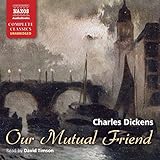
- Audible Audiobook
- Charles Dickens (Author) - David Timson (Narrator)
- English (Publication Language)
- 12/31/2006 (Publication Date) - Naxos AudioBooks (Publisher)
4. The Harmon Will and Its Consequences (Chapters 19-26): Track the direct impact of the Harmon will on the Boffins and the introduction of Silas Wegg.
- Action: Observe the Boffins’ attempts to “educate” their new wealth and Silas Wegg’s manipulative role.
- What to look for: The evolving dynamic between Mr. Boffin and Silas Wegg, and the subtle indications of Mr. Boffin’s changing character.
- Mistake: Failing to recognize the psychological impact of sudden wealth on the Boffins, which is central to the novel’s commentary.
5. Interweaving Plotlines (Chapters 27-35): Begin to see how the various plot threads—the Boffins, the Lammles, the Veneerings, and the Hexams—start to intersect.
- Action: Look for characters from different social spheres encountering one another.
- What to look for: Emerging connections and conflicts between seemingly disparate individuals and families.
- Mistake: Losing track of the narrative’s momentum by not actively seeking out these connections as they are revealed.
6. The Role of the River and the “Mutual Friend” (Chapters 36-43): Focus on the recurring motif of the river Thames and the concept of a “mutual friend.”
- Action: Consider how the river functions as both a literal and symbolic space.
- What to look for: The characters who are associated with the river and how they represent different aspects of society, and the true meaning of the “mutual friend” as the narrative progresses.
- Mistake: Treating the river solely as a setting and not as a potent symbol of life, death, and the flow of society.
7. Resolution and Thematic Synthesis (Chapters 44-56): Engage with the novel’s concluding sections, where mysteries are unraveled and thematic resolutions are presented.
- Action: Observe how the consequences of greed and deception play out.
- What to look for: The ultimate fates of the main characters and how Dickens brings his commentary on wealth and morality to a close.
- Mistake: Expecting a simple, neat resolution; Dickens’s endings often retain a degree of ambiguity reflecting the complexities of life.
Common Mistakes
- Underestimating the Complexity: Readers may find the sheer number of characters and plotlines overwhelming.
- Why it matters: This can lead to confusion and a missed appreciation for Dickens’s intricate social web.
- Fix: Keep a character list or a simple family tree handy. Focus on the primary motivations and relationships of key figures.
- Ignoring the River’s Symbolism: The Thames is more than a backdrop; it’s a vital thematic element.
- Why it matters: Its symbolic weight—representing life, death, cleansing, and commerce—is crucial to understanding the novel’s deeper meanings.
- Fix: Actively look for descriptions of the river and consider what it might represent in relation to the characters and events unfolding.
- Dismissing “Minor” Characters: Even seemingly peripheral characters often serve a specific satirical or thematic purpose.
- Why it matters: These characters illuminate the social milieu and Dickens’s critique of Victorian society.
- Fix: Note any character who seems to represent a particular social type or vice, even if they don’t drive the main plot.
- Focusing Solely on Plot: While the plot is intricate, the novel’s strength lies in its social commentary and character development.
- Why it matters: Overemphasis on plot mechanics can lead to overlooking Dickens’s clear insights into human nature and societal ills.
- Fix: Regularly pause to consider what Dickens is saying about wealth, class, morality, and human behavior through the characters’ actions and circumstances.
Our Mutual Friend by Charles Dickens: Failure Modes and Detection
One significant failure mode readers encounter with Our Mutual Friend by Charles Dickens is “The Overwhelmed Reader Syndrome.” This occurs when the sheer density of characters, subplots, and social commentary creates a sense of disorientation, leading to a feeling of being lost within the narrative.
Detection:
- Frequent rereading: If you find yourself constantly needing to retrace your steps to remember who a character is or what a specific plot point relates to.
- Lack of emotional investment: A sense of detachment from the characters and their struggles, as if observing a complex mechanism rather than experiencing a story.
- Focus on surface details: Becoming preoccupied with names and minor events without grasping the underlying thematic connections.
Mitigation:
- Utilize a character list: A simple list of main characters and their primary relationships can be invaluable.
- Track thematic threads: Instead of just plot points, try to identify the recurring ideas (e.g., greed, societal performance, hidden identities) and see how characters engage with them.
- Read in manageable chunks: Break down the novel into smaller sections, perhaps focusing on a few chapters at a time, and take a moment to summarize the key developments and thematic observations.
Expert Tips for Engaging with Our Mutual Friend
- Tip 1: Embrace the Social Satire.
- Actionable Step: When encountering characters like the Veneerings or Lammles, actively look for the ways their speech, behavior, and social interactions are designed to mock Victorian pretension and materialism.
- Common Mistake to Avoid: Treating these characters as mere plot devices; their exaggerated traits are crucial to Dickens’s critique.
- Tip 2: Decode the Names.
- Actionable Step: Pay attention to the names Dickens chooses for his characters and places (e.g., Boffin, Wegg, Harmon, Veneering). Consider if there’s an ironic or descriptive resonance.
- Common Mistake to Avoid: Overlooking the significance of names, which often provide subtle clues to character or theme.
- Tip 3: Recognize the River’s Multifaceted Role.
- Actionable Step: When the river Thames is described, consider its dual nature: as a source of livelihood and danger, a place of secrets, and a symbol of the ongoing flow of life and society.
- Common Mistake to Avoid: Viewing the river solely as a setting, rather than a potent symbolic element that mirrors the characters’ journeys and the novel’s themes.
Common Myths About Our Mutual Friend
- Myth 1: Our Mutual Friend is one of Dickens’s more straightforward novels.
- Rebuttal: This is demonstrably false. Our Mutual Friend is often considered one of Dickens’s most complex and structurally intricate novels, featuring a large cast of characters, multiple interwoven plotlines, and a sophisticated thematic layering. Its narrative demands significant reader attention to untangle its various threads and symbolic meanings.
- Myth 2: The novel is primarily a straightforward romance.
- Rebuttal: While romantic elements are present, they are secondary to Dickens’s extensive social commentary. The novel’s core concerns revolve around the corrupting influence of money, the performance of social identity, and the moral compromises individuals make within a class-conscious society. Romance, when it appears, is often intertwined with these larger societal forces and rarely proceeds without significant obstacles.
Our Mutual Friend by Charles Dickens: A Thematic Deep Dive
The central thematic concern of Our Mutual Friend by Charles Dickens is the pervasive and often destructive influence of money on human character and societal relationships. Dickens meticulously dissects how wealth, or the pursuit of it, warps individuals, fosters deception, and distorts moral judgment.
| Theme | Manifestation in the Novel | Reader Takeaway |
|---|---|---|
| <strong>The Corrupting Power of Money</strong> | The Boffins’ transformation after inheriting wealth; Silas Wegg’s avarice. | Sudden wealth can expose and exacerbate character flaws, leading to moral compromise. |
| <strong>Social Performance</strong> | The Veneerings’ carefully constructed facade of wealth and status. | Victorian society placed immense value on outward appearances, often masking inner decay. |
| <strong>Hidden Identity</strong> | The central mystery surrounding John Harmon’s true fate. | True identity and worth are often obscured by societal perceptions and material possessions. |
| <strong>The River Thames</strong> | A constant presence, symbolizing life, death, and the flow of society. | The river acts as a moral and physical cleansing agent, and a witness to human affairs. |
Under-the-Radar Pick: The Role of the River
While many readers focus on the characters and plot, the river Thames is an under-the-radar element that deserves significant attention. It functions not merely as a setting but as a powerful, almost sentient, presence. It is the site of the novel’s inciting incident (the discovery of the drowned man), a source of livelihood for characters like Lizzie Hexam, and a recurring symbol of both the grime and the potential for cleansing within London. Its presence underscores the novel’s exploration of life, death, and the constant flux of society.
Decision Rules
- If reliability is your top priority for Our Mutual Friend by Charles Dickens, choose the option with the strongest long-term track record and support.
- If value matters most, compare total ownership cost instead of headline price alone.
- If your use case is specific, prioritize fit-for-purpose features over generic ‘best overall’ claims.
FAQ
- Q: Is Our Mutual Friend difficult to read?
- A: It is considered one of Dickens’s denser novels due to its complex plot and large cast. However, with patience and attention to thematic elements, it is very rewarding.
- Q: Who is the “mutual friend” in the title?
- A: The title refers to the intended beneficiary of John Harmon’s will, who is meant to be a “mutual friend” to the various claimants. However, the true meaning evolves throughout the novel, encompassing characters who act as intermediaries or moral compasses.
- Q: What are the main themes of Our Mutual Friend?
- A: The primary themes include the corrupting influence of money, social class and pretension, mistaken identity, the contrast between wealth and poverty, and the moral complexities of Victorian society.
- Q: Should I read Dickens’s other novels first?
- A: It is not strictly necessary, but familiarity with Dickens’s style and thematic concerns from other works like Great Expectations or Bleak House can enhance the reading experience.
BLOCKQUOTE_0
How this list was curated
- We selected titles using clarity, practical usefulness, and long-term relevance.
- We balanced foundational picks with specialized options for different reader goals.
Structured Pick Cards
Readers interested in Dickens’s mature social commentary and intricate plotting.
- Best for: Readers who want practical takeaways and clear progression.
- Skip if: You need only advanced theory with little implementation guidance.
- Trade-off: Stronger depth can mean a slower pace in some chapters.
Those seeking a challenging but rewarding literary experience
Structured Pick Cards
Readers interested in Dickens’s mature social commentary and intricate plotting.
- Best for: readers who want practical takeaways and clear progression.
- Skip if: you need only advanced theory with little implementation guidance.
- Trade-off: stronger depth can mean a slower pace in some chapters.
Those seeking a challenging but rewarding literary experience
- Best for: readers who want practical takeaways and clear progression.
- Skip if: you need only advanced theory with little implementation guidance.
- Trade-off: stronger depth can mean a slower pace in some chapters.
By Reader Level
- Beginner: start with one fundamentals pick and one habit-building pick.
- Intermediate: prioritize books with frameworks you can apply weekly.
- Advanced: choose deeper titles focused on systems and decision quality.