Leonid Andreyev’s The Seven Who Were Hanged
The Seven Who Were Hanged by Leonid Andreyev: Quick Answer
- The Seven Who Were Hanged by Leonid Andreyev is a stark, philosophical novella that delves into the psychological states of seven individuals awaiting execution.
- It is best suited for readers interested in existential literature, early 20th-century Russian thought, and the moral complexities of capital punishment.
- The work’s primary strength is its unflinching portrayal of human consciousness under duress, though its bleak tone may not appeal to all readers.
The Seven Who Were Hanged by Leonid Andreyev: Who This Is For
- Readers who appreciate literature that probes deep philosophical questions about life, death, and justice, rather than focusing on plot-driven narratives.
- Individuals interested in understanding the intellectual and emotional landscape of Russia during a period of significant social and political upheaval.
What To Check First
- Author’s Philosophical Stance: Leonid Andreyev was known for his engagement with existential themes and psychological realism. Understanding this context helps frame the novella’s focus on internal experience.
- Historical Setting: The story is set against the backdrop of early 20th-century Russia, a time of revolutionary ferment and political repression. This context is crucial for understanding the motivations behind the characters’ actions.
- The Nature of “Crime”: Andreyev deliberately complicates the idea of crime, presenting a spectrum of motivations from political idealism to personal desperation.
- The Role of Capital Punishment: The novella is a direct confrontation with the act and implications of state-sanctioned killing, exploring its psychological impact on both the condemned and the executioners.
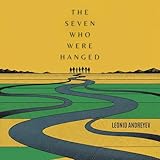
- Audible Audiobook
- Leonid Andreyev (Author) - Scotty Kwas (Narrator)
- English (Publication Language)
- 12/19/2025 (Publication Date) - Story House Audio (Publisher)
The Seven Who Were Hanged by Leonid Andreyev: A Psychological Examination
The Seven Who Were Hanged by Leonid Andreyev offers a profound and often unsettling exploration of capital punishment, not through the lens of legal proceedings or political ideology, but through the intimate, internal experiences of those facing death. Andreyev shifts the narrative’s gravity from the act of terrorism or political assassination that led to the condemnations to the introspective moments of the condemned themselves. This deliberate focus challenges conventional understandings of justice, pushing the reader to consider the human cost of state-sanctioned killing and the search for meaning in the face of ultimate finality.
The novella’s enduring power lies in its masterful psychological realism. Andreyev grants each of the seven individuals a distinct inner life, revealing their fears, regrets, fleeting hopes, and philosophical ponderings. This humanization is a direct counterpoint to their reduction by the state to mere criminals awaiting execution. By immersing the reader in their final hours, Andreyev compels a confrontation with the existential questions of life’s value, the nature of guilt, and the moral authority of a system that can extinguish a life.
Step-by-Step Plan for Understanding The Seven Who Were Hanged
1. Analyze the psychological impact of impending death: Observe how each of the seven condemned individuals reacts internally to their fate.
- What to look for: The specific thoughts, emotions, and philosophical reflections each character experiences as their execution nears. Note any shifts in their perspective or emotional state.
- Mistake to avoid: Focusing only on the external circumstances or the details of their crimes, thereby missing the novella’s core emphasis on internal experience.
2. Examine the spectrum of motivations for the crimes: Andreyev presents diverse reasons for the characters’ actions.
- What to look for: The individual drivers behind each person’s involvement in revolutionary acts or other offenses. This includes political conviction, personal desperation, or even a sense of fatalism.
- Mistake to avoid: Generalizing all the condemned as driven by a single, monolithic ideology; recognize the individual nuances and complexities of their choices.
3. Evaluate the portrayal of the executioners: Pay close attention to the guards and officials tasked with carrying out the executions.
- What to look for: How Andreyev depicts their internal states, their sense of duty, and any signs of psychological burden or detachment from their actions.
- Mistake to avoid: Viewing the executioners as purely functional agents of the state; Andreyev often imbues them with their own internal conflicts and moral considerations.
4. Identify moments of existential contemplation: The novella is rich with passages where characters grapple with fundamental questions of existence.
- What to look for: Specific instances where characters question the meaning of life, the nature of freedom, the inevitability of death, or the purpose of their suffering.
- Mistake to avoid: Skimming over these introspective passages; they are central to the novella’s philosophical depth and Andreyev’s thematic exploration.
5. Consider the theme of shared humanity and fate: Despite their individual circumstances, the seven share a common, grim destiny.
- What to look for: Instances where their experiences, thoughts, or even brief interactions highlight their collective human behavior in the face of death.
- Mistake to avoid: Reading each character’s narrative in complete isolation; their shared fate underscores the novella’s broader commentary on mortality and societal structures.
6. Analyze the novella’s concluding impact: Andreyev’s ending is designed to linger rather than resolve.
- What to look for: The lasting impressions or questions the novella leaves regarding the efficacy of capital punishment, the nature of justice, and the resilience or fragility of the human spirit.
- Mistake to avoid: Expecting a neat moral conclusion or a definitive statement on the “rightness” or “wrongness” of the events; the power lies in its sustained contemplation.
Common Myths About The Seven Who Were Hanged
- Myth: The novella is a straightforward condemnation of the Tsarist regime’s political oppression.
- Why it matters: While the political context is present and significant, framing the work solely as a political tract overlooks its profound engagement with universal existential and psychological themes. Andreyev’s interest extends beyond specific historical injustices to the fundamental human behavior.
- Fix: Approach the novella as a philosophical inquiry that uses a specific historical scenario to explore broader questions about life, death, justice, and the search for meaning, applicable across different political systems.
- Myth: All characters are portrayed as noble rebels or martyrs for a cause.
- Why it matters: This simplification ignores the nuanced psychological portraits Andreyev paints. While some characters are driven by strong ideals, others grapple with doubt, fear, and a sense of futility, making them more complex and human.
- Fix: Appreciate the individuality of each character’s motivations and internal struggles. Recognize that Andreyev presents a spectrum of human responses to extreme circumstances, rather than a uniform heroic narrative.
Expert Tips for Engaging with The Seven Who Were Hanged
- Tip 1: Prioritize Psychological Depth: Andreyev’s primary method is the detailed exploration of his characters’ inner lives.
- Actionable Step: Dedicate time to dissecting the internal monologues of each of the seven condemned individuals. Pay close attention to their evolving thoughts and feelings, noting any moments of profound insight or despair.
- Common Mistake to Avoid: Skimming over descriptive passages or internal reflections, treating them as filler. These sections are the core of the novella’s narrative and thematic weight.
- Tip 2: Connect to Existentialist Precursors: The novella anticipates many themes later explored in existential philosophy.
- Actionable Step: Identify passages where characters confront the apparent meaninglessness of their lives, the nature of freedom, or the absurdity of their situation. Consider how these resonate with existentialist concepts.
- Common Mistake to Avoid: Viewing the philosophical discussions as detached intellectual exercises. Andreyev grounds these themes in the visceral, lived experience of his characters facing death.
- Tip 3: Examine the Ambiguity of Justice and Authority: Andreyev challenges the reader’s assumptions about state authority and the nature of justice.
- Actionable Step: Analyze the portrayal of the officials and guards involved in the executions. How does Andreyev depict their roles, their potential moral compromises, and their relationship to the state’s power?
- Common Mistake to Avoid: Accepting the state’s actions and legal pronouncements at face value. Andreyev invites skepticism by revealing the human cost and the internal conflicts inherent in the enforcement of capital punishment.
Decision Rules
- If a deep philosophical dive into the human behavior under duress is your objective, The Seven Who Were Hanged by Leonid Andreyev is a highly effective choice.
- If you prioritize narratives with clear plot progression and optimistic resolutions, this novella may not align with your reading preferences.
- If your interest lies in early 20th-century Russian literature and its engagement with existential themes, this work offers significant value.
FAQ
- Q: What is the central theme of “The Seven Who Were Hanged”?
A: The central theme is the profound psychological and philosophical experience of individuals facing capital punishment, exploring their search for meaning and confronting the nature of justice.
- Q: Is the novella suitable for readers new to Russian literature?
A: Yes, while familiarity with Russian literary traditions can enhance appreciation, “The Seven Who Were Hanged” is a powerful and self-contained work that can be understood and appreciated on its own merits.
- Q: How does Andreyev’s approach to the condemned differ from other authors?
A: Andreyev’s distinction lies in his intense focus on the internal, psychological landscape of each individual in their final hours, prioritizing their existential reflections over external plot mechanics or political polemics.
- Q: What kind of emotional experience can a reader expect?
A: Readers can expect a somber, introspective, and emotionally resonant experience. The novella is not intended to be uplifting but to provoke deep thought about fundamental aspects of human existence and societal structures.
| Character Group | Primary Focus of Andreyev’s Narrative | Key Psychological Element Explored | Potential Reader Takeaway |
|---|