Timberlake Wertenbaker’s ‘Our Country’s Good’: Theatre and Redemption
Quick Answer
- Our Country’s Good by Timberlake Wertenbaker is a play examining the transformative power of theatre within a harsh penal colony in 18th-century Australia.
- It contrasts the brutality of the colonial justice system with the humanizing potential of art, using the staging of a play as its central metaphor.
- The play serves as a powerful commentary on civilization, identity, and the possibility of redemption through creative expression.
Who This Is For
- Readers interested in drama that explores social justice, the impact of art on marginalized communities, and the nature of civilization.
- Students and educators studying 20th-century British theatre, post-colonial literature, or the intersection of performance and social change.
What to Check First
- Historical Context: Understand the realities of British transportation of convicts to Australia in the late 18th century, including the harsh conditions and the penal system’s objectives. This context is crucial for appreciating the play’s premise.
- The Play-Within-a-Play Device: Recognize that the core dramatic action involves the convicts and guards staging John Gay’s 1729 play, ‘The Recruiting Officer’. The play’s themes and character interactions are mirrored and amplified by this meta-theatrical element.
- Character Development: Observe how the characters, both convict and officer, undergo significant personal transformations as they engage with the rehearsal and performance process. The development of their empathy and understanding is central to the narrative.
- Themes of Authority and Rebellion: Note the inherent conflict between the rigid, often cruel, authority of the military officers and the burgeoning sense of self-worth and community among the convicts, which is fostered by their artistic endeavor.
Step-by-Step Plan: Understanding Our Country’s Good by Timberlake Wertenbaker
1. Analyze the Opening Scene: Examine the initial depiction of the penal colony and the characters’ desperate circumstances.
- What to look for: The stark portrayal of dehumanization, the overwhelming sense of despair, and the rigid social hierarchy enforced by the military.
- Mistake to avoid: Underestimating the depth of the convicts’ suffering and the precariousness of their existence, which makes the subsequent artistic endeavor seem improbable.
2. Identify the Catalyst for Theatre: Observe how the idea of staging a play, specifically ‘The Recruiting Officer,’ is introduced and initially met with resistance or skepticism.
- What to look for: The motivations of Lieutenant Second-Lieutenant Ralph Clark, who champions the project, and the pragmatic or cynical reactions of others.
- Mistake to avoid: Dismissing the theatrical project as mere entertainment; its true function is as a tool for psychological survival and social re-integration.
3. Track Character Arcs During Rehearsals: Follow the development of key characters as they take on roles and interact with each other in the context of the play.
- What to look for: Instances of empathy, growing self-awareness, and the breaking down of pre-conceived notions about social status and individual worth. For example, consider the relationship between Captain David Collins and the convict Mary Brenall.
- Mistake to avoid: Focusing solely on the plot of ‘The Recruiting Officer’ itself, rather than how its staging impacts the characters within ‘Our Country’s Good’.
4. Examine the Officers’ Involvement: Analyze the role of the British officers, particularly their initial opposition and eventual engagement with the theatrical production.
- What to look for: The officers’ own struggles with their roles, their prejudices, and how their perspectives shift as they witness the convicts’ growing confidence and talent.
- Mistake to avoid: Assuming a monolithic view of the officers; their individual responses to the project reveal varying degrees of humanity and rigidity.
5. Assess the Climax: The Performance: Evaluate the significance of the actual performance of ‘The Recruiting Officer’ for the penal colony.
- What to look for: The sense of shared accomplishment, the temporary transcendence of their harsh reality, and the profound emotional impact on both performers and audience.
- Mistake to avoid: Viewing the performance as simply the end of the story; its true impact is in the lasting changes it instigates in the characters and their community.
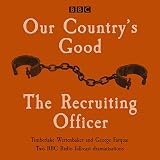
- Audible Audiobook
- Timberlake Wertenbaker (Author) - Adam Billington, Adjoa Andoh, full cast (Narrators)
- English (Publication Language)
- 08/20/2020 (Publication Date) - BBC Audio (Publisher)
6. Consider the Play’s Ending: Analyze the final scenes and their implications for the future of the colony and the individuals within it.
- What to look for: The lingering effects of the theatrical experience, the potential for continued personal growth, and the subtle critique of the colonial enterprise.
- Mistake to avoid: Expecting a neatly resolved, purely optimistic conclusion; the play acknowledges ongoing challenges while affirming the power of art.
Our Country’s Good by Timberlake Wertenbaker: Failure Modes
One significant failure mode readers encounter with Our Country’s Good by Timberlake Wertenbaker is misinterpreting the play’s central argument as a simplistic endorsement of art as a panacea for all societal ills. This occurs when the audience or reader focuses solely on the positive outcomes of the theatrical production without fully appreciating the deeply ingrained systemic issues it confronts.
Failure Mode: Art as a “Magic Bullet”
- How it manifests: The audience believes the play suggests that simply putting on a play will automatically solve problems of crime, poverty, and oppression. They may overlook the play’s nuanced critique of the colonial system and the ongoing struggles faced by the characters.
- How to detect it early: During initial readings or viewings, pay close attention to whether the play explicitly addresses the ongoing challenges and limitations of the characters’ situations, even after the play’s success. Does the ending present a fully resolved utopia, or does it acknowledge continued hardship alongside the moments of redemption? For instance, the fate of characters like Mary Brenall after the performance is not entirely resolved, highlighting that the system’s flaws persist.
- How to mitigate: Actively seek out and analyze the moments in the text that underscore the brutality of the colonial administration, the systemic nature of injustice, and the precariousness of the convicts’ freedom. Consider the play not as a solution, but as a powerful demonstration of art’s potential to foster humanity and challenge oppression within existing structures. Recognize that the play-within-a-play is a temporary escape and a catalyst for change, not a permanent fix.
Expert Tips
- Tip 1: Emphasize the Dual Narrative:
- Actionable Step: When analyzing the play, consciously track the plot of ‘The Recruiting Officer’ alongside the meta-narrative of the convicts rehearsing and performing it.
- Common Mistake to Avoid: Merging the two narratives too completely, losing sight of how the original play’s themes of military life, social hierarchy, and romantic entanglement are reinterpreted and amplified by the convicts’ own experiences and desires. For example, the character of Kite in ‘The Recruiting Officer’ is performed by a convict who is also dealing with his own struggles for authority and identity.
- Tip 2: Deconstruct the Officers’ Motivations:
- Actionable Step: Analyze the specific reasons and justifications provided by each officer for their support or opposition to the play.
- Common Mistake to Avoid: Generalizing the officers as a single, monolithic entity. Differentiate between characters like Captain David Collins, who initially sees the play as a disciplinary tool, and Lieutenant Second-Lieutenant Ralph Clark, whose motivations are more idealistic and driven by a genuine belief in art’s redemptive power.
- Tip 3: Focus on Language and Transformation:
- Actionable Step: Pay attention to how the language used by the characters evolves throughout the play, particularly as they engage with the text of ‘The Recruiting Officer’.
- Common Mistake to Avoid: Overlooking the subtle shifts in vocabulary, sentence structure, and emotional expression that signify characters’ growing confidence, self-awareness, and humanity. For instance, observe how characters who begin with coarse, functional language gradually adopt more nuanced and expressive speech patterns.
Common Mistakes
- Mistake: Viewing the play as purely historical fiction.
- Why it matters: While set in a historical period, the play uses this setting to explore universal themes of human nature, art, and societal control that remain relevant today.
- Fix: Engage with the play’s thematic resonance, considering how its exploration of power dynamics, identity, and redemption applies to contemporary contexts.
- Mistake: Underestimating the theatrical challenges faced by the convicts.
- Why it matters: The convicts are illiterate, untrained, and operating under extreme duress. Their ability to stage a play is a testament to their resilience and the power of shared purpose, not an easy feat.
- Fix: Appreciate the practical difficulties and focus on the ingenuity and determination required for the production to succeed. Recognize that the act of learning lines and blocking scenes itself is a transformative process.
- Mistake: Overlooking the critique of the British Empire.
- Why it matters: The play is not just about theatre; it is a profound indictment of the brutality and dehumanization inherent in the colonial project and the penal system.
- Fix: Analyze the dialogue and stage directions that highlight the officers’ cruelty, the convicts’ suffering, and the moral bankruptcy of transporting people for minor offenses. Consider the irony of the title itself.
- Mistake: Assuming the play offers a simple “happy ending.”
- Why it matters: While there are moments of profound connection and individual growth, the play does not suggest that all problems are solved. The systemic issues of colonialism and punishment persist.
- Fix: Recognize the nuanced conclusion, where art has facilitated significant personal change and community building, but the broader societal structures remain challenging. The focus is on the possibility of redemption and human connection, not a complete societal overhaul.
Quick Comparison
| Option | Best for | Pros | Watch out |
|---|---|---|---|
| Quick Answer | General use | Our Country’s Good by Timberlake Wertenbaker is a play examining the transfor… | Mistake to avoid: Underestimating the depth of the convicts’ suffering and th… |
| Who This Is For | General use | It contrasts the brutality of the colonial justice system with the humanizing… | Mistake to avoid: Dismissing the theatrical project as mere entertainment; it… |
| What to Check First | General use | The play serves as a powerful commentary on civilization, identity, and the p… | Mistake to avoid: Focusing solely on the plot of ‘The Recruiting Officer’ its… |
| Step-by-Step Plan Understanding Our Countrys Good by Timberlake Wertenbaker | General use | Readers interested in drama that explores social justice, the impact of art o… | Mistake to avoid: Assuming a monolithic view of the officers; their individua… |
Decision Rules
- If reliability is your top priority for Our Country’s Good by Timberlake Wertenbaker, choose the option with the strongest long-term track record and support.
- If value matters most, compare total ownership cost instead of headline price alone.
- If your use case is specific, prioritize fit-for-purpose features over generic ‘best overall’ claims.
FAQ
- Q: What is the primary message of ‘Our Country’s Good’ by Timberlake Wertenbaker?
- A: The primary