John Barth’s Novel: Chimera
Quick Answer
- Chimera by John Barth is a collection of three novellas (“Dunyazadiad,” “Perseid,” and “Bellerophoniad”) that deconstruct classical myths through metafictional and experimental literary techniques.
- This collection is recommended for readers who appreciate narrative self-awareness, philosophical depth, and a challenging engagement with the nature of storytelling.
- Readers seeking linear plots, straightforward character arcs, or easily digestible narratives may find the complex, self-reflexive structure of Chimera by John Barth to be a significant hurdle.
Who This Is For
- Readers of postmodern and experimental fiction who enjoy authors that dissect literary conventions and explore the act of writing itself.
- Individuals interested in how classical narratives are reinterpreted to comment on themes of identity, truth, and the construction of meaning in a contemporary context.
For those ready to dive into a metafictional exploration of myth, John Barth’s Chimera is a must-read collection. It’s a challenging but rewarding experience for lovers of experimental literature.
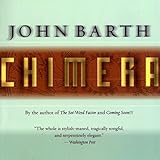
- Audible Audiobook
- John Barth (Author) - Kevin Pariseau (Narrator)
- English (Publication Language)
- 10/07/2011 (Publication Date) - Audible Studios (Publisher)
What to Check First
- Metafictional Intent: Barth foregrounds the artificiality of storytelling. Be prepared for the text to comment on its own construction, characters, and the reader’s role.
- Mythological Reimagining: Each novella radically reworks a classical myth (Scheherazade, Perseus, Bellerophon). While understanding the original myth can enhance appreciation, Barth’s variations and their implications are the primary focus.
- Narrative Subjectivity: The narrators in Chimera are frequently unreliable, self-deceiving, or biased. Their perspectives are crucial to the text’s exploration of subjectivity and the construction of truth.
- Structural Ambition: Barth’s novellas depart from conventional linearity. Expect non-chronological elements, shifting perspectives, and interwoven narratives that demand active reader participation to assemble meaning.
Step-by-Step Plan for Engaging with Chimera by John Barth
1. Initiate with “Dunyazadiad”: This novella introduces Barth’s core thematic concerns regarding narrative.
- Action: Read the story, focusing on the framing device and the narrator’s motivations.
- What to look for: How the act of storytelling is presented as both a survival strategy and a means of self-creation.
- Mistake to avoid: Perceiving this as a simple retelling of The Arabian Nights; Barth uses the framework to examine the genesis of narrative itself.
2. Analyze the Narrator in “Perseid”: This novella retells the myth of Perseus.
- Action: Critically examine the narrator’s voice and their presented perspective.
- What to look for: Evidence of bias, self-deception, or a skewed perception of events that influences the retelling of the Perseus myth.
- Mistake to avoid: Accepting the narrator’s account as objective truth; their subjectivity is a central element Barth is dissecting.
3. Deconstruct Interwoven Narratives in “Bellerophoniad”: This is the most structurally complex novella.
- Action: Trace how the stories of Bellerophon and the Chimera are presented and linked.
- What to look for: Shifts in narrative voice, the blurring of distinctions between hero and monster, and how seemingly disparate tales comment upon each other.
- Mistake to avoid: Becoming frustrated by the absence of a clear, singular plot; focus instead on the method of storytelling and its thematic resonance.
4. Identify Metafictional Commentary: Actively seek instances where the text acknowledges its own artificiality.
- Action: Note passages where characters or the narrator seem aware of their fictional existence or discuss literary conventions.
- What to look for: Direct addresses to the reader, discussions about the writing process, or characters questioning their narrative place.
- Mistake to avoid: Dismissing these as mere stylistic embellishments; they are integral to Barth’s postmodern project.
5. Consider Myth and Modernity: Reflect on how Barth uses ancient myths to address contemporary issues.
- Action: Consider what the original myths represent and how Barth’s alterations comment on those representations.
- What to look for: How Barth’s re-imaginings reveal the constructed nature of myth and its relevance to modern understanding.
- Mistake to avoid: Viewing the myths as static, immutable entities; Barth demonstrates their fluidity and adaptability.
6. Appreciate Barth’s Linguistic Play: The author is known for his intellectual games and intricate wordplay.
- Action: Engage with the linguistic dexterity and layered meanings within the text.
- What to look for: Puns, allusions, and complex sentence structures that invite multiple interpretations.
- Mistake to avoid: Overlooking the intellectual satisfaction derived from Barth’s masterful manipulation of language.
Understanding Chimera by John Barth: A Deeper Dive
John Barth’s Chimera, published in 1972, is a seminal work of postmodern American literature. It comprises three novellas that do not simply retell classical myths but rather engage in a profound, self-aware interrogation of narrative itself, using these ancient stories as a sophisticated laboratory. Barth, renowned for his metafictional explorations, delves into the nature of storytelling, authorship, and readership with characteristic intellectual rigor and formal innovation. The collection’s enduring relevance lies in its capacity to challenge readers’ fundamental assumptions about what a story can and should be, offering a complex yet ultimately rewarding literary experience.
The continued significance of Chimera stems from its engagement with fundamental questions about how meaning is constructed through narrative. In an era saturated with information, much of it mediated, Barth’s deconstruction of myth and his emphasis on the subjective nature of storytelling provide a critical lens. He demonstrates that stories are not transparent windows onto reality but intricate constructions shaped by the teller’s biases, intentions, and the very act of narration. Chimera matters today because it offers a framework for understanding how all narratives, from ancient epics to contemporary media, are inherently interpretations rather than pure fact.
Strengths and Limitations of the Novellas
The primary strengths of Chimera are its intellectual ambition and formal experimentation. Barth’s masterful use of metafiction compels readers to critically examine the stories they consume.
- “Dunyazadiad”: This novella uses the framing device of Scheherazade’s sister, Dunyazad, to explore the origins and purpose of storytelling. Barth’s focus is on the motivation behind narrative, presenting it as a vital act of human agency.
- Concrete Takeaway: Recognize that even when faced with overwhelming circumstances, the act of crafting and telling a story can be a powerful assertion of control and creativity, as Dunyazad strategically positions herself.
- “Perseid”: Barth reinterprets the Perseus myth, but the narrative is filtered through a deeply unreliable narrator. The novella functions as a study in how personal perspective and memory can distort heroic narratives.
- Concrete Takeaway: Approach the narrator’s account in “Perseid” with skepticism; their subjective experience and potential self-aggrandizement are central to Barth’s critique of narrative objectivity.
- “Bellerophoniad”: This novella is the most structurally ambitious, intertwining the stories of Bellerophon and the Chimera. It showcases Barth’s skill in merging disparate narratives to generate new layers of meaning.
- Concrete Takeaway: Appreciate Barth’s innovative narrative architecture in “Bellerophoniad,” where the juxtaposition of hero and monster, and the interplay of different narrative voices, serve to illuminate the complex nature of identity and conflict.
However, the very qualities that define Chimera‘s literary merit also present significant challenges for some readers.
- Density and Complexity: Barth’s prose is intricate, dense, and often layered with philosophical concepts. This demands a high level of reader engagement and can be off-putting for those seeking more accessible prose.
- Concrete Limitation: Readers accustomed to straightforward narratives and simpler sentence structures may find Barth’s style a considerable barrier, potentially leading to disengagement rather than immersion.
- Experimental Structure: The novellas eschew traditional linear plotting. The non-chronological timelines, fragmented narratives, and self-reflexive commentary can leave readers feeling disoriented if they expect a conventional story arc.
- Concrete Limitation: Those who prioritize clear plot progression and discernible character development might find the novellas meandering or intellectually demanding to the point of frustration.
- Metafictional Distance: While a hallmark of postmodernism, the constant awareness of the text’s artifice can create a sense of emotional detachment. The intellectual play, while stimulating, may overshadow emotional resonance for some readers.
- Concrete Limitation: The emphasis on the mechanics of storytelling can sometimes prevent readers from forming deep emotional connections with the characters or their predicaments.
Common Myths About Chimera by John Barth
Here are common misconceptions readers encounter when approaching Chimera by John Barth:
- Myth 1: Chimera is simply a modern retelling of classic myths.
- Correction: While the novellas draw heavily from classical myths, Barth’s intent is not to retell them directly but to deconstruct, recontextualize, and utilize them as vehicles for exploring postmodern literary theories, particularly metafiction and narrative unreliability.
- Myth 2: The complex and fragmented narrative style indicates a lack of authorial control or clarity.
- Correction: The experimental structure is a deliberate artistic choice. Barth intentionally employs fragmentation and non-linearity to highlight themes of subjective truth, the constructed nature of reality, and the active role of the reader in creating meaning.
- Myth 3: Deep prior knowledge of classical mythology is essential for understanding and appreciating the book.
- Correction: While familiarity with the original myths can add depth, Barth provides sufficient context within each novella for readers to follow his unique interpretations. The focus is on his re-imagining and structural play, not on strict adherence to source material.
Expert Tips for Reading Chimera
- Tip 1: Embrace the Unreliable Narrator.
*
Quick Comparison
| Option | Best for | Pros | Watch out |
|---|---|---|---|
| Quick Answer | General use | Chimera by John Barth is a collection of three novellas (“Dunyazadiad,” “Pe… | Mistake to avoid: Perceiving this as a simple retelling of *The Arabian Night… |
| Who This Is For | General use | This collection is recommended for readers who appreciate narrative self-awar… | Mistake to avoid: Accepting the narrator’s account as objective truth; their… |
| What to Check First | General use | Readers seeking linear plots, straightforward character arcs, or easily diges… | Mistake to avoid: Becoming frustrated by the absence of a clear, singular plo… |
| Step-by-Step Plan for Engaging with Chimera by John Barth | General use | Readers of postmodern and experimental fiction who enjoy authors that dissect… | Mistake to avoid: Dismissing these as mere stylistic embellishments; they are… |
Decision Rules
- If reliability is your top priority for Chimera by John Barth, choose the option with the strongest long-term track record and support.
- If value matters most, compare total ownership cost instead of headline price alone.
- If your use case is specific, prioritize fit-for-purpose features over generic ‘best overall’ claims.