Orson Scott Card’s Fantasy Novel: ‘Seventh Son
Quick Answer
- Seventh Son by Orson Scott Card introduces a unique fantasy world where innate magical abilities, termed “Gifts,” are integrated into the practical realities of 19th-century American frontier life.
- This novel is recommended for readers who appreciate detailed world-building, slow-burn character development, and a thoughtful exploration of destiny and individual potential.
- Its primary strengths lie in its atmospheric setting and the nuanced portrayal of a protagonist’s emerging powers, though its deliberate pacing may not appeal to readers seeking immediate action.
Who This Is For
- Readers who enjoy immersive historical fantasy settings and narratives that focus on the internal growth and self-discovery of a young protagonist.
- Fans of Orson Scott Card looking to explore his early thematic interests in the nature of power, prophecy, and the individual’s place in a predetermined destiny.
What to Check First
- Narrative Pacing: Be prepared for a story that unfolds gradually, prioritizing atmosphere and character interiority over rapid plot progression. The focus is on building the world and Alvin’s understanding of himself.
- Magic System’s Nature: Understand that the “Gifts” are presented as practical, almost innate skills rather than overt spellcasting. Their manifestation is often subtle and tied to tangible actions.
- Protagonist-Centric Story: The narrative is deeply rooted in Alvin Miller’s experiences, his burgeoning “Maker” Gift, and his internal struggles to comprehend his unique destiny.
- Setting as a Character: The 19th-century American frontier is not merely a backdrop but an active element that shapes the characters, their challenges, and the practical application of their Gifts.
- Series Foundation: Recognize that Seventh Son is the first book in The Tales of Alvin Maker. It serves as an introduction and foundation, with many plot threads and character arcs designed to develop over subsequent volumes.
Step-by-Step Plan for Engaging with Seventh Son by Orson Scott Card
1. Understand the Series Context: Recognize that Seventh Son is the inaugural volume of a larger saga. This framing is critical for managing expectations, as the book is designed to introduce characters, establish the world, and set up future conflicts.
- Action: Read any available series introductions or summaries to grasp the scope of Alvin Maker’s story.
- What to Look For: Clues that indicate long-term character arcs and world-building that will extend beyond the scope of this initial novel.
- Mistake: Expecting all narrative threads to be fully resolved by the novel’s conclusion, leading to potential dissatisfaction with its open-ended nature.
2. Prioritize Alvin’s Internal Development: The narrative is heavily filtered through Alvin’s perspective. Focus on tracking his emotional responses, his dawning awareness of his extraordinary abilities, and his internal conflicts as he grapples with his identity.
- Action: Pay close attention to Alvin’s thoughts, fears, and his evolving comprehension of his “Maker” Gift.
- What to Look For: How his personal experiences, interactions, and the reactions of others shape his perception of his destiny and his place in the world.
- Mistake: Underestimating the significance of Alvin’s internal struggles, viewing them as secondary to external plot events.
3. Appreciate the Frontier Environment’s Influence: The 19th-century American frontier setting is a vital element that profoundly influences the characters’ lives and the practical application of their Gifts. Observe how the harsh realities of this environment shape daily existence and decision-making.
- Action: Note descriptions of daily life, the challenges of survival, and how the landscape and its demands interact with the characters’ abilities.
- What to Look For: Instances where the environment necessitates or complicates the use of Gifts, demonstrating their grounded nature.
- Mistake: Dismissing the setting’s role as mere backdrop, thereby failing to grasp its impact on plot development and character motivations.
4. Observe the Organic Introduction of Gifts: The magical elements, referred to as “Gifts,” are presented organically within the narrative and are often tied to tangible skills or innate talents. Understand that this is an emergent magic system within the story’s framework.
- Action: Identify and note the specific nature of each character’s Gift as it is revealed through their actions and interactions.
- What to Look For: The limitations, conditions, and practical applications of these Gifts, emphasizing their grounded rather than overtly spectacular nature.
- Mistake: Expecting a fully developed, complex magic system from the outset; the book details its emergence and integration into the characters’ lives.
If you’re looking for a unique blend of historical fantasy and character-driven storytelling, Orson Scott Card’s ‘Seventh Son’ is an excellent choice. This novel masterfully integrates magical abilities into the rugged 19th-century American frontier.
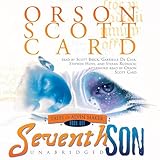
- Audible Audiobook
- Orson Scott Card (Author) - Scott Brick, Gabrielle de Cuir, Stephen Hoye (Narrators)
- English (Publication Language)
- 04/02/2007 (Publication Date) - Blackstone Audio, Inc. (Publisher)
5. Identify Thematic Underpinnings: Orson Scott Card frequently explores profound themes, including destiny versus free will, the nature of power and its responsibilities, and the societal impact of individuals with unique talents.
- Action: Look for recurring motifs or discussions related to fate, choice, the moral implications of possessing extraordinary abilities, and the concept of “making” things.
- What to Look For: How characters grapple with predetermined paths, their own agency, and the societal reactions to those who deviate from the norm.
- Mistake: Focusing solely on plot mechanics and overlooking the deeper philosophical questions and allegorical layers embedded within the narrative.
6. Recognize the Narrative Function of Events: Each event, even those that may seem minor or tangential, contributes to Alvin’s character development and the establishment of the series’ world and its overarching conflicts.
- Action: Evaluate how individual incidents contribute to Alvin’s growth, the understanding of his Gift, or the broader narrative arc of the saga.
- What to Look For: The cause-and-effect relationships that propel the story forward and set the stage for future challenges and developments.
- Mistake: Judging individual plot points in isolation without considering their cumulative contribution to the overall narrative and thematic development.
Common Mistakes
- Impatience with Pacing — Why it matters: The novel’s deliberate pacing is integral to its atmospheric and character-driven style. Rushing through descriptive passages or internal monologues can lead to overlooking subtle thematic elements and nuanced character development. — Fix: Adjust reading expectations to match the narrative’s rhythm. Embrace the slower pace as an opportunity to immerse yourself in the world and Alvin’s internal journey.
- Underestimating the Frontier Setting — Why it matters: The American frontier environment is a vital element that shapes the characters’ lives, their challenges, and how their “Gifts” are utilized. Ignoring its influence leads to a superficial understanding of the story’s core conflicts and character motivations. — Fix: Actively observe how the demands of frontier life—survival, community, resourcefulness—influence character decisions and the practical application of their abilities.
- Treating it as a Standalone Novel — Why it matters: Seventh Son is the foundational book of a larger series. Expecting a complete resolution of all conflicts will lead to disappointment with the open-ended nature of its conclusion. — Fix: Understand that the book’s primary role is to introduce the world, characters, and the central premise of Alvin’s story, setting the stage for subsequent volumes.
- Misinterpreting the Magic System — Why it matters: The “Gifts” are presented as practical, often subtle extensions of natural abilities, not overt high-fantasy spells. Expecting otherwise can lead to misjudging the narrative’s magical elements and Card’s unique approach. — Fix: View the Gifts as grounded abilities that manifest through skill, intuition, and practical application, focusing on their tangible effects within the story’s context and the characters’ daily lives.
Expert Tips
- Tip: Pay close attention to the language used to describe Alvin’s “Maker” Gift and its potential.
- Action: Note words related to shaping, building, creation, and control as they appear in descriptions of Alvin’s abilities and his internal thoughts about them.
- Mistake to Avoid: Assuming the Gift is purely destructive or overtly supernatural without textual evidence; it is fundamentally about constructive manipulation of materials and processes.
- Tip: Observe how societal beliefs, superstitions, and community folklore influence characters’ reactions to Alvin and the concept of his Gift.
- Action: Identify instances where local legends, community fears, or religious interpretations shape interactions with Alvin and the understanding of his unique abilities.
- Mistake to Avoid: Underestimating the power of communal belief systems in shaping character arcs and driving plot developments, as these often create significant conflict for Alvin.
- Tip: Consider the biblical and historical allusions woven into the narrative.
- Action: Look for parallels to biblical stories (e.g., the seventh son prophecy) or historical events that might inform the themes of destiny, prophecy, the founding of a new society, and the clash between established order and burgeoning innovation.
- Mistake to Avoid: Reading the story purely as fantasy without acknowledging its grounding in historical and cultural contexts, which adds significant depth to the thematic exploration of fate and free will.
Understanding the World of Seventh Son by Orson Scott Card
The world presented in Seventh Son is a meticulously crafted alternate history, drawing heavily from the realities of 19th-century American frontier life. Orson Scott Card establishes a reality where specific individuals are born with innate magical abilities, termed “Gifts.” These are not flamboyant spells but rather an extension of natural talents, such as the capacity to shape wood, locate water, or perceive the inherent qualities of objects. This grounded approach to magic makes it feel more organic to the setting, emphasizing how these Gifts would realistically be perceived and utilized by a populace accustomed to hard labor and resourcefulness.
The narrative’s strength lies in its detailed portrayal of frontier existence. Card excels at depicting the harsh realities of life, the close-knit yet often superstitious communities, and the constant struggle for survival. This gritty backdrop serves as a crucible for the protagonist, Alvin Miller, the seventh son of a seventh son, prophesied to be a Maker. His journey is not one of immediate heroism but of gradual self-discovery
Quick Comparison
| Option | Best for | Pros | Watch out |
|---|---|---|---|
| Quick Answer | General use | Seventh Son by Orson Scott Card introduces a unique fantasy world where inn… | Mistake: Expecting all narrative threads to be fully resolved by the novel’s… |
| Who This Is For | General use | This novel is recommended for readers who appreciate detailed world-building,… | Mistake: Underestimating the significance of Alvin’s internal struggles, view… |
| What to Check First | General use | Its primary strengths lie in its atmospheric setting and the nuanced portraya… | Mistake: Dismissing the setting’s role as mere backdrop, thereby failing to g… |
| Step-by-Step Plan for Engaging with Seventh Son by Orson Scott Card | General use | Readers who enjoy immersive historical fantasy settings and narratives that f… | Mistake: Expecting a fully developed, complex magic system from the outset; t… |
Decision Rules
- If reliability is your top priority for Seventh Son by Orson Scott Card, choose the option with the strongest long-term track record and support.
- If value matters most, compare total ownership cost instead of headline price alone.
- If your use case is specific, prioritize fit-for-purpose features over generic ‘best overall’ claims.