The Iraq War: A Deep Dive Into Its Complexities
This analysis examines George Packer’s The Assassins’ Gate, focusing on its utility for readers seeking a nuanced understanding of the Iraq War. It outlines key considerations for evaluating the book’s arguments and provides practical steps for engagement.
Who This Is For
- Readers who have a foundational understanding of the Iraq War and wish to explore its complexities through a journalistic lens.
- Individuals interested in the intersection of policy, military action, and the human experience in conflict zones.
What to Check First
- Authorial Stance: Packer’s position as a journalist embedded with troops shapes his narrative. Assess how this perspective influences his portrayal of events and individuals.
- Scope of Coverage: The book primarily focuses on the early years of the war. Note its limitations in covering later developments or broader geopolitical contexts.
- Narrative Focus: The Assassins’ Gate prioritizes individual stories and experiences. Consider if this approach adequately addresses systemic failures or strategic analyses.
- Evidence Basis: Identify the types of sources Packer relies upon – interviews, official documents, personal observations – and evaluate their implications for the book’s claims.
Understanding The Assassins’ Gate by George Packer: A Step-by-Step Plan
Engaging with The Assassins’ Gate requires a structured approach to discern its contributions and limitations.
1. Initial Reading and Note-Taking: Read through the book, marking passages that highlight key events, character perspectives, or analytical insights.
- Action: Highlight or bookmark significant quotes and descriptive passages.
- What to Look For: Moments where Packer offers a particularly vivid description of the war’s impact or a sharp observation about decision-making.
- Mistake: Reading passively without engaging actively with the text, leading to a superficial understanding.
2. Identify Core Themes: After the initial read, consolidate the recurring ideas and arguments presented by Packer.
- Action: List the central themes, such as the disconnect between policy and reality, the psychological toll of war, or the challenges of nation-building.
- What to Look For: Patterns in the narratives, repeated observations about soldier or civilian experiences, and the author’s framing of causality.
- Mistake: Failing to synthesize individual anecdotes into overarching thematic arguments, treating the book as a mere collection of stories.
3. Contextualize Historical Events: Place the events described in The Assassins’ Gate within the broader timeline of the Iraq War and its preceding political climate.
- Action: Cross-reference key dates and events with established historical accounts of the war.
- What to Look For: How Packer’s narrative aligns with or diverges from other historical records, and whether his embedded perspective offers unique insights or introduces biases.
- Mistake: Accepting Packer’s account as the sole or definitive historical record without external verification.
4. Analyze Character Portrayals: Examine how Packer presents the individuals he encounters, from soldiers and civilians to policymakers.
- Action: Note the descriptors Packer uses and the actions he attributes to key figures.
- What to Look For: Consistency in characterization, evidence of complexity versus simplification, and the author’s apparent sympathy or critique.
- Mistake: Over-reliance on Packer’s subjective descriptions without considering the potential for his embedded position to influence his judgment of individuals.
5. Evaluate Analytical Claims: Assess any explicit arguments Packer makes about the war’s causes, conduct, or consequences.
- Action: Isolate statements where Packer offers an interpretation or conclusion.
- What to Look For: The evidence presented to support these claims, the logical coherence of the arguments, and potential counter-arguments.
- Mistake: Accepting analytical claims at face value without scrutinizing the underlying evidence or logical structure.
6. Consider the “Failure Mode”: Identify instances where the book’s narrative choices might lead readers to a skewed understanding of the war.
- Action: Look for sections that might overemphasize individual heroism or tragedy at the expense of systemic issues, or vice-versa.
- What to Look For: A tendency to focus on the “fog of war” as an excuse for poor decisions, or a narrative that presents the conflict as solely the result of bad actors rather than complex systemic failures.
- Mistake: Concluding that the book’s focus on individual experience inherently provides a complete picture of the war’s strategic or political dimensions.
The Assassins’ Gate by George Packer: Strengths and Limitations
George Packer’s The Assassins’ Gate offers a powerful, ground-level perspective on the Iraq War, particularly its initial invasion and occupation. Its strength lies in its immersive, journalistic approach, bringing readers into the experiences of soldiers and Iraqi civilians. Packer excels at capturing the confusion, fear, and human cost of conflict through vivid prose and intimate portraits.
However, the book’s focus on embedded journalism inherently limits its scope. While providing invaluable personal accounts, it may not offer a comprehensive strategic or political analysis of the war’s origins or long-term consequences. Readers seeking a detached, high-level overview of policy decisions might find its narrative deeply personal rather than broadly analytical.
BLOCKQUOTE_0
This quote encapsulates the central tension Packer explores: the gap between the stated reasons for the war and the lived reality on the ground. It serves as a caution against accepting official narratives without scrutinizing the human impact.
Common Myths About The Assassins’ Gate
- Myth: The book presents a definitive, objective account of the Iraq War.
- Correction: As a work of journalism, The Assassins’ Gate is inherently shaped by the author’s perspective, access, and narrative choices. While meticulously researched and deeply empathetic, it is a particular interpretation, not an objective chronicle. Packer’s embedded status provides unique insights but also potential blind spots regarding broader strategic contexts.
- Myth: The book’s focus on individual stories means it neglects the political motivations behind the war.
- Correction: While individual experiences are central, Packer does engage with the political context and the justifications for the war. However, the emphasis remains on the human impact of those decisions, rather than a deep dive into the policy debates themselves. Readers should supplement this with works specifically analyzing the political landscape.
For readers seeking a profound and immersive understanding of the Iraq War’s early stages, George Packer’s The Assassins’ Gate is an essential read. This book offers a deeply human perspective, capturing the chaos and personal toll of the conflict.
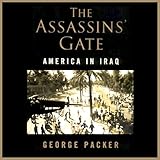
- Audible Audiobook
- George Packer (Author) - Richard Poe (Narrator)
- English (Publication Language)
- 12/18/2006 (Publication Date) - Recorded Books (Publisher)
Expert Tips for Reading The Assassins’ Gate
- Tip 1: Prioritize Contextual Reading.
- Action: Before or during reading, familiarize yourself with the basic timeline and key political figures involved in the lead-up to the Iraq War.
- Mistake to Avoid: Assuming The Assassins’ Gate provides all necessary historical background; it complements rather than replaces foundational knowledge.
- Tip 2: Distinguish Narrative from Analysis.
- Action: Actively differentiate between Packer’s vivid storytelling and his explicit analytical statements about the war’s causes or effects.
- Mistake to Avoid: Blurring the lines between compelling personal accounts and broader, evidence-based historical or strategic conclusions.
- Tip 3: Supplement with Diverse Perspectives.
- Action: Consider reading reviews or scholarly analyses of The Assassins’ Gate alongside other books on the Iraq War offering different viewpoints (e.g., academic histories, policy critiques).
- Mistake to Avoid: Treating Packer’s work as the sole or final word on the subject, which can lead to an incomplete understanding.
Frequently Asked Questions
- Q: Does The Assassins’ Gate offer a clear “villain” or “hero” narrative for the Iraq War?
- A: Packer tends to present complex characters and situations, often highlighting the moral ambiguities and difficult choices faced by individuals caught in the conflict. The focus is less on assigning blame and more on understanding the human experience of war.
- Q: Is this book suitable for someone with no prior knowledge of the Iraq War?
- A: While accessible, the book assumes a degree of familiarity with the conflict’s basic premise. Readers new to the subject might benefit from reading a concise overview of the war’s history before diving into The Assassins’ Gate to better contextualize the narratives.
- Q: How does The Assassins’ Gate compare to other books about the Iraq War?
- A: It stands out for its deeply personal, on-the-ground reporting and its literary quality. Unlike more academic or policy-focused accounts, it prioritizes the lived experiences of those directly involved.
- Q: Does the book cover the entire duration of the Iraq War?
- A: The Assassins’ Gate primarily focuses on the period from the 2003 invasion through the initial occupation and insurgency. It does not provide an exhaustive account of the war’s entire lifespan.
| Aspect | Strength | Limitation | Reader Takeaway |
|---|---|---|---|
| Narrative Style | Immersive, vivid, and empathetic portrayal of individual experiences. | May sacrifice broader strategic or political analysis for personal depth. | Excellent for understanding the human cost and ground-level realities. |
| Scope | Focus on early invasion and occupation offers detailed insights. | Limited coverage of later phases of the war or its long-term consequences. | Best supplemented with works addressing the war’s later stages or origins. |
| Perspective | Embedded journalism provides unique access and intimate observations. | Potential for bias or incomplete understanding of non-embedded viewpoints. | Be aware of the author’s position and cross-reference with other sources. |
Decision Rules
- If reliability is your top priority for The Assassins’ Gate by George Packer, choose the option with the strongest long-term track record and support.
- If value matters most, compare total ownership cost instead of headline price alone.
- If your use case is specific, prioritize fit-for-purpose features over generic ‘best overall’ claims.