Exploring William Wycherley’s Satirical Play, The Country Wife
Quick Answer
- The Country Wife by William Wycherley is a Restoration comedy known for its sharp wit and unflinching portrayal of societal hypocrisy, particularly concerning marriage and sexual morality.
- Readers seeking a historically significant, albeit often shocking, exploration of 17th-century English society will find value, but those sensitive to explicit themes or vulgarity may wish to approach with caution.
- The play’s enduring relevance lies in its examination of reputation, deception, and the commodification of women, themes that resonate beyond its original context.
Who This Is For
- Students and scholars of English literature, particularly those studying Restoration drama and satire.
- Readers interested in historical plays that offer a critical, often cynical, look at societal norms and human behavior.
What to Check First
- Historical Context: Familiarize yourself with the Restoration period in England (late 17th century) to understand the social, political, and cultural backdrop against which the play was written and performed. This includes the reopening of theaters after Puritan rule and the prevailing attitudes towards marriage, infidelity, and social class.
- Author’s Style: William Wycherley was known for his biting satire and often controversial subject matter. Understanding his penchant for exposing vice and folly without offering easy solutions is crucial for appreciating The Country Wife.
- Thematic Previews: Research the play’s central themes, such as the manipulation of reputation, the pursuit of pleasure versus social standing, and the transactional nature of marriage. This will help you anticipate the play’s moral landscape.
- Content Warnings: Be aware that The Country Wife contains explicit language, sexual innuendo, and themes of adultery and deception that may be considered offensive by modern standards.
Step-by-Step Plan for Engaging with The Country Wife
1. Read the Prologue and Epilogue: Action: Read these sections carefully. What to look for: These framing devices often set the tone and offer commentary from the author or characters, providing initial insights into the play’s intent and reception. Mistake: Skipping them, missing the author’s direct address to the audience.
2. Identify Key Characters and Their Motivations: Action: As you read, create a mental or written list of the main characters (e.g., Horner, Margery Pinchwife, Lady Fidget). What to look for: Their primary goals, their relationships, and the masks they wear. Mistake: Getting lost in the intricate plot without understanding the driving forces behind each character’s actions.
3. Analyze Horner’s “Fop’s Disease” Ruse: Action: Pay close attention to Horner’s feigned impotence. What to look for: How this deception allows him access to married women and exposes the hypocrisy of the men who believe him. Mistake: Taking Horner’s condition at face value, rather than recognizing it as a satirical device.
4. Examine the Treatment of Margery Pinchwife: Action: Observe Margery’s journey from naive country wife to a more worldly (though still ethically compromised) figure. What to look for: The societal pressures and her own desires that shape her actions, and how she navigates the corrupt London society. Mistake: Judging Margery solely by modern moral standards without considering her character’s development within the play’s world.
5. Deconstruct the “Virtuous” Ladies: Action: Scrutinize the behavior of characters like Lady Fidget, Mrs. Squeamish, and Mrs. Talkative. What to look for: The stark contrast between their public pronouncements of virtue and their private actions, revealing the superficiality of their reputations. Mistake: Accepting their claims of morality at face value, missing the satirical critique.
6. Evaluate the Play’s Satirical Targets: Action: Consider what aspects of 17th-century society Wycherley is most sharply criticizing. What to look for: The marriage market, the treatment of women, the vanity of men, and the superficiality of social decorum. Mistake: Viewing the play as merely a collection of scandalous events rather than a pointed social commentary.
7. Consider the Resolution (or Lack Thereof): Action: Reflect on the play’s ending. What to look for: Whether justice is served, if characters learn from their mistakes, and what the final state of society appears to be. Mistake: Expecting a neat, morally uplifting conclusion; Wycherley’s endings are often ambiguous and reflect his cynical view.
For those looking to dive into this seminal work, a well-annotated edition of William Wycherley’s The Country Wife is highly recommended to fully grasp the nuances of its language and historical context.
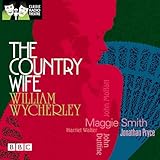
- Audible Audiobook
- William Wycherley (Author) - Full Cast, Jonathan Pryce, Maggie Smith (Narrators)
- English (Publication Language)
- 02/24/2010 (Publication Date) - BBC Digital Audio (Publisher)
The Country Wife by William Wycherley: A Controversial Masterpiece
William Wycherley’s The Country Wife, first performed in 1675, stands as a quintessential example of Restoration comedy, a genre known for its wit, libertinism, and unflinching critique of society. The play’s central premise, revolving around the notorious Horner and his elaborate scheme to gain access to married women by pretending to be impotent, immediately signals its provocative nature. This strategy, known as the “fop’s disease,” allows Horner to move freely through the drawing rooms and boudoirs of London, becoming privy to the sexual intrigues and hypocrisies of the era’s elite.
The play is structured around a series of interconnected plots, but the core narrative focuses on the marital woes of the Pinchwifes. Margery, the titular “country wife,” is brought to London by her jealous and older husband, Pinchwife, who fears she will be corrupted. Ironically, it is his very attempts to control her that expose her to the temptations and deceptions of the city, leading her into Horner’s orbit. Wycherley masterfully uses Margery’s naivete and subsequent seduction to highlight the artificiality of societal constraints and the powerful allure of forbidden desires. The play’s enduring power lies not just in its scandalous plotlines but in its sharp dissection of reputation, virtue, and the transactional nature of relationships in a society obsessed with appearances.
Understanding The Country Wife by William Wycherley’s Satirical Edge
The brilliance of The Country Wife lies in its relentless satirical gaze. Wycherley spares no one, skewering the vanity of men, the duplicity of women, the absurdity of the marriage market, and the hollowness of social pretensions. The so-called “virtuous” ladies of the play, such as Lady Fidget and Mrs. Squeamish, are exposed as women driven by lust and social maneuvering, their public piety a mere facade. Their pronouncements on morality are particularly ironic, given their clandestine meetings with Horner.
BLOCKQUOTE_0
This quote, while not directly from the play, captures the spirit of Wycherley’s contrarian and self-aware approach to his work. He seemed to relish provoking audiences and critics, challenging conventional morality with a cynical yet intellectually rigorous wit. The play’s strength is its refusal to offer easy answers or moralistic pronouncements, instead presenting a world where vice and virtue are often indistinguishable, and where survival and pleasure depend on cunning and deception.
Common Myths About The Country Wife
- Myth: The Country Wife is simply a bawdy farce with no deeper meaning.
- Why it matters: This view overlooks the play’s sophisticated social commentary.
- Correction: While undeniably bawdy, the play is a sharp satire of Restoration society, critiquing hypocrisy, the marriage market, and the treatment of women. Its humor is derived from exposing these societal flaws.
- Myth: Margery Pinchwife is a purely innocent victim throughout the play.
- Why it matters: This simplifies a complex character and her agency.
- Correction: Margery begins as naive but develops a degree of cunning and assertiveness as she navigates London. Her actions, while influenced by circumstance, also reflect her own desires and growing understanding of the world.
- Myth: The play endorses the libertine lifestyle it depicts.
- Why it matters: This misinterprets the nature of satire.
- Correction: Wycherley uses satire to expose and critique, not to endorse. By presenting the excesses and moral decay of his characters, he aims to provoke thought and reveal the artificiality of societal norms, rather than to advocate for the behaviors themselves.
Expert Tips for Reading The Country Wife
- Tip 1: Focus on the Performance Context.
- Actionable Step: Imagine the play being performed in a Restoration theatre. Consider the audience’s expectations and the social freedoms (and restrictions) of the era.
- Common Mistake to Avoid: Reading the play solely through a modern lens without acknowledging its historical performance context, which can lead to misinterpretations of its humor and social critique.
- Tip 2: Track the Evolution of Reputation.
- Actionable Step: Note how characters attempt to construct, maintain, or manipulate their reputations, and the consequences of these efforts.
- Common Mistake to Avoid: Overlooking the central role of reputation as a currency and a weapon in the play; characters are often more concerned with seeming virtuous than being virtuous.
- Tip 3: Identify the Satirical Targets.
- Actionable Step: Keep a running list of the social types and institutions Wycherley seems to be mocking (e.g., jealous husbands, foolish fops, hypocritical ladies, the marriage lottery).
- Common Mistake to Avoid: Focusing solely on the plot’s scandalous elements without recognizing the underlying commentary on societal flaws and human nature.
Quick Comparison
| Option | Best for | Pros | Watch out |
|---|---|---|---|
| Quick Answer | General use | The Country Wife by William Wycherley is a Restoration comedy known for its… | Common Mistake to Avoid: Reading the play solely through a modern lens withou… |
| Who This Is For | General use | Readers seeking a historically significant, albeit often shocking, exploratio… | Common Mistake to Avoid: Overlooking the central role of reputation as a curr… |
| What to Check First | General use | The play’s enduring relevance lies in its examination of reputation, deceptio… | Common Mistake to Avoid: Focusing solely on the plot’s scandalous elements wi… |
| Step-by-Step Plan for Engaging with The Country Wife | General use | Students and scholars of English literature, particularly those studying Rest… | Common Mistake to Avoid: Reading the play solely through a modern lens withou… |
Decision Rules
- If reliability is your top priority for The Country Wife by William Wycherley, choose the option with the strongest long-term track record and support.
- If value matters most, compare total ownership cost instead of headline price alone.
- If your use case is specific, prioritize fit-for-purpose features over generic ‘best overall’ claims.
FAQ
- Q: Is The Country Wife suitable for all readers?
- A: No. The play contains explicit sexual content, coarse language, and themes that may be offensive to some readers. It is best suited for those with an interest in historical drama and a tolerance for mature subject matter.
- **Q: