Understanding Horace’s Classical ‘Odes
Horace’s Odes represent a cornerstone of Western classical literature, offering a sophisticated exploration of Roman life, philosophy, and the human behavior. This guide provides a structured approach to engaging with these complex poems, focusing on their literary significance and enduring thematic depth.
Quick Answer
- The Odes by Horace offer a meticulously crafted poetic exploration of Roman life, philosophy, and emotion, demanding careful attention from the reader.
- This collection is best suited for individuals seeking to delve into foundational Western poetry and understand its intricate relationship with Roman culture and philosophy.
- A foundational understanding of Roman history and basic Latin poetic conventions can significantly enhance comprehension, though a good translation and contextual notes are paramount for general readers.
Who This Is For
- Students and scholars of classical literature requiring a deeper analysis of Horace’s poetic output and its historical context.
- General readers interested in exploring foundational Western poetry and its enduring themes of love, politics, mortality, and the pursuit of wisdom.
What to Check First
Before embarking on a reading of The Odes by Horace, consider the following critical elements:
- Translation Quality: The choice of translation is crucial. Different translators offer varying interpretations and stylistic approaches. For instance, the translation by David Ferry is often lauded for its accessibility and poetic resonance in English, while others may prioritize a more literal rendering. Verify reviews or scholarly opinions on translations to find one that aligns with your reading goals.
- Edition with Scholarly Annotations: Consult editions that provide extensive notes. These annotations are vital for understanding historical allusions, mythological references, and linguistic nuances that are often opaque to modern readers. A well-annotated edition, such as those from Oxford World’s Classics or Hackett Publishing, can transform the reading experience.
- Roman Context: Familiarize yourself with the socio-political landscape of the late Roman Republic and early Empire (roughly 1st century BCE to 1st century CE). Horace’s poems are deeply embedded in the events, figures, and cultural norms of his era, including the transition from Republic to Empire under Augustus.
- Poetic Form and Meter: While not strictly necessary for a general understanding, a basic awareness of Latin meter (like the Alcaic and Sapphic stanzas) and poetic structure can deepen your appreciation for Horace’s technical mastery and the musicality of his verse.
Step-by-Step Plan for Engaging with The Odes by Horace
Approaching Horace’s Odes requires a systematic method to fully appreciate their literary artistry and philosophical weight.
1. Select a High-Quality Translation:
- Action: Choose a translation recognized for its fidelity to the original Latin while maintaining poetic flow and accessibility in English.
- What to Look For: Translations that balance literal accuracy with the tone, rhythm, and emotional impact of Horace’s verse. Consult literary reviews or academic recommendations.
- Mistake: Opting for a translation that is either overly literal and stilted, or too free and loses the specific nuances of Horace’s language and thought.
2. Utilize Editions with Comprehensive Notes:
- Action: Read with an edition that provides detailed annotations explaining historical figures, mythological allusions, and Roman customs.
- What to Look For: Explanations of references to contemporaries like Maecenas or Augustus, and clarifications of Roman social practices or religious rituals.
- Mistake: Skimming or ignoring the notes, which can lead to a superficial understanding or misinterpretation of poems reliant on specific historical or cultural context.
3. Identify and Track Thematic Threads:
- Action: Actively look for recurring themes such as carpe diem (seize the day), the pursuit of moderation (aurea mediocritas), the transience of life, the nature of true friendship, and the role of poetry.
- What to Look For: How Horace revisits and develops these themes across different odes, noting variations in his treatment and the contexts he employs. For instance, compare the nuanced presentation of carpe diem in Ode 1.11 with its appearance elsewhere.
- Mistake: Treating each ode as an isolated unit without recognizing the interconnectedness of Horace’s philosophical outlook and thematic concerns.
For a foundational understanding of Roman poetry and its intricate relationship with Roman culture and philosophy, The Odes by Horace is an essential read. This collection offers a meticulously crafted poetic exploration of Roman life, philosophy, and emotion.
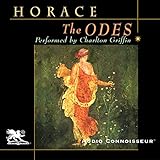
- Audible Audiobook
- Horace (Author) - Charlton Griffin (Narrator)
- English (Publication Language)
- 11/13/2007 (Publication Date) - Audio Connoisseur (Publisher)
4. Analyze Poetic Craftsmanship:
- Action: Pay close attention to Horace’s skillful use of imagery, metaphor, simile, apostrophe, and rhetorical devices.
- What to Look For: Examples of vivid sensory language, carefully constructed arguments, and the impact of direct address (apostrophe) to individuals or abstract concepts.
- Mistake: Focusing solely on the surface narrative or meaning while overlooking the linguistic artistry that contributes to the poem’s persuasive power and aesthetic appeal.
5. Explore Philosophical Influences:
- Action: Investigate the underpinnings of Epicurean and Stoic philosophies in Horace’s work.
- What to Look For: Evidence of Epicurean ideals concerning pleasure, tranquility, and the avoidance of pain, alongside Stoic concepts of virtue, reason, and acceptance of fate.
- Mistake: Attributing Horace’s views rigidly to a single philosophical school without acknowledging his personal synthesis and adaptation of these ideas.
6. Conduct Close Readings of Key Odes:
- Action: Select a few significant odes for in-depth analysis, examining their structure, argument, and emotional trajectory.
- What to Look For: The development of thought within the poem, the interplay of form and content, and the overall impact. For example, Ode 3.30 (“Exegi monumentum aere perennius” – I have erected a monument more lasting than bronze) offers clear insights into Horace’s reflections on poetic immortality.
- Mistake: Attempting to absorb the entire collection without dedicating focused study to individual poems, which can hinder a deep understanding.
7. Read Aloud (When Possible):
- Action: Whenever feasible, read the poems aloud, even in translation, to experience their sonic qualities.
- What to Look For: The rhythm, cadence, alliteration, assonance, and overall musicality that contribute to the poem’s aesthetic dimension.
- Mistake: Consuming the poetry solely as silent text, thereby missing a significant layer of its artistic impact and Horace’s deliberate craftsmanship.
Common Myths About The Odes by Horace
Myth 1: Horace’s Odes are exclusively about hedonistic pursuits and romantic liaisons.
- Why it Matters: This misconception trivializes the profound philosophical and ethical dimensions of the work, leading to an incomplete understanding.
- Correction: While themes of love, wine, and conviviality are indeed present, they frequently serve as a framework for exploring deeper inquiries into moderation, the ephemeral nature of happiness, and the cultivation of inner peace. Odes such as 3.2, which praises martial virtue and discipline (“Dulce et decorum est pro patria mori” – It is sweet and fitting to die for one’s country), directly challenge the notion of unbridled hedonism. Horace masterfully uses lighter themes to frame more serious reflections on life’s impermanence and the importance of wisdom.
Myth 2: Horace’s poetry is inherently inaccessible to modern readers due to its ancient context.
- Why it Matters: This can create an unnecessary barrier, deterring readers from engaging with a foundational work of Western literature that offers timeless insights.
- Correction: While historical and cultural context is undeniably important for a full appreciation, the core human emotions and philosophical questions explored in The Odes by Horace resonate universally across millennia. Themes of love, loss, ambition, friendship, and the search for meaning are perennial. With the aid of well-chosen translations and contextual notes, modern readers can readily connect with the emotional depth and intellectual arguments presented by Horace. The poem’s enduring relevance stems from its ability to speak to timeless human experiences and dilemmas.
Decision Criteria for Engaging with The Odes by Horace
- If your primary constraint is time for deep analysis: Prioritize a single, highly-regarded translation with extensive scholarly notes, focusing on a curated selection of key odes rather than attempting a comprehensive read.
- If your goal is to understand the philosophical underpinnings: Focus on odes that explicitly engage with Epicurean and Stoic themes, cross-referencing with classical philosophy texts.
- If your interest lies in the poetry’s aesthetic qualities: Seek out translations known for their lyrical merit and read them aloud to appreciate their rhythm and sound.
Decision Rules
- If reliability is your top priority for The Odes by Horace, choose the option with the strongest long-term track record and support.
- If value matters most, compare total ownership cost instead of headline price alone.
- If your use case is specific, prioritize fit-for-purpose features over generic ‘best overall’ claims.
FAQ
- Q1: What is the most significant philosophical influence on Horace’s Odes?
A1: Horace’s work is significantly shaped by both Epicureanism and Stoicism. He synthesized these schools into a personal philosophy that emphasizes moderation, contentment with simple pleasures, and acceptance of life’s uncertainties and mortality.
- Q2: How does Horace’s concept of “carpe diem” differ from modern interpretations?
A2: Horace’s “carpe diem” is less about reckless abandon and more about mindful appreciation and utilization of the present moment. It urges readers to make the most of current opportunities and enjoy present happiness, rather than deferring it to an uncertain future, typically within a framework of moderation and wisdom.
- Q3: Which Odes are considered essential for understanding Horace’s breadth of themes?
A3: Key odes that showcase Horace’s range include 1.11 (“Carpe diem”), 3.2 (on patriotic duty and virtue), 3.30 (on poetic legacy), and 1.38 (on simple living versus ostentation). These poems illustrate his lyricism, philosophical depth, and reflections on mortality and legacy.
- Q4: What constitutes a particularly effective translation of The Odes by Horace?
A4: An effective translation captures the formal elegance, emotional nuance, and intellectual rigor of the original Latin while remaining accessible and engaging for an English-speaking audience. It avoids anachronisms and seeks to convey Horace’s unique blend of wit, gravitas, and philosophical reflection.
Expert Tips for Reading Horace’s Odes
- Tip 1: Engage with scholarly interpretations of specific themes or odes.
- Actionable Step: Seek out and read at least one academic article or essay that delves into a particular aspect of Horace’s work, such as his relationship with Augustan power or his treatment of love. For example, research critical analyses of his use of mythology.
- Common Mistake to Avoid: Relying solely on introductory material or brief summaries, which often lack the depth and critical perspective necessary to appreciate the complexities of scholarly debate surrounding Horace.
- Tip 2: Compare multiple translations of a single ode.
- Actionable Step: Select a well-known ode, such as Ode 1.11, and read it in at least two different translations side-by-side.
- Common Mistake to Avoid: Assuming that all translations convey the same meaning, tone, and emotional weight. Subtle differences in word choice, syntax, and meter can significantly alter the reader’s experience and interpretation of the poem.
- Tip 3: Analyze the function of the addressee in Horace’s Odes.
- Actionable Step: When reading an ode, identify the specific person or entity Horace is addressing (e.g., a friend like Vergil, a patron like Maecenas, a lover, or a deity). Consider how this direct address shapes the poem’s tone, argument, and persuasive intent.
- Common Mistake to Avoid: Treating the poems as purely internal monologues. Horace often engages in dialogue or direct address, which introduces a performative and persuasive element crucial to understanding the poem’s purpose.
A Table of Thematic Elements in Horace’s Odes
| Theme | Description | Example Ode(s) | Impact on Reader |
|---|---|---|---|
| <strong>Carpe Diem</strong> | Seize the day; live fully and mindfully in the present. | 1.11, 3.8 | Encourages proactive engagement with life and appreciation of current opportunities. |
| <strong>Moderation (Aurea Mediocritas)</strong> | The pursuit of a balanced life, avoiding extremes of pleasure, wealth, or hardship. | 2.10, 2.15 | Promotes wisdom, contentment, and resilience against life’s unpredictable nature. |
| <strong>Transience of Life</strong> | Awareness of mortality and the fleeting nature of time and worldly possessions. | 1.4, 2.3 | Fosters a sense of urgency and encourages focus on enduring values and experiences. |
| <strong>Poetic Immortality</strong> | The belief that poetry can grant the author lasting fame and remembrance beyond death. | 3.30, 4.2 | Reflects on legacy, the enduring power of art, and the poet’s role in society. |
| <strong>Friendship & Loyalty</strong> | The profound value and complexities of personal relationships, especially in turbulent times. | 1.22, 3.9 | Highlights the importance of human connection, support, and steadfast loyalty. |
| <strong>Roman Patriotism/Duty</strong> | The concept of civic virtue and the responsibilities of Roman citizens. | 3.2, 3.4 | Explores the ideals of service and sacrifice within the Roman state. |
BLOCKQUOTE_0