Stephen King’s The Dark Tower Series Explained
Quick Answer
- The Dark Tower series by Stephen King is a sprawling epic blending multiple genres, best approached with a clear understanding of its interconnected nature.
- Readers often encounter difficulty due to the series’ non-linear narrative and the gradual integration of King’s wider fictional universe.
- A systematic approach, focusing on key entry points and understanding thematic arcs, mitigates common stumbling blocks.
Who This Is For
- Readers seeking a comprehensive, genre-bending narrative that spans fantasy, sci-fi, western, and horror elements.
- Existing Stephen King fans who wish to understand the foundational role of this series within his larger body of work.
What to Check First
- Series Order: Confirm the intended reading order. While loosely chronological, specific books and supplementary materials can enhance comprehension. The primary novels are:
1. The Gunslinger
2. The Drawing of the Three
3. The Waste Lands
4. Wizard and Glass
5. Wolves of the Calla
6. Song of Susannah
7. The Dark Tower
- Interconnectivity: Recognize that characters, locations, and events from other Stephen King novels (e.g., ‘Salem’s Lot, It, Insomnia) appear in the Dark Tower series. Understanding these connections is not mandatory for enjoyment but enriches the experience.
- Genre Blend: Be prepared for a significant tonal and stylistic shift across the books. The early novels are more akin to a western, while later ones incorporate elements of epic fantasy and cosmic horror.
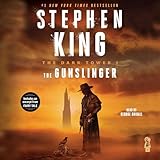
- Audible Audiobook
- Stephen King (Author) - George Guidall (Narrator)
- English (Publication Language)
- 01/01/2016 (Publication Date) - Simon & Schuster Audio (Publisher)
Step-by-Step Plan to Reading The Dark Tower by Stephen King
1. Begin with The Gunslinger: Start with the first book.
- Action: Read the novel.
- What to look for: Roland Deschain’s relentless pursuit of the Man in Black and the mysterious Dark Tower. Pay attention to the bleak, sparse atmosphere and the introduction of Jake Chambers.
- Mistake: Expecting a fully formed epic from the outset. The Gunslinger is a foundational text, more focused on character introduction and world-building than complex plot.
2. Engage with The Drawing of the Three: Proceed to the second installment.
- Action: Read the novel.
- What to look for: The “drawing” of Roland’s new ka-tet (Eddie Dean and Odetta Holmes/Susannah Dean). Observe the expansion of the narrative scope and the introduction of parallel world mechanics.
- Mistake: Underestimating the importance of the new ka-tet members. Their individual backstories and psychological complexities are crucial to the series’ emotional core.
3. Confront The Waste Lands: Continue with the third book.
- Action: Read the novel.
- What to look for: The completion of Roland’s ka-tet with Jake and the introduction of the sentient AI, the Wizard’s Glass. Note the increasing scale of the conflict and the introduction of new antagonists.
- Mistake: Assuming all plot threads will be resolved quickly. This book significantly expands the mythology and introduces new obstacles that prolong the journey.
4. Immerse in Wizard and Glass: Read the fourth book.
- Action: Read the novel.
- What to look for: Roland’s backstory and his tragic romance with Susan Delgado. This novel provides extensive exposition and character development, offering a significant pause in the direct pursuit of the Tower.
- Mistake: Becoming impatient with the extended flashback. This section is vital for understanding Roland’s motivations and the cyclical nature of his quest.
5. Navigate Wolves of the Calla: Progress to the fifth book.
- Action: Read the novel.
- What to look for: The ka-tet’s involvement in the plight of the town of Calla Bryn Sturgis. Observe the more overt sci-fi elements and the direct confrontation with new villains.
- Mistake: Overlooking the subtle connections to other King novels. This book begins to more explicitly weave in elements from King’s wider universe, which can be confusing if not recognized.
6. Experience Song of Susannah: Read the sixth book.
- Action: Read the novel.
- What to look for: Susannah’s internal struggles and her separation from the ka-tet. This installment focuses on individual character arcs and introduces supernatural entities in a more pronounced way.
- Mistake: Forgetting the significance of Susannah’s fractured identity. Her journey is central to the series’ thematic exploration of self and destiny.
7. Conclude with The Dark Tower: Read the final novel.
- Action: Read the novel.
- What to look for: The ultimate confrontation and the resolution of Roland’s quest. Pay close attention to the meta-fictional elements and the cyclical nature of the narrative.
- Mistake: Expecting a conventional, neatly tied-up ending. The conclusion is designed to be thought-provoking and reflective of the series’ overarching themes.
Common Mistakes
- Mistake: Treating The Dark Tower as a standard fantasy series.
- Why it matters: This leads to unmet expectations regarding consistent tone, magic systems, and narrative structure.
- Fix: Acknowledge the series’ genre fluidity and its roots in western, sci-fi, and horror.
- Mistake: Attempting to read every Stephen King novel before or during The Dark Tower.
- Why it matters: While some connections enhance the experience, they are not strictly necessary for understanding the primary narrative arc. This can lead to reader burnout.
- Fix: Focus on the main series first. Refer to other King novels only if specific references cause confusion or if you desire deeper context.
- Mistake: Getting bogged down in the meta-narrative too early.
- Why it matters: The self-referential elements can be disorienting if introduced before the reader is invested in Roland and his ka-tet.
- Fix: Allow the story to unfold organically. The meta-commentary becomes more impactful once the characters and their quest are established.
- Mistake: Skipping The Gunslinger due to its perceived simplicity or dated prose.
- Why it matters: This book lays the essential groundwork for Roland’s character, his world, and his singular obsession.
- Fix: Commit to reading The Gunslinger as the necessary starting point, understanding it as an introduction rather than a fully realized installment.
Quick Comparison
| Option | Best for | Pros | Watch out |
|---|---|---|---|
| Quick Answer | General use | The Dark Tower series by Stephen King is a sprawling epic blending multiple g… | Mistake: Expecting a fully formed epic from the outset. The Gunslinger is a… |
| Who This Is For | General use | Readers often encounter difficulty due to the series’ non-linear narrative an… | Mistake: Underestimating the importance of the new ka-tet members. Their indi… |
| What to Check First | General use | A systematic approach, focusing on key entry points and understanding themati… | Mistake: Assuming all plot threads will be resolved quickly. This book signif… |
| Step-by-Step Plan to Reading The Dark Tower by Stephen King | General use | Readers seeking a comprehensive, genre-bending narrative that spans fantasy,… | Mistake: Becoming impatient with the extended flashback. This section is vita… |
Decision Rules
- If reliability is your top priority for The Dark Tower by Stephen King, choose the option with the strongest long-term track record and support.
- If value matters most, compare total ownership cost instead of headline price alone.
- If your use case is specific, prioritize fit-for-purpose features over generic ‘best overall’ claims.
FAQ
- Q: Do I need to read other Stephen King books before starting The Dark Tower?
- A: No, it is not strictly required. While references to other King novels (like ‘Salem’s Lot, It, and Insomnia) exist and enrich the experience, the core narrative of The Dark Tower series is self-contained enough to be followed without prior knowledge of those works.
- Q: What is the best reading order for The Dark Tower?
- A: The most widely recommended reading order follows the publication order of the main series: The Gunslinger, The Drawing of the Three, The Waste Lands, Wizard and Glass, Wolves of the Calla, Song of Susannah, and The Dark Tower. Some supplementary books like The Wind Through the Keyhole can be read between books 4 and 5, or after the series concludes, depending on reader preference.
- Q: Is The Dark Tower series finished?
- A: Yes, the main series concluded with the publication of The Dark Tower in 2004. Stephen King has since released The Wind Through the Keyhole (2012), which is considered a mid-quel, fitting between books 4 and 5.
- Q: Why do some readers find The Dark Tower difficult to get into?
- A: The series is known for its unique blend of genres, which can be jarring for readers expecting a single, consistent style. The early books have a different tone and pace than the later ones, and the narrative’s scope expands considerably, incorporating meta-fictional elements and connections to King’s broader universe, which can be challenging to navigate.
Understanding The Dark Tower by Stephen King’s Thematic Core
The Dark Tower by Stephen King is fundamentally a narrative about quests, destiny, and the nature of reality. At its heart lies Roland Deschain, the last gunslinger, driven by an all-consuming pursuit of the titular Dark Tower, believed to be the nexus of all existence. This pursuit is not merely a physical journey but a spiritual and psychological one, exploring themes of obsession, sacrifice, and the redemptive power of companionship. The series questions the concept of free will versus destiny, as Roland and his chosen companions (his ka-tet) grapple with forces beyond their comprehension.
BLOCKQUOTE_0
This quote encapsulates a central tenet of the series: the existence of multiple realities and the interconnectedness of all things. It serves as a reminder that the journey is as significant as the destination, and that the lessons learned, the bonds formed, and the sacrifices made hold weight across dimensions. The thematic depth lies not just in the external conflict but in the internal struggles of Roland and his ka-tet as they confront their pasts, their flaws, and the very fabric of existence.
Expert Tips for Approaching The Dark Tower Series
- Tip 1: Embrace the Journey, Not Just the Destination.
- Action: Focus on the development of Roland and his ka-tet, their