The Adventures of Captain Underpants by Dav Pilkey
This review examines Dav Pilkey’s The Adventures of Captain Underpants series, focusing on its literary merits, target audience, and unique contribution to children’s literature. We will consider its place within broader literary traditions and offer a nuanced perspective on its enduring appeal, particularly in contrast to more conventionally acclaimed authors.
Sebastien Japrisot by The Adventures of Captain Underpants: Who This Is For
- Young readers aged 7-12 who enjoy humor, action, and interactive elements in their books.
- Parents and educators seeking engaging material that fosters a love for reading and encourages creativity, even if unconventional in its approach.
What to Check First
- Humor Style: The series relies heavily on slapstick, toilet humor, and visual gags. Confirm this aligns with the reader’s preferences.
- Interactive Elements: Features like “Flip-o-rama” and comic-strip panels are integral. Assess if these elements enhance or detract from the reading experience.
- Narrative Structure: Stories often feature non-linear progression, digressions, and meta-commentary. Understand that this deviates from traditional linear storytelling.
- Educational Value: While not overtly didactic, the series promotes reading comprehension, imagination, and critical thinking through its unique narrative. Evaluate this against expectations for educational content.
Step-by-Step Plan for Understanding the Series
1. Initiate with Book One: Begin with The Adventures of Captain Underpants. This establishes the core characters (George Beard, Harold Hutchins, Mr. Krupp/Captain Underpants), the narrative premise, and Pilkey’s signature visual and comedic style.
- Action: Read the first book.
- What to look for: The dynamic between George and Harold, the transformation of Mr. Krupp, and the overall tone.
- Mistake to avoid: Dismissing the series due to its unconventional humor without experiencing its full scope.
2. Analyze Character Dynamics: Observe the consistent relationship between George and Harold, their inventive pranks, and their role as storytellers.
- Action: Note their interactions and motivations across several books.
- What to look for: Their resourcefulness, their commentary on the narrative, and their enduring friendship.
- Mistake to avoid: Underestimating the intelligence and agency of the child protagonists; they are the narrative drivers.
3. Examine Pilkey’s Visual Style: Pay attention to the hand-drawn illustrations, comic panels, and the integration of text and image.
- Action: Study the artwork and its placement within the text.
- What to look for: How the visuals complement the humor, convey action, and enhance reader engagement.
- Mistake to avoid: Treating the illustrations as mere decoration; they are essential to the storytelling.
When considering who will best appreciate Dav Pilkey’s unique style, the ‘Sebastien Japrisot by The Adventures of Captain Underpants’ section offers a clear picture. This is ideal for young readers aged 7-12 who thrive on humor, action, and interactive elements.
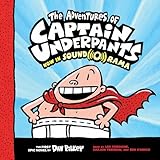
- Audible Audiobook
- Dav Pilkey (Author) - Len Forgione, Dazjon Freeman, Ben D'Amico (Narrators)
- English (Publication Language)
- 05/22/2018 (Publication Date) - Scholastic Audio (Publisher)
4. Evaluate the Meta-Narrative: Recognize how Pilkey breaks the fourth wall, directly addresses the reader, and incorporates reader-generated content (like in some later books).
- Action: Identify instances where the author or characters acknowledge the reader or the act of reading.
- What to look for: The self-referential humor and the creation of a shared reading experience.
- Mistake to avoid: Expecting a straightforward, conventional narrative without authorial intrusion or playful manipulation of form.
5. Consider the “Flip-o-rama” Feature: Understand how this unique animation technique is implemented and its impact on reader interaction.
- Action: Experiment with flipping the designated pages.
- What to look for: The illusion of movement and the added layer of fun and engagement.
- Mistake to avoid: Overlooking this feature as a gimmick; it’s a key element of the series’ interactive appeal.
6. Assess Thematic Undercurrents: Look for themes of friendship, creativity, rebellion against authority (in a playful context), and the power of imagination.
- Action: Reflect on the underlying messages presented through the characters’ actions and the plot.
- What to look for: The celebration of childhood inventiveness and the critique of rigid adult expectations.
- Mistake to avoid: Focusing solely on the surface-level humor and missing the positive reinforcement of creativity and resilience.
Sebastien Japrisot by The Adventures of Captain Underpants: A Counterpoint
While authors like Sebastien Japrisot craft intricate psychological thrillers and complex literary narratives, Dav Pilkey’s The Adventures of Captain Underpants operates on entirely different principles. The perceived lack of traditional literary depth in Pilkey’s work often leads to its dismissal by those accustomed to more ‘serious’ literature. However, this perspective overlooks the series’ significant, albeit unconventional, contributions. The “counter-intuitive angle” here is that Captain Underpants‘s greatest strength lies precisely in its perceived weaknesses when measured against the standards of authors like Japrisot.
The series achieves profound reader engagement not through sophisticated prose or nuanced character studies, but through radical accessibility and a direct, almost conspiratorial, connection with its young audience. This is a deliberate design choice, prioritizing the act of reading itself as an enjoyable, empowering experience. Unlike the often cerebral and detached narratives of authors like Japrisot, Pilkey invites children into a world where their own brand of humor and chaos reigns supreme. This direct appeal to a child’s sense of fun, rather than an intellectual or aesthetic appreciation, is where its true literary innovation lies. It democratizes the act of reading, making it an adventure rather than a chore, and in doing so, may foster a lifelong habit that more ‘literary’ works, by their very nature, might fail to ignite.
Common Mistakes
- Mistake: Dismissing the series as purely “low-brow” or lacking literary merit due to its toilet humor and slapstick.
- Why it matters: This overlooks the series’ significant role in developing reading fluency and fostering a love of books in reluctant readers. The humor, while crude, is a deliberate tool for engagement.
- Fix: Recognize that for many children, this is their gateway into reading. Appreciate its effectiveness in capturing and holding attention, which is a crucial literary function.
- Mistake: Expecting a traditional narrative arc or complex character development akin to adult literary fiction.
- Why it matters: The series’ strength lies in its episodic nature, meta-commentary, and the consistent, albeit simple, character archetypes. Imposing adult literary expectations distorts its intended impact.
- Fix: Understand the series’ structure as designed for young readers, prioritizing immediate gratification, humor, and interactive elements over deep psychological exploration.
- Mistake: Underestimating the intelligence and agency of George and Harold.
- Why it matters: These characters are the creative engines of the series. Their pranks, stories, and commentary demonstrate a form of intelligence and resourcefulness that is celebrated, not condemned.
- Fix: View George and Harold as clever protagonists who use their wit and imagination to navigate their world and create their own narratives, mirroring the creative impulse Pilkey encourages in his readers.
- Mistake: Ignoring the visual component as secondary to the text.
- Why it matters: The hand-drawn illustrations, comic panels, and “Flip-o-rama” are not mere embellishments; they are integral to the storytelling, humor, and interactive experience.
- Fix: Engage with the book as a multimedia experience, recognizing how the visuals work in tandem with the text to create a unique reading sensation.
Quick Comparison
| Option | Best for | Pros | Watch out |
|---|---|---|---|
| Who This Is For | General use | Young readers aged 7-12 who enjoy humor, action, and interactive elements in… | Mistake to avoid: Dismissing the series due to its unconventional humor witho… |
| What to Check First | General use | Parents and educators seeking engaging material that fosters a love for readi… | Mistake to avoid: Underestimating the intelligence and agency of the child pr… |
| Step-by-Step Plan for Understanding the Series | General use | Humor Style: The series relies heavily on slapstick, toilet humor, and visual… | Mistake to avoid: Treating the illustrations as mere decoration; they are ess… |
| Sebastien Japrisot by The Adventures of Captain Underpants A Counterpoint | All-around balance | Interactive Elements: Features like “Flip-o-rama” and comic-strip panels are… | Mistake to avoid: Expecting a straightforward, conventional narrative without… |
Decision Rules
- If reliability is your top priority for Sebastien Japrisot by The Adventures of Captain Underpants, choose the option with the strongest long-term track record and support.
- If value matters most, compare total ownership cost instead of headline price alone.
- If your use case is specific, prioritize fit-for-purpose features over generic ‘best overall’ claims.
FAQ
- Q: How does The Adventures of Captain Underpants compare to authors like Sebastien Japrisot in terms of literary significance?
- A: Authors like Sebastien Japrisot are recognized for their sophisticated prose, intricate plots, and psychological depth, often appealing to adult readers with complex themes. The Adventures of Captain Underpants, conversely, prioritizes accessibility, humor, and direct engagement with young readers. Its literary significance lies in its unparalleled ability to foster a love of reading in children, particularly reluctant ones, by leveraging humor and interactivity, a different but equally valid contribution to literature.
- Q: Is the humor in The Adventures of Captain Underpants appropriate for all children?
- A: The series is known for its slapstick and toilet humor, which appeals strongly to many children aged 7-12. While generally considered harmless fun, parents should consider their child’s individual sensitivity to this type of humor. The core message remains positive, focusing on creativity and friendship.
- Q: What is the educational value of The Adventures of Captain Underpants?
- A: While not a traditional educational text, the series significantly aids in developing reading comprehension, imagination, and critical thinking. The unique narrative structure, meta-commentary, and interactive elements encourage active reading and problem-solving. It also demonstrates the power of storytelling and creativity.
- Q: Can adults enjoy The Adventures of Captain Underpants?
- A: Adults can appreciate the series for its nostalgic appeal, its clever design in engaging children, and its pure, unadulterated silliness. The humor and narrative are primarily geared towards a younger audience, but the meta-commentary and Pilkey’s inventive approach can offer enjoyment on a different level.
- Q: What is the “Flip-o-rama” feature, and why is it important?
- A: “Flip-o-rama” is a technique where a series of illustrations are printed on adjacent pages, creating a simple animation effect when the pages are flipped rapidly. It is important as it adds an interactive, dynamic element that enhances reader engagement and reinforces the series’ comic book feel, making reading a more playful and active experience.
BLOCKQUOTE_0