Recalling Youth: Tove Ditlevsen’s ‘Childhood’ Explored
Childhood by Tove Ditlevsen: Quick Answer
- Childhood by Tove Ditlevsen is a starkly honest memoir chronicling the author’s early years, marked by a complex family dynamic, social isolation, and a burgeoning artistic sensibility.
- It offers a raw, unsentimental look at formative experiences, making it compelling for readers interested in psychological depth and literary autofiction.
- Readers seeking a conventionally uplifting narrative may find its unflinching portrayal challenging.
Who This Is For
- Readers interested in the psychological underpinnings of creativity and the impact of early life experiences on artistic development.
- Those who appreciate autofiction and memoirs that prioritize emotional truth and literary craft over straightforward chronological recounting.
What to Check First
Before diving into Childhood by Tove Ditlevsen, consider these points:
- Authorial Intent: Ditlevsen’s work is known for its unflinching honesty, often bordering on the brutal. This book is not a sanitized recollection.
- Thematic Focus: Expect themes of alienation, the search for identity, the complexities of family relationships, and the early stirrings of artistic ambition.
- Narrative Style: Ditlevsen employs a precise, almost clinical prose that, paradoxically, amplifies the emotional weight of her experiences.
- Comparison to Other Works: If you’ve read Ditlevsen’s other works, particularly her later autobiographical volumes, understand that Childhood forms the foundational layer of her life story.
Exploring Childhood by Tove Ditlevsen
Tove Ditlevsen’s Childhood is not a gentle journey back in time. It is a meticulous, often discomfiting, excavation of the author’s early years in Copenhagen. The memoir focuses on the period from roughly age three to adolescence, detailing a world perceived through a child’s sensitive, yet often isolated, lens. Ditlevsen’s family life forms the central, and often troubling, backdrop. Her relationship with her mother is particularly fraught, characterized by a lack of overt affection and a constant undercurrent of unspoken tension. Her father, a socialist printer, exists somewhat at a distance, a figure of quiet observation rather than active engagement.
The book excels in its depiction of the child’s internal landscape. Ditlevsen’s nascent poetic voice is already present, a crucial element that sets her apart from her peers and provides an escape from her often harsh reality. Her fascination with words and her early attempts at writing are portrayed not as precocious hobbies but as essential survival mechanisms. This focus on the genesis of artistic identity is a key strength, offering insight into how profound early experiences can shape a lifelong creative calling. The narrative does not shy away from the social awkwardness and feelings of otherness that marked Ditlevsen’s youth, presenting them with a disarming frankness.
The Literary Merit of Ditlevsen’s Early Life
The strength of Childhood by Tove Ditlevsen lies in its literary execution. Ditlevsen, a celebrated poet, brings a poet’s precision to her prose. This is evident in her ability to capture fleeting moments of sensory detail and emotional nuance. For example, her descriptions of the Danish winter, the specific quality of light, or the sounds of her neighborhood are rendered with an acute awareness that grounds the narrative firmly in its setting. This sensory richness, combined with her introspective gaze, creates a powerful sense of immersion for the reader.
However, this same precision can be a point of contention. The absence of overt sentimentality, while a stylistic triumph for many, might leave readers accustomed to more emotionally effusive memoirs feeling a sense of detachment. The book’s power is cumulative; it builds through the accumulation of seemingly small, yet significant, observations and emotional beats. The counter-intuitive angle here is that Ditlevsen’s success in portraying childhood alienation is precisely because she does not frame it as a solvable problem within the narrative itself. Instead, she presents it as a fundamental condition that shapes the self, a condition that the act of writing will later help to process.
For those drawn to raw, introspective memoirs, Tove Ditlevsen’s ‘Childhood’ offers a profound look at formative years. It’s a compelling read for anyone interested in the psychological roots of creativity.
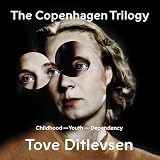
- Audible Audiobook
- Tove Ditlevsen (Author) - Stine Wintlev (Narrator)
- English (Publication Language)
- 01/26/2021 (Publication Date) - Macmillan Audio (Publisher)
Comparison Framework: Ditlevsen’s Childhood vs. Similar Works
When considering Childhood by Tove Ditlevsen, it’s helpful to place it within the broader landscape of autobiographical literature. While many memoirs focus on overcoming adversity or celebrating formative relationships, Ditlevsen’s approach is more analytical and less conventionally cathartic.
| Feature | Childhood by Tove Ditlevsen | A Childhood (Eva Hoffman) | The Glass Castle (Jeannette Walls) |
|---|---|---|---|
| <strong>Primary Focus</strong> | Genesis of artistic identity, internal emotional landscape | Cultural displacement, language acquisition, intellectual growth | Survival, family dysfunction, resilience, finding stability |
| <strong>Tone</strong> | Stark, introspective, precise, unsentimental | Reflective, intellectual, observant | Resilient, often humorous despite hardship, ultimately hopeful |
| <strong>Family Dynamics</strong> | Complex, emotionally distant, source of alienation | Supportive of intellectual pursuits, but often absent | Chaotic, neglectful, but with underlying bonds of loyalty |
| <strong>Authorial Voice</strong> | Emergent poet, keenly observant of self and surroundings | Developing intellectual, analytical | Pragmatic survivor, keenly observant of external circumstances |
| <strong>Reader Takeaway</strong> | Understanding the roots of artistic drive and early alienation | Insight into the process of cultural adaptation and identity formation | Appreciation for resilience and the search for a stable future |
Step-by-Step Reading Plan
To fully appreciate Childhood by Tove Ditlevsen, follow these steps:
1. Begin with the Epigraph: Pay close attention to any introductory quotes or author’s notes, as they often set the tone and thematic expectations.
- What to look for: Clues about the author’s perspective or the central concerns of the memoir.
- Mistake: Skipping the epigraph, potentially missing a key framing device.
2. Establish the Setting: Note Ditlevsen’s descriptions of her Copenhagen neighborhood and home environment.
- What to look for: How the physical space reflects or contrasts with her internal state.
- Mistake: Reading the descriptions passively without connecting them to her emotional experience.
3. Track Key Relationships: Observe Ditlevsen’s interactions with her mother, father, and any siblings or peers.
- What to look for: Patterns of communication (or lack thereof) and the emotional impact of these dynamics.
- Mistake: Focusing only on plot events and overlooking the nuanced interpersonal dynamics.
4. Identify Early Artistic Sensibilities: Note instances where Ditlevsen expresses a fascination with language, poetry, or a unique way of seeing the world.
- What to look for: The earliest signs of her creative impulse and how it functions as a coping mechanism.
- Mistake: Dismissing these as childish musings rather than recognizing them as the seeds of her future career.
5. Analyze Internal Monologue: Pay attention to Ditlevsen’s reflections and inner thoughts, even when they seem contradictory or difficult.
- What to look for: The development of her self-awareness and her internal processing of events.
- Mistake: Expecting a linear, straightforward internal narrative; Ditlevsen’s is often complex and layered.
6. Consider the Unsaid: Ditlevsen is adept at conveying meaning through implication and omission.
- What to look for: What is not explicitly stated but is strongly suggested by the context or Ditlevsen’s reactions.
- Mistake: Taking all statements at face value without considering subtext.
7. Reflect on the Ending: Consider how the memoir concludes and what it suggests about the enduring impact of childhood experiences.
- What to look for: The sense of closure, or lack thereof, and its implications for Ditlevsen’s life and work.
- Mistake: Expecting a neat resolution; Ditlevsen’s endings often open up further questions.
Common Mistakes in Reading Ditlevsen’s Childhood
- Mistake: Expecting a typical coming-of-age narrative with clear resolutions.
- Why it matters: Ditlevsen’s Childhood is more about the formation of the self through persistent conditions than a story of overcoming specific obstacles.
- Fix: Approach the book with an expectation of introspection and psychological exploration rather than a plot-driven arc.
- Mistake: Interpreting the author’s honesty as a lack of emotional depth.
- Why it matters: Her starkness is a stylistic choice that amplifies the emotional weight by avoiding sentimentality.
- Fix: Recognize that the emotional impact is conveyed through precise observation and understatement, not effusive language.
- Mistake: Underestimating the significance of early artistic stirrings.
- Why it matters: Ditlevsen positions her nascent poetic voice as a vital force from a very young age, integral to her survival and identity.
- Fix: Pay close attention to her early engagement with words and imagination as formative elements.
- Mistake: Focusing solely on the negative aspects of her family relationships.
- Why it matters: While often fraught, these relationships are the crucible in which her complex inner world is forged.
- Fix: Analyze the dynamics for their formative influence, acknowledging their role in shaping her unique perspective.
Decision Rules
- If reliability is your top priority for Childhood by Tove Ditlevsen, choose the option with the strongest long-term track record and support.
- If value matters most, compare total ownership cost instead of headline price alone.
- If your use case is specific, prioritize fit-for-purpose features over generic ‘best overall’ claims.
FAQ
- Q: Is Childhood by Tove Ditlevsen a difficult read?
A: It can be challenging due to its unflinching honesty and portrayal of complex family dynamics. However, its literary merit and psychological depth make it a rewarding experience for many readers.
- Q: How does Childhood relate to Tove Ditlevsen’s other autobiographical works?