Gary Soto’s Reflections On Neighborhood Life
Quick Answer
- Core Focus: This collection of essays by Gary Soto chronicles his formative years in a working-class Chicano neighborhood, examining the profound influence of setting on identity and experience.
- Key Strengths: Soto’s writing is characterized by its raw authenticity, vivid sensory detail, and a nuanced portrayal of community life that balances hardship with resilience.
- Audience Fit: Ideal for readers interested in memoir, Chicano literature, and the intricate relationship between environment and self-discovery.
Who This Is For
- Readers seeking authentic and nuanced portrayals of American adolescence and immigrant experiences.
- Those interested in how setting shapes individual identity and community dynamics.
What To Check First
- Author’s Background: Gary Soto’s biography provides essential context for understanding the personal reflections in the book, particularly his upbringing and cultural heritage.
- Memoir Genre Conventions: Familiarity with the memoir form will help in appreciating the subjective nature of the narratives and the author’s selective recollection of events.
- Chicano Literature Context: Understanding this literary tradition offers a framework for interpreting the cultural references, social dynamics, and unique perspectives presented in the essays.
- Soto’s Other Works: Comparing “Living Up The Street” to his poetry or other prose can reveal recurring motifs and thematic threads throughout his literary career.
Step-by-Step Plan: Understanding Living Up The Street by Gary Soto
1. Engage with the Opening Essays:
- Action: Read the initial pieces that establish the neighborhood’s atmosphere and introduce Soto’s early observations.
- What to look for: The grounding of the narrative in specific sensory details (sounds, smells, sights) and the introduction of key relationships.
- Mistake to avoid: Underestimating the importance of these early environmental descriptions; they are foundational to the book’s themes.
2. Identify Recurring Motifs:
- Action: Note instances of poverty, cultural identity, family dynamics, and the search for belonging or escape.
- What to look for: How these motifs are revisited and evolve across different essays, revealing a broader tapestry of experience.
- Mistake to avoid: Treating each essay as an isolated anecdote; their interconnectedness builds a cumulative understanding.
3. Analyze the Narrative Voice and Tone:
- Action: Pay close attention to Soto’s diction, sentence structure, and the emotional tenor of his recollections.
- What to look for: The blend of nostalgia, critical self-awareness, understated humor, and moments of stark realism.
- Mistake to avoid: Assuming the voice is purely objective; it is a highly personal and subjective interpretation of memory.
4. Examine the Role of Setting as a Character:
- Action: Consider how the physical environment of the neighborhood—its streets, homes, and local landmarks—actively shapes the characters and their lives.
- What to look for: Descriptions that imbue the setting with personality and influence the characters’ aspirations, limitations, and daily routines.
- Mistake to avoid: Separating the characters from their environment; the setting is integral to their development and the narrative’s impact.
5. Appreciate the Craft of Micro-Narratives:
- Action: Observe Soto’s ability to distill significant moments and observations into concise, impactful vignettes.
- What to look for: The use of sharp imagery, poignant dialogue, and precise language that captures the essence of an experience.
- Mistake to avoid: Focusing solely on plot progression; the power of these essays lies in the rendering of specific, resonant moments.
Gary Soto’s “Living Up The Street” is a powerful collection of essays that offers a deeply personal and authentic look at his childhood in a working-class Chicano neighborhood. If you’re interested in memoirs that explore the profound influence of environment on identity, this book is a must-read.
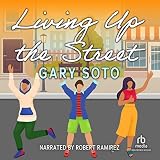
- Audible Audiobook
- Gary Soto (Author) - Robert Ramirez (Narrator)
- English (Publication Language)
- 03/20/2013 (Publication Date) - Recorded Books (Publisher)
6. Consider the Counter-Narrative to Stereotypes:
- Action: Reflect on how Soto’s portrayal challenges common societal assumptions about his background and community.
- What to look for: Depictions of agency, ingenuity, and the complex humanity of individuals living in circumstances often simplified by external narratives.
- Mistake to avoid: Reading the work through a lens of deficit or victimhood; Soto emphasizes resilience and the richness of lived experience.
7. Synthesize Personal Experience with Universal Themes:
- Action: Connect Soto’s specific recollections to broader human experiences of growing up, identity formation, and navigating social landscapes.
- What to look for: How his particular journey resonates with universal aspects of human longing, adaptation, and the search for meaning.
- Mistake to avoid: Limiting the book’s relevance to only those with similar backgrounds; its emotional core is widely accessible.
Living Up The Street by Gary Soto: Navigating Neighborhood Realities
Gary Soto’s collection of essays, “Living Up The Street,” offers a compelling and intimate look at his formative years in a working-class Chicano neighborhood. This is not a broad sociological study, but rather a deeply personal exploration of how the physical and social landscape of his youth imprinted itself upon his developing identity. Soto masterfully uses language to recreate the sensory richness of his environment, from the sounds of the street to the textures of everyday objects. His essays are less about grand events and more about the accumulation of small, telling moments that collectively build a powerful portrait of a specific time and place.
The enduring power of “Living Up The Street” lies in its unflinching authenticity. Soto does not shy away from the economic hardships or the social challenges that defined his upbringing. However, he balances these realities with a profound appreciation for the moments of joy, humor, and deep human connection that sustained him and his community. This nuanced perspective prevents the narratives from becoming solely tales of struggle, instead presenting a more complete and resonant picture of resilience. For instance, his descriptions of childhood games or neighborhood gatherings are imbued with a palpable sense of life and shared experience.
Strengths
- Authentic Voice: Soto’s prose is direct, unpretentious, and deeply personal, offering an unfiltered glimpse into his formative years. This lends a powerful credibility to his recollections.
- Vivid Sensory Detail: The author excels at creating sensory impressions that bring his neighborhood to life. Readers can almost feel the summer heat or hear the specific cadence of street conversations.
- Nuanced Portrayal of Community: The book avoids simplistic portrayals of poverty, instead showcasing the complex web of relationships, support systems, and internal tensions within the community.
Limitations
- Subjectivity of Memory: As a memoir, the work is inherently subjective. While this contributes to its authenticity and emotional resonance, readers seeking purely objective historical accounts may find it less so.
- Episodic Structure: Some essays are more vignette-like than strictly narrative-driven, which may lead to a less propulsive reading experience for those accustomed to traditional plot arcs.
Common Myths About Living Up The Street by Gary Soto
- Myth: The book is solely a lament about poverty and hardship.
- Why it matters: This perspective overlooks the significant emphasis Soto places on resilience, joy, and the resourceful ways individuals and communities navigate difficult circumstances.
- Fix: Actively seek out moments of humor, connection, and strength within the narratives, recognizing that the book celebrates survival and adaptation as much as it acknowledges struggle.
- Myth: Soto’s childhood was devoid of positive influences due to his environment.
- Why it matters: This misinterpretation dismisses the strong familial bonds, friendships, and community networks that Soto depicts as crucial to his development.
- Fix: Pay attention to the descriptions of family members, neighbors, and peer groups, understanding how these relationships provided support and shaped his worldview.
- Myth: The book offers a prescriptive guide to overcoming adversity.
- Why it matters: “Living Up The Street” is primarily a work of reflection and observation, not a self-help manual. Its power lies in its depiction of experience, not in providing solutions.
- Fix: Appreciate the book for its literary and emotional insights, understanding that its value comes from illustrating the complexities of lived experience rather than offering direct advice.
Expert Tips for Engaging with Gary Soto’s Reflections
- Tip 1: Read with an Eye for Sensory Language.
- Action: Actively highlight or note descriptions that appeal to sight, sound, smell, taste, and touch.
- Mistake to avoid: Skimming over descriptive passages; these are the building blocks of Soto’s immersive storytelling and are crucial for understanding the atmosphere he creates.
- Tip 2: Consider the “Why” Behind Small Moments.
- Action: For seemingly minor anecdotes, pause and consider what larger theme or aspect of character development they might represent.
- Mistake to avoid: Dismissing anecdotes as trivial or anecdotal filler; Soto masterfully uses small moments to reveal larger truths about his life and community.
- Tip 3: Connect the Personal to the Universal.
- Action: After reading an essay, reflect on how Soto’s specific experiences might mirror or contrast with universal aspects of adolescence, family life, or social belonging.
- Mistake to avoid: Limiting the book’s relevance solely to those who share similar ethnic or socioeconomic backgrounds; the emotional and thematic core is broadly relatable.
BLOCKQUOTE_0
Comparison Table
| Aspect | “Living Up The Street” by Gary Soto | Generic Memoir | Chicano Literature Anthologies |
|---|---|---|---|
| Primary Focus | Personal formative years in a specific neighborhood | Broad life experiences, often chronological | Diverse voices and themes within the Chicano experience |
| Writing Style | Evocative, sensory, understated humor, authentic voice | Varies widely; can be formal or informal | Diverse, reflecting individual authorial styles |
| Strengths | Deeply personal, nuanced portrayal of environment’s impact, vivid imagery | Can offer broad life lessons or historical context | Showcases cultural richness and variety of perspectives |
| Potential Limitations | Subjectivity of memory, episodic structure | Can lack specificity or unique voice | May require more background context for full appreciation |
| Ideal Reader | Interested in memoir, identity, influence of place | Seeking general life stories or inspiration | Interested in Chicano culture, literature, and social commentary |
Decision Rules for Engaging with Soto’s Work
- If your primary goal is to understand the profound impact of environment on identity formation, “Living Up The Street” is the most direct and impactful choice.
- If you are seeking a broader understanding of the Chicano literary tradition, exploring anthologies that include Soto’s work would be more comprehensive.
- If you prefer a more traditional chronological narrative of a life, other memoirs might be a better fit, though they may lack the specific focus on neighborhood life found here.
FAQ
- Q: Is “Living Up The Street” a novel or a collection of short stories?
- A: It is a collection of autobiographical essays, offering personal reflections on Gary Soto’s childhood and adolescence.
- Q: What is the primary theme explored in “Living Up The Street by Gary Soto”?
- A: The primary theme is the author’s formative experiences growing up in a working-class Chicano neighborhood and how this environment shaped his identity.
- Q: Who would benefit most from reading this book?
- A: Readers interested in memoir, Chicano literature, and the impact of environment on personal development will find this book particularly rewarding.
- Q: Does Soto offer solutions to the challenges he depicts?
- A: The book focuses more on observation and reflection rather than offering prescriptive solutions. The “solution” often lies in the resilience and resourcefulness of the individuals and community depicted.