Michelle Alexander’s The New Jim Crow: Key Insights
The New Jim Crow by Michelle Alexander: Quick Answer
- Core Argument: Michelle Alexander’s The New Jim Crow posits that the U.S. criminal justice system, through mass incarceration, operates as a contemporary system of racial control, mirroring historical Jim Crow laws.
- Key Mechanism: The book details how drug offenses, enforced disproportionately within minority communities, serve as a pretext for stripping rights and establishing a permanent undercaste.
- Impact: It offers a critical lens for understanding persistent racial inequality, social stratification, and the political disenfranchisement of African Americans.
Who This Is For
- Readers seeking an in-depth, evidence-based understanding of systemic racism in the United States, particularly its manifestation within the legal system.
- Individuals interested in tracing the historical evolution of racial control in America, from slavery and Jim Crow to contemporary mass incarceration.
What to Check First
- Alexander’s Central Thesis: Confirm your understanding that the book argues mass incarceration is a deliberate, race-conscious policy, not simply a reactive measure to crime.
- Historical Parallels: Note the specific comparisons Alexander draws between slavery, Jim Crow laws, and the architecture of the current legal framework.
- Legal Mechanisms: Identify the key legal tools and policies Alexander highlights, such as drug laws, sentencing guidelines, and felony disenfranchisement.
- Societal Impact: Recognize the book’s focus on the creation of a racial caste system and its pervasive effects on employment, housing, and civic participation.
- “Colorblind” Critique: Understand Alexander’s argument that seemingly race-neutral policies can produce racially discriminatory outcomes in practice.
Step-by-Step Plan for Understanding The New Jim Crow
1. Establish Historical Context: Begin by understanding the legacy of slavery and Jim Crow laws. What to look for: Alexander’s detailed historical accounts that demonstrate a continuum of racial control. Mistake: Assuming The New Jim Crow is solely about contemporary issues without appreciating its deep historical roots.
2. Analyze the “War on Drugs”: Examine how the “War on Drugs” became the primary engine of mass incarceration. What to look for: Evidence of targeted enforcement and disproportionate impact on Black communities, even when drug use rates are similar across racial groups. Mistake: Accepting the drug war’s stated public safety goals as its sole or primary function.
3. Deconstruct the Legal Architecture: Study the specific legal mechanisms Alexander details. What to look for: Laws and policies that create and sustain the caste system, such as mandatory minimums, racial profiling, and felony disenfranchisement. Mistake: Underestimating the deliberate, legalistic nature of the system Alexander describes.
4. Evaluate the “Colorblind” Facade: Understand how the system operates under the guise of race neutrality. What to look for: Alexander’s critique of how seemingly race-neutral policies can produce racially discriminatory outcomes. Mistake: Accepting claims of colorblindness at face value without critically examining their practical application.
5. Assess the Caste System’s Effects: Comprehend the societal consequences of mass incarceration. What to look for: Alexander’s evidence of how a criminal record functions as a badge of inferiority, limiting access to employment, education, and housing. Mistake: Viewing incarceration solely as a punitive measure without recognizing its role in creating a permanent, marginalized class.
6. Consider the Political Implications: Recognize how the system impacts political power and representation. What to look for: Alexander’s analysis of how felony disenfranchisement removes millions from the electorate. Mistake: Isolating the criminal justice system from its broader political and democratic consequences.
7. Engage with Proposed Solutions: Understand Alexander’s call for fundamental reform. What to look for: The book’s emphasis on ending the drug war and dismantling the legal structures of mass incarceration. Mistake: Focusing only on the problem without considering the scale of reform required.
Michelle Alexander’s seminal work, The New Jim Crow, offers a profound analysis of the U.S. criminal justice system. If you’re looking to understand its core arguments, this book is an essential read.
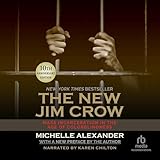
- Audible Audiobook
- Michelle Alexander (Author) - Karen Chilton (Narrator)
- English (Publication Language)
- 04/03/2012 (Publication Date) - Recorded Books (Publisher)
The New Jim Crow by Michelle Alexander: Challenging Assumptions
Common Myths About Mass Incarceration
- Myth 1: Mass incarceration is primarily driven by rising crime rates.
- Why it matters: This assumption frames the issue as a straightforward response to crime, obscuring the role of policy choices.
- Fix: Alexander presents data showing crime rates have fallen significantly in many periods while incarceration rates have soared, indicating policy, not just crime, is the driver. This necessitates a focus on understanding why policies were enacted and their racial implications.
- Myth 2: The “War on Drugs” is a neutral, colorblind effort to combat addiction and crime.
- Why it matters: This belief perpetuates the idea that the system is fair and unbiased.
- Fix: Alexander provides extensive evidence that enforcement practices, sentencing disparities, and the targeting of specific communities reveal a deeply racialized system, even without explicit racial intent. This requires a critical examination of enforcement patterns.
- Myth 3: Once released, individuals with criminal records are free to reintegrate into society.
- Why it matters: This overlooks the permanent legal and social stigmas associated with felony convictions.
- Fix: The book details how laws and regulations systematically deny formerly incarcerated individuals basic rights and opportunities, creating a permanent undercaste. Understanding these legal barriers is crucial for effective advocacy and policy change.
Expert Tips for Engaging with The New Jim Crow
- Tip 1: Focus on the legal mechanisms Alexander describes as the foundation of the new caste system.
- Actionable Step: Identify and list at least three specific laws or legal practices (e.g., mandatory minimums, felony disenfranchisement) that Alexander argues perpetuate racial control.
- Common Mistake to Avoid: Treating the book as a purely sociological or historical account without deeply engaging with its legal analysis.
- Tip 2: Connect Alexander’s analysis to contemporary events and policies.
- Actionable Step: Research current debates around policing, sentencing reform, or drug policy and analyze them through the lens of The New Jim Crow.
- Common Mistake to Avoid: Reading the book as a historical artifact rather than a relevant critique of ongoing systems.
- Tip 3: Recognize the scale of the problem as presented by Alexander.
- Actionable Step: Consider the implications of Alexander’s argument that the system is designed to control, not simply punish, a specific population.
- Common Mistake to Avoid: Underestimating the systemic nature of the problem and seeking only superficial solutions.
BLOCKQUOTE_0
The New Jim Crow by Michelle Alexander: A Societal Analysis
This section examines the broader societal implications and structural critiques presented in Alexander’s work, offering a nuanced perspective beyond surface-level interpretations.
| Aspect of Analysis | Alexander’s Focus | Reader Takeaway | Common Misinterpretation |
|---|---|---|---|
| <strong>Racial Caste System</strong> | How legal status (felon) functions as a new racial identifier. | Understand that legal status, not just race, creates a permanent underclass. | Believing the system is solely about individual guilt and punishment. |
| <strong>”Colorblind” Ideology</strong> | How the pretense of colorblindness masks racialized outcomes. | Critically assess policies for their practical, discriminatory effects. | Accepting official justifications for policies without scrutinizing disparities. |
| <strong>Political Disenfranchisement</strong> | The impact of felony disenfranchisement on democratic participation. | Recognize the systematic removal of a significant population from the electorate. | Viewing voting rights solely as a matter of individual responsibility, not systemic exclusion. |
Frequently Asked Questions
- Q1: Is The New Jim Crow only about race?
A1: While race is central to Alexander’s argument, the book also analyzes class, poverty, and the intersection of these factors with the criminal justice system. It demonstrates how legal status creates a new, race-based caste.
- Q2: Does Alexander deny that crime exists or that people commit crimes?
A2: No. Alexander acknowledges that crime occurs but argues that the response to crime, particularly through the “War on Drugs” and mass incarceration, has been deliberately crafted and disproportionately targets Black communities, functioning as a system of racial control.
- Q3: What is the most significant takeaway from The New Jim Crow?
A3: The most significant takeaway is that the U.S. has not ended racial caste, but merely redesigned it. The current system of mass incarceration, Alexander argues, serves a similar function to Jim Crow laws in maintaining a racial hierarchy and controlling Black populations.
- Q4: How does Alexander suggest we address the issues raised in The New Jim Crow?
A4: Alexander calls for a fundamental dismantling of the current system, including ending the “War on Drugs,” reforming sentencing laws, and restoring rights to formerly incarcerated individuals. She advocates for a shift in public consciousness and policy toward genuine racial justice.
Decision Rules
- If reliability is your top priority for The New Jim Crow by Michelle Alexander, choose the option with the strongest long-term track record and support.
- If value matters most, compare total ownership cost instead of headline price alone.
- If your use case is specific, prioritize fit-for-purpose features over generic ‘best overall’ claims.