Mark Twain’s The Innocents Abroad: A Humorous Travelogue
This guide provides a critical examination of Mark Twain’s The Innocents Abroad, focusing on its literary significance, potential reader challenges, and strategies for engaging with its unique brand of satire. It is designed for readers interested in classic American literature, satire, and the evolution of travel writing, particularly those who appreciate a contrarian perspective on well-trodden cultural narratives.
The Innocents Abroad by Mark Twain: Quick Answer
- The Innocents Abroad is a foundational text in American travel literature, renowned for its sharp satire and critique of both European cultural pretensions and American tourist behavior.
- While its humor and social commentary remain potent, modern readers should be aware of dated perspectives and the necessity of historical context to fully grasp Twain’s intent.
- This book is recommended for readers who enjoy irreverent humor, insightful observations on cultural encounters, and a challenge to conventional views of travel and history.
Who This Is For
- Readers interested in the development of Mark Twain’s distinctive literary voice and his early career as a social commentator.
- Individuals who appreciate satirical writing that dissects cultural differences, the romanticization of travel, and common human foibles.
For a foundational text in American travel literature, renowned for its sharp satire and critique, look no further than Mark Twain’s classic.
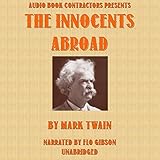
- Audible Audiobook
- Mark Twain (Author) - Flo Gibson (Narrator)
- English (Publication Language)
- 12/30/2016 (Publication Date) - Audio Book Contractors, LLC (Publisher)
What to Check First
To maximize your understanding and appreciation of The Innocents Abroad, consider these points before commencing your reading:
- Publication Context: Published in 1869, the book reflects mid-19th-century American viewpoints on Europe and the Holy Land. Understanding this historical distance is crucial for interpreting Twain’s humor and critiques accurately.
- Twain’s Satirical Persona: Twain adopts the persona of an unsophisticated, yet acutely observant, American traveler. This “innocent” perspective is a deliberate tool used to satirize European traditions and the perceived gullibility of his fellow tourists. Recognize that his observations are often exaggerated for comedic effect.
- Episodic Narrative Structure: The book is composed of a series of letters and essays rather than a continuous plot. Its strength lies in these distinct, observational vignettes, each offering a specific comedic or critical focus.
- Potential for Dated Sensibilities: Some of Twain’s commentary on religion, culture, and specific nationalities may be perceived as insensitive or prejudiced by contemporary standards. Approach these passages with an awareness of their historical origins and Twain’s satirical intent.
Step-by-Step Plan for Reading The Innocents Abroad
A structured reading approach can significantly enhance comprehension and appreciation of Twain’s work.
1. Review Introductory Material: Begin by reading any provided preface or introduction. This often supplies essential historical context and insights into Twain’s satirical intent, which is vital for understanding his approach to the material.
- What to look for: Clues regarding Twain’s intended audience and his specific use of irony.
- Mistake to avoid: Skipping introductory sections, which can lead to misinterpreting Twain’s humor as straightforward commentary and missing the foundational context.
2. Engage with European Excursions: Focus on Twain’s descriptions of popular European destinations like Italy, France, and Switzerland. Note how he contrasts American expectations with the realities of these sites and their inhabitants.
- What to look for: Twain’s witty comparisons and his critique of romanticized notions of European culture. His commentary on Italian art, for instance, often highlights perceived decay and superficial tourist appreciation, a prime example of his contrarian gaze.
- Mistake to avoid: Treating his descriptions of historical sites and artworks as objective critiques rather than integral parts of his comedic performance and satirical framing.
3. Analyze Holy Land Observations: The latter portion of the book, detailing the journey through the Holy Land, is particularly rich for Twain’s satire. Observe his irreverent treatment of religious sites and the pilgrims.
- What to look for: Twain’s questioning of accepted narratives and his tendency to find the mundane or absurd in places of supposed spiritual significance. His skepticism regarding the authenticity of relics is a prime example of his challenge to unquestioning faith.
- Mistake to avoid: Expecting a reverent or devotional tone; Twain deliberately subverts these expectations to provoke thought and laughter.
4. Identify Recurring Satirical Targets: Note the consistent themes Twain satirizes, such as American provincialism, the pretentiousness of tourists, the commercialization of culture, and religious dogma.
- What to look for: Patterns in Twain’s humor that reveal his core critiques and his underlying skepticism toward established institutions and human behavior.
- Mistake to avoid: Focusing on individual jokes without recognizing the larger satirical framework and the interconnectedness of his targets.
5. Recognize the “Uncritical Reception” Failure Mode: A common pitfall for readers is accepting Twain’s observations at face value, failing to recognize the satirical intent or historical distance. This can inadvertently lead the reader to adopt or reinforce outdated stereotypes.
- What to look for: Moments where Twain’s humor relies on stereotypes or potentially offensive generalizations. Consider whether the humor targets the subject or the reader’s potential assumptions about the subject.
- Mistake to avoid: Believing Twain’s humorous exaggerations represent objective truths about the cultures or people he describes, thereby missing the critical distance Twain establishes.
6. Appreciate Twain’s Developing Voice: Pay attention to how Twain cultivates his distinctive narrative voice—a blend of naive observation and sharp wit. This voice is a significant factor in the book’s enduring legacy and its ability to challenge readers.
- What to look for: The seamless integration of humor and critique, making potentially dry subjects engaging and thought-provoking.
- Mistake to avoid: Overlooking the craft of the writing and the intentional construction of the narrative voice in favor of simply consuming the jokes.
7. Consult External Analysis (Optional): After reading, consider consulting literary criticism or historical analyses of The Innocents Abroad. This can offer deeper insights into the book’s significance and the nuances of its reception.
- What to look for: Scholarly interpretations that contextualize Twain’s work and address its complexities, particularly its contrarian stance.
- Mistake to avoid: Relying solely on personal interpretation without considering the broader literary conversation and the historical reception of the book.
Common Mistakes
- Mistake: Treating Twain’s humor as direct, literal commentary.
- Why it matters: This leads to misinterpreting his satire as genuine criticism or endorsement, potentially causing offense or misunderstanding and missing the point of his ironic detachment.
- Fix: Always consider the possibility of irony, exaggeration, and a deliberate persona. Ask: “Is Twain making fun of this, or is he genuinely complaining?”
- Mistake: Expecting modern sensibilities in historical cultural commentary.
- Why it matters: The book reflects 19th-century American attitudes. Judging it solely by 21st-century standards risks anachronism and misses the historical value of Twain’s observations as a product of his time.
- Fix: Read with awareness of the time period. Note where Twain’s views diverge from contemporary norms, understanding this as a reflection of historical context rather than a personal failing for modern readers.
- Mistake: Overlooking the narrative arc of Twain’s persona.
- Why it matters: Twain crafts a specific character—the “innocent”—whose journey is as much about his own evolving understanding (or deliberate misunderstanding) as it is about the places he visits, offering a layered critique.
- Fix: Track how the narrator’s voice and perspective shift, or remain comically consistent, throughout the journey, noting the development of his contrarian viewpoint.
- Mistake: Focusing solely on the humor without appreciating the underlying social critique.
- Why it matters: While undeniably funny, the book’s lasting impact comes from its sharp observations on human nature, cultural assumptions, and the tourist experience, particularly its questioning of widely held beliefs.
- Fix: After a good laugh, consider why Twain found something funny and what broader point he might be making about society, human behavior, or the nature of “innocence” abroad.
The Innocents Abroad by Mark Twain: A Deeper Look
Mark Twain’s early travelogue, The Innocents Abroad, stands as a landmark in American literature, celebrated for its humor and its audacious dissection of cultural encounters. The book chronicles the “Great Pilgrimage” of a group of American tourists across Europe and into the Holy Land, offering a counterpoint to the romanticized Grand Tour narratives prevalent at the time. Twain, writing as a correspondent for the Sacramento Daily Union, adopted a persona of an unsophisticated, yet keenly observant, American who is both awed and bewildered by the Old World, deliberately challenging the prevailing romantic ideals.
The enduring strength of The Innocents Abroad by Mark Twain lies in its sustained satirical voice. Twain masterfully uses irony to expose the pretensions of both European aristocracy and his fellow American travelers. He mocks the uncritical adoration of ancient ruins, the perceived vanity of European art, and the superficiality of many tourists who sought to mimic sophistication without genuine understanding. For instance, his extended descriptions of visits to the Coliseum or the Chamber of Horrors serve not merely as historical accounts but as opportunities for biting commentary on how history and culture are consumed and commodified. The narrative’s episodic nature, drawn from his dispatches, lends itself to these focused, often hilarious, observations, each contributing to his contrarian worldview.
However, the book’s historical context also presents challenges for contemporary readers. Twain’s humor, while groundbreaking for its era, can sometimes border on the insensitive by modern standards. His observations about certain nationalities and religious practices, though intended satirically, may strike some readers as prejudiced or overly simplistic. This is particularly evident in his treatment of the Holy Land, where his skepticism and irreverence can be jarring. The narrative’s pacing can also feel leisurely, reflecting the style of newspaper correspondence from the period, which might test the patience of readers accustomed to more dynamic storytelling.
Despite these potential challenges, The Innocents Abroad remains a vital work. It offers a unique lens through which to
Quick Comparison
| Option | Best for | Pros | Watch out |
|---|---|---|---|
| The Innocents Abroad by Mark Twain Quick Answer | General use | The Innocents Abroad is a foundational text in American travel literature,… | Mistake to avoid: Skipping introductory sections, which can lead to misinterp… |
| Who This Is For | General use | While its humor and social commentary remain potent, modern readers should be… | Mistake to avoid: Treating his descriptions of historical sites and artworks… |
| What to Check First | General use | This book is recommended for readers who enjoy irreverent humor, insightful o… | Mistake to avoid: Expecting a reverent or devotional tone; Twain deliberately… |
| Step-by-Step Plan for Reading The Innocents Abroad | General use | Readers interested in the development of Mark Twain’s distinctive literary vo… | Mistake to avoid: Focusing on individual jokes without recognizing the larger… |
Decision Rules
- If reliability is your top priority for The Innocents Abroad by Mark Twain, choose the option with the strongest long-term track record and support.
- If value matters most, compare total ownership cost instead of headline price alone.
- If your use case is specific, prioritize fit-for-purpose features over generic ‘best overall’ claims.