Los Angeles Stories: Understanding John Fante’s Ask the Dust
This guide offers a critical examination of John Fante’s Ask the Dust, designed for readers seeking to understand its literary significance and potential challenges. It focuses on thematic depth, narrative approach, and audience suitability, providing practical insights for engaging with this seminal work.
Who This Is For
- Readers interested in the raw, unvarnished portrayal of 1930s Los Angeles: This novel is essential for those who seek literature that captures the desperation, ambition, and often harsh realities of immigrant life and artistic struggle in early LA.
- Those who appreciate complex, flawed protagonists and confessional prose: Ask the Dust is driven by Arturo Bandini’s intense internal monologue and his often self-destructive behavior, offering a challenging but compelling character study.
What to Check First
Before engaging with Ask the Dust, consider these critical elements:
- Narrative Voice and Protagonist: Arturo Bandini is a deeply flawed and often unlikeable narrator. His perspective is subjective, unreliable, and can be difficult to connect with due to his arrogance, insecurity, and misogynistic tendencies.
- Themes of Race and Identity: The novel directly confronts issues of ethnicity, prejudice, and the immigrant experience, particularly through Bandini’s Italian-American identity and his interactions with Mexican characters. These depictions are historically significant but can be jarring for modern readers.
- Depiction of Relationships: The romantic and sexual relationships are often fraught with power imbalances, manipulation, and desperation, reflecting the era and Bandini’s character. These dynamics require careful, critical consideration.
- Literary Style: Fante’s prose is direct, visceral, and poetic, but also deliberately crude and unvarnished. Readers accustomed to more polished or sentimental narratives may find it challenging.
Step-by-Step Plan for Understanding Ask the Dust by John Fante
Navigating Ask the Dust effectively requires a deliberate approach to its challenging content and style.
For those seeking to delve into the raw, unvarnished world of 1930s Los Angeles through literature, John Fante’s seminal novel, Ask the Dust, is an essential read. This powerful work captures the desperation, ambition, and often harsh realities of immigrant life and artistic struggle.
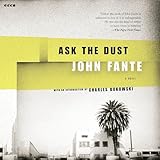
- Audible Audiobook
- John Fante (Author) - Roger Wayne (Narrator)
- English (Publication Language)
- 06/16/2026 (Publication Date) - Ecco (Publisher)
1. Acknowledge the Protagonist’s Flaws: Recognize that Arturo Bandini is not an aspirational figure to be emulated.
- Action: Pay close attention to Bandini’s internal monologues, his justifications for his actions, and his often contradictory thoughts about women and his own worth.
- Mistake: Expecting Bandini to be a sympathetic hero or a reliable narrator will lead to frustration and a misinterpretation of the novel’s intent.
2. Contextualize the Historical Setting: Understand the novel as a product of its time, the 1930s Dust Bowl era in Los Angeles.
- Action: Note the economic hardship, the pervasive social prejudices, and the cultural anxieties that shape the characters’ lives and interactions.
- Mistake: Judging the characters’ attitudes and the novel’s social commentary solely through a 21st-century lens without acknowledging the historical context.
3. Examine Fante’s Prose Style: Appreciate the raw, unsparing nature of Fante’s writing as a deliberate artistic choice.
- Action: Observe the visceral descriptions, the directness of the language, and the way Fante uses dialogue to reveal character and advance the plot.
- Mistake: Dismissing the writing as merely crude or vulgar without recognizing its deliberate artistic intent and its power to evoke a specific atmosphere.
4. Analyze the Theme of Artistic Struggle: Consider Bandini’s ambition as a writer and the obstacles he faces.
- Action: Track Bandini’s attempts to write, his aspirations for literary success, and how his personal life and environment influence his creative process.
- Mistake: Overlooking the novel’s exploration of the artist’s journey, focusing solely on Bandini’s personal failings without seeing the broader commentary.
5. Deconstruct the Depiction of Relationships: Engage critically with the complex and often unhealthy dynamics between characters.
- Action: Observe the power struggles, the declarations of love intertwined with perceived betrayal, and the desperation that drives the characters’ romantic entanglements.
- Mistake: Accepting the relationships at face value without recognizing the underlying psychological and social forces at play, such as Bandini’s own insecurities.
6. Identify Los Angeles as a Character: Recognize how the city itself shapes the narrative and the characters’ destinies.
- Action: Notice the descriptions of the landscape, the specific locations, and the pervasive atmosphere of both opportunity and decay.
- Mistake: Reading Ask the Dust as a generic story that happens to be set in Los Angeles, rather than understanding the city’s integral role in shaping the characters’ struggles and aspirations.
Ask The Dust by John Fante: Common Myths and Misconceptions
- Myth: Ask the Dust is a straightforward rags-to-riches story of an aspiring writer.
- Why it matters: This assumption leads to disappointment as the novel is far more complex. Arturo Bandini is a deeply flawed protagonist whose journey is marked by self-sabotage and emotional turmoil, not simple triumph.
- Correction: The novel is a raw, often brutal, exploration of artistic ambition intertwined with personal failure and the harsh realities of poverty and identity in 1930s Los Angeles. Its strength lies in its unflinching honesty and psychological depth, not in a conventional narrative arc.
- Myth: The novel’s controversial depictions of women and ethnicity are simply a reflection of Fante’s personal biases.
- Why it matters: While Fante’s own life experiences undoubtedly informed the novel, attributing all characterizations solely to the author risks flattening the literary analysis and ignoring the novel’s artistic purpose.
- Correction: Fante uses these elements to explore the psychological landscape of his protagonist and the social dynamics of the era. Bandini’s prejudiced views are a facet of his character and the societal norms he navigates, serving to highlight the novel’s themes of alienation and self-deception rather than endorsing those views.
- Myth: The prose is too crude and difficult to appreciate artistically.
- Why it matters: This can deter readers from experiencing Fante’s powerful and unique literary voice.
- Correction: Fante’s direct, unvarnished language is a deliberate stylistic choice that lends authenticity and visceral impact to the narrative. It mirrors the harshness of Bandini’s world and his internal state, creating a powerful, albeit challenging, literary experience that is integral to the novel’s impact.
Expert Tips for Reading Ask the Dust
- Tip 1: Embrace the Unreliability. View Arturo Bandini’s narration as a window into a troubled psyche, not as objective truth.
- Actionable Step: Actively question Bandini’s motivations and interpretations of events. Look for contradictions between his internal thoughts and his external actions.
- Common Mistake to Avoid: Accepting Bandini’s self-assessments or his descriptions of others at face value, which can lead to a misinterpretation of the novel’s thematic complexity and Fante’s artistic intent.
- Tip 2: Focus on the Atmosphere and Setting. Let the vivid descriptions of 1930s Los Angeles immerse you in the novel’s world.
- Actionable Step: Pay close attention to Fante’s sensory details – the heat, the dust, the smells, the sounds of the city – and how they contribute to the characters’ moods and experiences.
- Common Mistake to Avoid: Skimming over descriptive passages, thereby missing the crucial atmospheric elements that are as much a character as the people within the story and contribute significantly to the novel’s impact.
- Tip 3: Consider the Novel’s Place in Literary History. Understand Ask the Dust as a foundational text for post-war American literature, particularly for its raw realism and introspective focus.
- Actionable Step: Research Fante’s influences and the literary movements that followed his work. Compare its themes and style to other writers who depict urban struggles or artistic ambition, such as Charles Bukowski or early works by William Faulkner.
- Common Mistake to Avoid: Reading the novel in isolation, without appreciating its impact on subsequent generations of writers or its role in shaping the literary landscape of American realism.
Decision Criterion for Ask The Dust by John Fante
When considering Ask the Dust by John Fante, a key decision criterion is your tolerance for a deeply unreliable and often unsympathetic protagonist.
- If protagonist sympathy is essential: If you require a protagonist who is consistently likable or aspirational, Ask the Dust may not be the right choice. Arturo Bandini’s flaws are central to the narrative, and his unreliability is a deliberate feature.
- If character complexity and raw realism are valued: If you are interested in exploring the darker aspects of human nature, artistic struggle, and societal pressures through a complex, flawed character, then Ask the Dust offers a powerful and rewarding experience.
Literary Elements Comparison
| Element | Ask The Dust by John Fante | Comparison Work 1 (e.g., <em>The Great Gatsby</em>) | Comparison Work 2 (e.g., <em>Native Son</em>) |
|---|---|---|---|
| <strong>Protagonist Type</strong> | Unreliable, self-sabotaging artist | Charismatic, yet morally ambiguous social climber | Systemically oppressed, driven by circumstance |
| <strong>Narrative Style</strong> | Visceral, confessional, raw | Lyrical, observational, detached | Grim, stark, immediate |
| <strong>Setting’s Role</strong> | A character of desperation and false promise | A symbol of wealth, illusion, and decay | A prison of social injustice and racial prejudice |
| <strong>Thematic Focus</strong> | Artistic ambition, identity, alienation | The American Dream, class, illusion vs. reality | Racism, systemic oppression, morality |
Decision Rules
- If reliability is your top priority for Ask The Dust by John Fante, choose the option with the strongest long-term track record and support.
- If value matters most, compare total ownership cost instead of headline price alone.
- If your use case is specific, prioritize fit-for-purpose features over generic ‘best overall’ claims.
FAQ
- Q: Is Ask the Dust suitable for a reader who prefers optimistic stories?
- A: No. Ask the Dust is a starkly realistic novel that often portrays