Philosophy of History: Collingwood’s Key Concepts
The Idea of History by R. G. Collingwood: Core Concepts
- R. G. Collingwood’s philosophy of history, as presented in The Idea of History, posits that historical understanding is achieved through the historian’s imaginative re-enactment of past thought processes.
- This approach prioritizes the internal logic and subjective comprehension of past actors’ intentions over purely empirical observation.
- Key concepts include absolute and relative presuppositions, and history as a distinct form of scientific inquiry focused on the mind.
Who This Is For
- Academics and students of philosophy, historiography, and intellectual history seeking to engage with Collingwood’s foundational work.
- Researchers interested in alternative methodologies to positivist history, particularly those focusing on the internal logic of past actions.
What to Check First
- Collingwood’s definition of history: Does his emphasis on “re-enactment of past thought” align with your expectations for historical understanding?
- The role of the historian’s mind: Evaluate how Collingwood’s framework addresses the potential for subjectivity and bias in historical accounts.
- The concept of ‘absolute presuppositions’: Assess the clarity and practical applicability of these foundational, unquestioned beliefs in historical analysis.
- The distinction between history and natural science: Understand how Collingwood frames history as a unique scientific discipline focused on the mind rather than external nature.
The Idea of History by R. G. Collingwood: Core Principles
R. G. Collingwood, in his seminal work The Idea of History, articulates a philosophy that fundamentally reframes historical understanding. He argues against a purely empirical or scientific model of history, proposing instead that history is the re-enactment of past thought within the historian’s own mind. This perspective posits that understanding historical events requires grasping the thoughts, intentions, and reasoning of the historical actors involved.
Collingwood distinguishes between two crucial types of presuppositions that underpin human thought and action:
- Absolute Presuppositions: These are foundational beliefs that a community or an era takes for granted, operating as unquestioned axioms. They cannot be proven or disproven within their own framework and form the bedrock of a civilization’s understanding and actions. For instance, the belief in the existence of an external, material world serves as an absolute presupposition for much of modern scientific endeavor.
- Relative Presuppositions: These are beliefs that are considered true or false within a specific system of thought or a particular inquiry. They are subject to verification or falsification through evidence and logical argument.
For a deeper dive into these foundational ideas, R. G. Collingwood’s seminal work, The Idea of History, is essential reading.
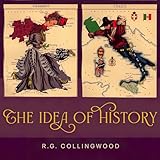
- Audible Audiobook
- R.G. Collingwood (Author) - Dennis Rowley (Narrator)
- English (Publication Language)
- 10/31/2023 (Publication Date) - Mockingbird Press (Publisher)
Collingwood contends that the historian’s primary task is to uncover these presuppositions, particularly the absolute ones, as they are essential for explaining the underlying logic of past actions and events. He famously articulated this, stating:
BLOCKQUOTE_0
This active inquiry involves a process of re-enactment, where the historian imaginatively reconstructs the past by thinking the thoughts of those who lived it. This is not merely an act of empathy or sympathy, but a rigorous, logical, and critical process aimed at understanding the internal coherence of past actions and decisions.
Revisiting The Idea of History by R. G. Collingwood
Collingwood’s perspective offers a potent counterpoint to more positivist approaches that seek objective, external verification of historical facts. He asserts that history is indeed a science, but one that diverges from the natural sciences. Natural sciences investigate the workings of nature, which are external to the observer. History, by contrast, studies the workings of the human mind, which can be re-enacted internally by the historian.
A critical aspect of Collingwood’s theory is the recognition that historical knowledge is not static. It evolves as new evidence is uncovered and as the historian’s own understanding and presuppositions shift. This dynamic nature is a strength, allowing for continuous refinement of historical narratives. However, it also raises significant questions regarding the potential for bias and the subjective interpretation of evidence.
Step-by-Step Plan: Applying Collingwood’s Method
Implementing Collingwood’s philosophy of history requires a specific methodological approach focused on understanding past thought processes.
1. Formulate a Historical Question: Begin by posing a clear question that probes the motivations, intentions, or reasoning behind past actions or events.
- Action: Define a research question focused on “why” or “how” rather than solely “what.”
- What to look for: A question that seeks to understand the underlying cognitive processes that led to a historical outcome.
- Mistake: Posing a question answerable solely by factual recall without delving into underlying cognitive processes.
2. Gather Relevant Evidence: Collect primary and secondary sources that can shed light on the mental states, beliefs, and presuppositions of historical actors.
- Action: Compile a comprehensive set of documents, artifacts, and accounts relevant to the historical actors and their context.
- What to look for: Evidence that provides insight into past thought processes, intentions, or underlying assumptions, such as personal letters, diaries, speeches, or legal arguments.
- Mistake: Relying exclusively on factual chronologies without actively seeking evidence of the mental states or presuppositions of the individuals involved.
3. Hypothesize Absolute Presuppositions: Propose the fundamental, unstated beliefs that likely underpinned the actions or decisions in question.
- Action: Identify and articulate the foundational, taken-for-granted beliefs that appear to inform the historical context.
- What to look for: Underlying assumptions that logically explain the decision-making processes, even if these assumptions were not explicitly articulated by the historical actors.
- Mistake: Confusing absolute presuppositions, which are foundational and unquestioned, with temporary opinions or relative beliefs that are subject to debate.
4. Re-enact Past Thought: Engage in a process of mental reconstruction, attempting to think the thoughts of the historical actors, informed by their hypothesized presuppositions.
- Action: Mentally reconstruct the chain of reasoning that an historical actor might have followed.
- What to look for: A coherent logical progression of thought that plausibly leads to the observed historical actions and outcomes, based on the hypothesized presuppositions.
- Mistake: Projecting modern assumptions, values, or cognitive frameworks onto historical actors, thereby anachronistically interpreting their motivations.
5. Test the Reconstruction Against Evidence: Critically evaluate whether the re-enacted thought process logically and comprehensively explains the available historical evidence.
- Action: Compare the reconstructed thought process with all relevant historical data.
- What to look for: Consistency and explanatory power between the reconstructed thought process and the verifiable facts of the historical record.
- Mistake: Forcing the historical evidence to fit a pre-conceived mental reconstruction, rather than allowing the evidence to shape the understanding.
6. Refine and Iterate: Adjust the hypothesis and the re-enactment based on how well it accounts for the evidence and resolves inconsistencies.
- Action: Revise the hypothesized presuppositions and the re-enactment process as needed.
- What to look for: A progressively clearer, more coherent, and more comprehensive understanding of the past event or action.
- Mistake: Concluding the inquiry prematurely once an initial explanation is formulated, rather than pursuing deeper logical coherence and explanatory depth.
Common Mistakes
- Mistake: Treating history as a mere collection of objective facts.
- Why it matters: This approach overlooks Collingwood’s central argument that history is fundamentally about understanding the subjective thought processes that drive events.
- Fix: Shift focus from simply recording events to exploring the motivations, beliefs, and intentions behind them, using evidence to reconstruct past reasoning.
- Mistake: Confusing re-enactment with simple empathy or sympathy.
- Why it matters: Re-enactment is a rigorous intellectual and logical process of reconstructing past reasoning, not merely an emotional connection to historical figures.
- Fix: Emphasize the critical and analytical reconstruction of past thought patterns, requiring logical coherence and evidential support.
- Mistake: Failing to distinguish between absolute and relative presuppositions.
- Why it matters: Misidentifying the foundational beliefs of a historical context can lead to an incomplete or inaccurate understanding of the underlying logic of actions.
- Fix: Carefully analyze whether a belief is foundational and taken for granted within a system (absolute) or if it is a proposition subject to verification or falsification (relative).
- Mistake: Assuming historical objectivity is achieved through emotional detachment.
- Why it matters: Collingwood argues that genuine historical understanding requires active engagement and subjective re-enactment, not passive observation.
- Fix: Embrace the active role of the historian in intellectually reconstructing past thought processes, with objectivity derived from the logical fidelity to evidence.
Expert Tips
- Tip: When analyzing historical actors, prioritize identifying their “absolute presuppositions” as the bedrock of their worldview.
- Actionable Step: Look for recurring, unquestioned assumptions in their writings or actions that appear to shape their fundamental understanding of reality. For example, in analyzing the Enlightenment, consider the absolute presupposition of human reason’s capacity to discover truth.
- Common Mistake to Avoid: Mistaking temporary opinions or specific beliefs for absolute presuppositions; for instance, assuming a specific political stance is an absolute presupposition rather than a relative belief or policy.
- Tip: Understand that the historian’s own “absolute presuppositions” are integral to the re-enactment process.
- Actionable Step: Be transparent about your own foundational beliefs that might influence your interpretation, and critically examine how they shape your reconstruction of the past. For example, if you hold a materialist worldview, acknowledge how this might affect your interpretation of religious motivations.
- Common Mistake to Avoid: Believing your re-enactment is purely objective and free from your own presuppositions, leading to an unacknowledged imposition of modern frameworks onto the past.
- Tip: The “scissors-and-paste” method of historical writing is the antithesis of Collingwood’s approach.
- Actionable Step: Focus on constructing a narrative that explains the logic of past events through the re-enactment of thought, rather than merely compiling facts from sources. For instance, instead of just stating that a war occurred, explain the thought processes that led to its initiation.
- Common Mistake to Avoid: Simply summarizing or quoting sources without demonstrating the internal thought processes that connect them or explain the events they describe.
Quick Comparison
| Option | Best for | Pros | Watch out |
|---|---|---|---|
| The Idea of History by R G Collingwood Core Concepts | General use | R. G. Collingwood’s philosophy of history, as presented in *The Idea of Histo… | Mistake: Posing a question answerable solely by factual recall without delvin… |
| Who This Is For | General use | This approach prioritizes the internal logic and subjective comprehension of… | Mistake: Relying exclusively on factual chronologies without actively seeking… |
| What to Check First | General use | Key concepts include absolute and relative presuppositions, and history as a… | Mistake: Confusing absolute presuppositions, which are foundational and unque… |
| The Idea of History by R G Collingwood Core Principles | General use | Academics and students of philosophy, historiography, and intellectual histor… | Mistake: Projecting modern assumptions, values, or cognitive frameworks onto… |
Decision Rules
- If reliability is your top priority for The Idea of History by R. G. Collingwood, choose the option with the strongest long-term track record and support.
- If value matters most, compare total ownership cost instead of headline price alone.
- If your use case is specific, prioritize fit-for-purpose features over generic ‘best overall’ claims.
FAQ
- Q: Is Collingwood’s philosophy of history universally applicable to all periods and cultures?
- A: Collingwood’s method is most directly applicable to periods where sufficient textual and documentary evidence exists to reconstruct past thought. Its utility may be significantly constrained for pre-literate societies or eras with sparse records of individual reasoning.
- Q: How does Collingwood’s view of history fundamentally differ from historical positivism?
- A: Historical positivism aims to discover objective, observable facts and universal laws, mirroring the natural sciences. Collingwood, conversely, posits that history is the science of the mind, achieved through the subjective re-enactment of past thought, emphasizing internal logic over external verification.
- Q: Can historical accounts be considered ‘objective’ if they rely on the historian’s subjective re-enactment of past thought?
- A: Collingwood would argue that objectivity in history is achieved through the logical coherence and explanatory power of the re-enactment, which can be tested against the available evidence. The accuracy lies in the fidelity of the reconstruction to the historical record, not in the historian’s detachment.
- Q: What is considered a primary limitation of Collingwood’s approach to history?
- A: A significant limitation is the potential for inherent subjectivity and the difficulty in definitively verifying the accuracy of re-enacted thought processes, especially when dealing with complex, inarticulate, or poorly documented historical actors.
Contrarian Viewpoint: The Limits of Re-enactment
While R. G. Collingwood’s philosophy of history offers a compelling alternative to purely empirical methods, its reliance on the re-enactment of past thought presents considerable challenges. The assertion that history is fundamentally the re-enactment of past thinking processes, while intellectually stimulating, often founders on practical implementation and the inherent limitations of historical evidence.
The core difficulty lies in the claim that one can truly “re-enact” another’s thought. Our access to the past is mediated by imperfect records, biased accounts, and the vast gulf of experience that separates us from historical actors. To claim a definitive reconstruction of past thought risks imposing present-day conceptual frameworks onto the past, a form of anachronism that Collingwood himself would likely critique. The very act of re-enactment is an interpretation, shaped by the historian’s own absolute presuppositions, which are themselves subject to change and debate.
Furthermore, Collingwood’s emphasis on “absolute presuppositions” can be problematic. While the concept of foundational beliefs is useful, definitively identifying and isolating these ‘absolute’ presuppositions for past societies is a complex and often speculative endeavor. What appears absolute from one perspective might be relative from another, or simply a forgotten detail of everyday life. This can lead to a circularity where the historian assumes the very presuppositions they are trying to prove.
A decision criterion for engaging with The Idea of History by R. G. Collingwood is the availability and nature of primary source material. If the historical period or subject under study is rich in personal correspondence, diaries, philosophical tracts, or legal documents that reveal explicit reasoning and argumentation, Collingwood’s method may yield richer insights. However, for periods dominated by archaeological evidence, oral traditions, or sparse written records, the method’s utility is significantly constrained, potentially leading to speculative rather than demonstrable historical understanding. The contrarian perspective suggests that while Collingwood’s ideas are valuable for stimulating critical thought about historical methodology, their practical application requires extreme caution and a clear acknowledgment of their inherent limitations.