Jon Fosse’s ‘A Shining’: A Literary Analysis
This analysis examines Jon Fosse’s novella ‘A Shining,’ focusing on its thematic depth, narrative structure, and unique contribution to contemporary literature. It is intended for readers interested in minimalist prose, existential exploration, and the subtle nuances of human experience as depicted by a Nobel laureate. The work’s power lies not in explicit narrative but in its carefully crafted atmosphere and the resonance it finds within the reader’s own consciousness.
A Shining by Jon Fosse: Who This Is For
- Readers seeking a concise yet profound literary experience, particularly those drawn to existential themes and sparse, evocative prose.
- Students and scholars of contemporary Scandinavian literature who wish to understand Jon Fosse’s distinctive style and thematic concerns.
What to Check First
- Authorial Context: Jon Fosse, a Nobel Prize in Literature winner, is known for his repetitive, minimalist style that often creates a trance-like effect. Understanding this stylistic signature is crucial for appreciating ‘A Shining.’
- Thematic Preoccupation: The novella delves into themes of isolation, memory, and the search for meaning in the face of absence. Identifying these core concerns will enhance comprehension.
- Narrative Ambiguity: Fosse deliberately employs ambiguity. Expect a lack of explicit plot resolution or character exposition; the meaning is often found in the unspoken and the suggested.
- Minimalist Aesthetics: The prose is characterized by short sentences, repetition, and a lack of traditional punctuation. This stylistic choice is integral to the novella’s impact, not an oversight.
Step-by-Step Plan: Understanding A Shining by Jon Fosse
1. Initial Reading for Atmosphere: Read the novella straight through to absorb the pervasive mood and rhythm.
- Action: Focus on the feeling and the recurring phrases.
- What to Look For: The sense of unease, the cyclical nature of the narrative, and the unnamed protagonist’s internal state.
- Mistake to Avoid: Expecting a traditional plot with clear rising action and resolution.
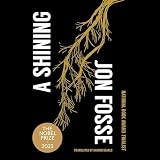
- Audible Audiobook
- Jon Fosse (Author) - Steve Hendrickson (Narrator)
- English (Publication Language)
- 02/29/2024 (Publication Date) - Transit Books (Publisher)
2. Second Reading for Thematic Traces: Re-read, this time actively noting recurring motifs and thematic elements.
- Action: Underline or make notes on phrases related to light, absence, memory, and repetition.
- What to Look For: The subtle shifts in the protagonist’s perception and the way memory interplays with present experience.
- Mistake to Avoid: Over-interpreting individual phrases without considering their cumulative effect.
3. Character Analysis (Implicit): Observe the protagonist through their internal monologue and sensory perceptions rather than through direct description.
- Action: Piece together the protagonist’s identity and motivations from their internal dialogue and reactions to their environment.
- What to Look For: The protagonist’s detachment, their longing, and their attempts to connect with the past.
- Mistake to Avoid: Seeking explicit biographical details or psychological profiles.
4. Structural Deconstruction: Analyze the novella’s structure, noting the use of repetition and the absence of conventional narrative arcs.
- Action: Map out how sentences and ideas are revisited and subtly altered.
- What to Look For: The creation of a meditative or hypnotic effect through Fosse’s prose.
- Mistake to Avoid: Dismissing repetition as mere filler; it is a key narrative device.
5. Symbolic Interpretation: Consider the symbolic weight of elements like the “shining,” the unnamed location, and the recurring objects.
- Action: Reflect on what these elements might represent beyond their literal meaning.
- What to Look For: The “shining” as a metaphor for memory, presence, or a fleeting moment of clarity.
- Mistake to Avoid: Imposing rigid, singular meanings onto symbols; Fosse’s work invites multiple interpretations.
6. Reader Response Integration: Consider your own emotional and intellectual response to the text.
- Action: Reflect on how the novella’s style and themes affected your reading experience.
- What to Look For: Moments of resonance, confusion, or profound quietude.
- Mistake to Avoid: Assuming your interpretation is the only valid one; Fosse’s work is designed to elicit personal engagement.
Common Myths About A Shining
- Myth: The novella is intentionally confusing or poorly written due to its unconventional style.
- Why it Matters: This misunderstands Fosse’s deliberate artistic choices. His minimalism is a tool to evoke specific emotional and psychological states.
- Fix: Approach the text with an openness to its unique aesthetic. Recognize that the lack of explicit clarity is often the point, inviting the reader to fill the gaps.
- Myth: The protagonist is suffering from a specific mental illness that explains their behavior.
- Why it Matters: This reduces the novella to a diagnostic case study, ignoring its broader existential and philosophical concerns.
- Fix: Focus on the universal human experiences of memory, loss, and the search for connection that Fosse explores, rather than seeking a specific clinical diagnosis.
- Myth: The “shining” is a literal, supernatural phenomenon.
- Why it Matters: This limits the novella’s thematic scope. The “shining” functions more as a potent metaphor.
- Fix: Consider the “shining” as representing moments of intense presence, memory recall, or a profound, albeit fleeting, awareness of existence.
Expert Tips for Engaging with A Shining
- Embrace the Silence: Fosse’s prose is as much about what is unsaid as what is written.
- Actionable Step: Read passages aloud to appreciate the rhythm and pauses. Pay attention to the spaces between words and sentences.
- Common Mistake to Avoid: Rushing through the text, trying to extract plot points. This misses the meditative quality Fosse cultivates.
- Focus on Sensory and Emotional Residue: The novella operates on a deep emotional and sensory level.
- Actionable Step: Keep a journal of the feelings and images the text evokes, rather than factual plot points. Note recurring sensory details.
- Common Mistake to Avoid: Seeking concrete character motivations or external plot developments. The internal landscape is paramount.
- Recognize Repetition as a Narrative Engine: Fosse’s use of repetition is not redundant; it builds atmosphere and thematic resonance.
- Actionable Step: Track how repeated phrases or ideas evolve or gain new significance with each recurrence.
- Common Mistake to Avoid: Viewing repetition as a flaw or an indication of writer’s block. It is a deliberate stylistic choice to create a specific reading experience.
Decision Rules
- If reliability is your top priority for A Shining by Jon Fosse, choose the option with the strongest long-term track record and support.
- If value matters most, compare total ownership cost instead of headline price alone.
- If your use case is specific, prioritize fit-for-purpose features over generic ‘best overall’ claims.
BLOCKQUOTE_0
FAQ
- Q: What is the central theme of ‘A Shining’ by Jon Fosse?
A: The novella primarily explores themes of memory, isolation, the passage of time, and the elusive nature of presence and meaning in human experience.
- Q: Why is the prose so sparse and repetitive?
A: Jon Fosse uses minimalist prose and repetition to create a trance-like or meditative effect, emphasizing internal states and the subtle rhythms of consciousness over external action.
- Q: Who is the unnamed protagonist?
A: The protagonist is intentionally left undefined, allowing readers to project their own experiences and interpretations onto the character, making the themes of isolation and memory more universal.
- Q: Is there a specific plot to follow in ‘A Shining’?
A: ‘A Shining’ does not follow a conventional plot structure. Instead, it offers a series of impressions, reflections, and atmospheric passages that build a cumulative emotional and thematic experience.
- Q: What does the title ‘A Shining’ refer to?
A: The “shining” can be interpreted in various ways, often referring to moments of intense awareness, memory recall, or a fleeting glimpse of clarity or significance within the protagonist’s subjective experience.
- Q: How does Jon Fosse’s Nobel Prize recognition influence the reading of ‘A Shining’?
A: His Nobel recognition underscores the literary significance of his distinctive style and thematic depth. It signals that ‘A Shining,’ despite its brevity and unconventional form, is a work of considerable artistic merit and philosophical weight.
| Element | Description | Impact on Reader |
|---|---|---|
| Minimalist Prose | Short sentences, repetition, sparse punctuation. | Creates a meditative, atmospheric, and sometimes unsettling reading experience. |
| Ambiguous Narrative | Lack of explicit plot, character exposition, or resolution. | Encourages active reader participation in constructing meaning and interpretation. |
| Thematic Focus | Isolation, memory, absence, the search for meaning, subjective experience. | Prompts introspection on universal human behaviors and existential questions. |
| Sensory Details | Emphasis on subtle sensory perceptions and internal feelings over external actions. | Deepens emotional resonance and the reader’s connection to the protagonist’s state. |
| Repetition | Recurrence of phrases, images, and sentence structures. | Builds atmosphere, reinforces themes, and creates a rhythmic, almost incantatory effect. |