A Look At ‘Stork Mountain’ By Miroslav Penkov
Miroslav Penkov’s novel, ‘Stork Mountain,’ is a deeply atmospheric and thematically rich exploration of memory, family, and the enduring echoes of trauma. It is a work that demands careful consideration and rewards contemplative reading. This review will provide a precise assessment of its narrative construction, thematic weight, and suitability for different readers.
Who This Is For
- Readers who appreciate literary fiction that prioritizes psychological depth and the intricate excavation of personal and familial histories.
- Individuals seeking a novel that offers a profound, albeit challenging, engagement with themes of memory, identity, and the lingering impact of the past.
What To Check First
- Narrative Structure: Examine the novel’s use of fragmented timelines and non-linear storytelling. Consider if this approach enhances or complicates your reading experience.
- Thematic Resonance: Assess the novel’s handling of themes such as intergenerational trauma, displacement, and the subjective nature of memory.
- Character Interiority: Evaluate the depth and believability of the characters’ internal lives, particularly the narrator and Emil, and how their pasts inform their present.
- Prose and Atmosphere: Consider the impact of Penkov’s deliberate pacing and evocative prose. Does this style align with your preferences for narrative immersion?
Step-by-Step Plan: Engaging with Stork Mountain
1. Initial Immersion and Tone Assessment: Begin by reading the opening chapters to establish the novel’s pervasive atmosphere and the initial presentation of its central relationships.
- Action: Read the first 30-50 pages.
- What to Look For: The dominant mood, the introduction of key characters and their immediate dynamics, and any early indications of underlying tension or mystery.
- Mistake to Avoid: Expecting a plot-driven narrative from the outset; the novel’s strength lies in its gradual unfolding and atmospheric build-up.
2. Mapping Narrative Threads: As you progress, actively note shifts in time and perspective to begin constructing a mental framework for the story’s chronology.
- Action: Keep a separate note to jot down character names, significant events, and temporal shifts as they appear.
- What to Look For: How the author uses temporal displacement to gradually reveal character motivations and illuminate thematic connections.
- Mistake to Avoid: Becoming overly fixated on creating a perfectly linear timeline; the novel’s structure is intentionally fluid and reflects the nature of memory.
3. Character Empathy and Motivation: Dedicate focused attention to understanding the internal lives and motivations of the central characters.
- Action: Concentrate on the emotional states and unspoken desires of characters like Emil and the narrator.
- What to Look For: The subtle ways past experiences and unresolved issues manifest in their present actions and interpersonal relationships.
- Mistake to Avoid: Dismissing characters’ internal struggles as secondary to plot events; their psychological journeys are central to the novel’s impact.
4. Identifying Thematic Patterns: Actively seek out recurring ideas, symbols, and motifs that contribute to the novel’s core concerns.
- Action: Note instances related to memory, loss, displacement, and the search for belonging.
- What to Look For: How these themes are interwoven through character arcs, narrative fragments, and descriptive passages.
- Mistake to Avoid: Treating themes as abstract concepts separate from the narrative; they are deeply embedded in the characters’ lived experiences.
5. Evaluating Stylistic Choices: Pay close attention to Penkov’s prose, descriptive language, and the overall tone.
- Action: Observe the sensory details and the effectiveness of the language in creating atmosphere and evoking emotion.
- What to Look For: How the writing style contributes to the novel’s mood and enhances the reader’s immersion in its world.
- Mistake to Avoid: Underestimating the significance of descriptive passages; they often carry thematic weight and contribute to characterization.
6. Engaging with Ambiguity: Consider the novel’s deliberate use of ambiguity, particularly regarding plot points and character resolutions.
- Action: Reflect on moments where information is withheld or implied rather than explicitly stated.
- What to Look For: Whether the ambiguity serves to deepen thematic resonance or feels like an evasion of narrative responsibility.
- Mistake to Avoid: Demanding absolute clarity or resolution for every narrative thread; the novel’s power often lies in its open-endedness.
7. Final Synthesis and Reflection: After finishing the novel, reflect on its overall impact and your personal connection to its themes and characters.
- Action: Consider how the novel’s fragmented structure and thematic explorations coalesced for you.
- What to Look For: Whether the novel’s strengths in atmosphere and thematic depth outweighed any perceived weaknesses in plot clarity for your reading experience.
- Mistake to Avoid: Rushing to a definitive judgment without allowing time for the novel’s complexities to settle; a second reading or reflection can often yield new insights.
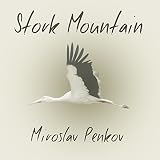
- Audible Audiobook
- Miroslav Penkov (Author) - Kirby Heyborne (Narrator)
- English (Publication Language)
- 03/15/2016 (Publication Date) - Tantor Audio (Publisher)
Stork Mountain by Miroslav Penkov: A Contrarian Perspective
While ‘Stork Mountain by Miroslav Penkov’ has garnered praise for its lyrical prose and its intricate exploration of memory and trauma, a contrarian perspective suggests that its deliberate structural fragmentation and thematic ambiguity may present a significant hurdle for many readers. The novel’s strength in evoking atmosphere and emotional resonance can, for some, come at the expense of narrative clarity and character development that feels fully realized. This is not to discredit Penkov’s artistry, but rather to highlight a potential point of friction. The narrative’s reliance on suggestion and implication, while artful, requires a considerable investment of reader effort to construct meaning, which may not align with preferences for more direct storytelling.
BLOCKQUOTE_0
The novel’s thematic explorations of intergenerational trauma and the weight of unspoken histories are undeniably potent. However, the method of presentation—often through fragmented memories and indirect revelations—can feel less like organic storytelling and more like a deliberate withholding of information. This approach, while artistically valid, can be perceived as a stylistic choice that prioritizes mood and thematic resonance over narrative propulsion. For readers who value a clear cause-and-effect progression and readily identifiable character motivations, this aspect of ‘Stork Mountain’ might present a significant challenge. The novel asks readers to actively participate in constructing meaning, a process that can be rewarding but also demanding.
Common Myths About ‘Stork Mountain’
- Myth: The novel is a straightforward, linear family saga.
- Why it Matters: Readers expecting a chronological account of a family’s history may be surprised and disoriented by the novel’s non-linear structure and fragmented timelines.
- Correction: ‘Stork Mountain’ utilizes a complex, non-linear narrative that weaves together multiple temporal strands and perspectives. This structure is designed to reflect the nature of memory and trauma, rather than present a simple chronological history.
- Myth: The ambiguity in the plot is a sign of narrative weakness.
- Why it Matters: Some readers might interpret the novel’s open-endedness or lack of explicit resolution as a flaw in the storytelling.
- Correction: The deliberate ambiguity is a key stylistic choice intended to invite reader interpretation and emphasize the subjective, often elusive, nature of memory and historical understanding. It is meant to provoke thought rather than provide definitive answers.
Expert Tips for Reading ‘Stork Mountain’
- Embrace the Non-Linearity: Do not attempt to force the narrative into a strictly chronological order. Instead, allow the shifts in time and perspective to reveal thematic connections and deepen your understanding of the characters’ pasts.
- Actionable Step: Keep a loose chronological log of events or character appearances as you read, but do not get bogged down in trying to perfectly reconcile every temporal jump.
- Common Mistake to Avoid: Frustration with the narrative’s lack of strict linearity, which can detract from appreciating the author’s intended effect.
- Focus on Atmosphere and Emotional Resonance: Penkov excels at creating a palpable mood and conveying deep emotional states. Pay close attention to the sensory details and the emotional undertones of the prose.
- Actionable Step: Highlight passages that evoke a strong sense of place or feeling, and consider what specific language or imagery makes them effective.
- Common Mistake to Avoid: Skimming over descriptive passages, assuming they are mere filler, when they are crucial to the novel’s overall impact and thematic conveyance.
- Read Between the Lines: Much of the novel’s power lies in what is suggested rather than explicitly stated. Be attuned to subtext, implication, and the emotional weight of unspoken histories.
- Actionable Step: When a character’s reaction seems disproportionate to the immediate situation, consider their past experiences or unresolved traumas as potential contributing factors.
- Common Mistake to Avoid: Expecting every character motivation or plot point to be overtly explained, which can lead to overlooking the nuanced storytelling.
Stork Mountain by Miroslav Penkov: A Deeper Dive
The thematic core of ‘Stork Mountain by Miroslav Penkov’ centers on the persistent influence of the past on the present, rendered through the lens of intergenerational trauma and the fragmented nature of memory. Penkov masterfully constructs a narrative that mirrors how individuals often recall their histories—not as a seamless flow, but as a collection of vivid, often disconnected, fragments. This approach necessitates a patient reader, one willing to engage with the novel’s deliberate pacing and its reliance on suggestion over explicit exposition. The strengths of the novel lie in its evocative atmosphere and the profound emotional resonance of its exploration of familial burdens. However, for readers who prioritize plot-driven narratives with clear resolutions, the novel’s inherent ambiguity might be perceived as a limitation. The decision criterion for enjoying this novel hinges on one’s tolerance for narrative ambiguity; if you thrive on pie
Quick Comparison
| Option | Best for | Pros | Watch out |
|---|---|---|---|
| Who This Is For | General use | Readers who appreciate literary fiction that prioritizes psychological depth… | Mistake to Avoid: Expecting a plot-driven narrative from the outset; the nove… |
| What To Check First | General use | Individuals seeking a novel that offers a profound, albeit challenging, engag… | Mistake to Avoid: Becoming overly fixated on creating a perfectly linear time… |
| Step-by-Step Plan Engaging with Stork Mountain | General use | Narrative Structure: Examine the novel’s use of fragmented timelines and non-… | Mistake to Avoid: Dismissing characters’ internal struggles as secondary to p… |
| Stork Mountain by Miroslav Penkov A Contrarian Perspective | General use | Thematic Resonance: Assess the novel’s handling of themes such as intergenera… | Mistake to Avoid: Treating themes as abstract concepts separate from the narr… |
Decision Rules
- If reliability is your top priority for Stork Mountain by Miroslav Penkov, choose the option with the strongest long-term track record and support.
- If value matters most, compare total ownership cost instead of headline price alone.
- If your use case is specific, prioritize fit-for-purpose features over generic ‘best overall’ claims.