Italo Calvino’s Path to the Nest of Spiders
The Path to the Nest of Spiders by Italo Calvino: Quick Answer
- The Path to the Nest of Spiders is Italo Calvino’s debut novel, offering a stark, unsentimental depiction of childhood during the Italian Resistance through the eyes of a young boy named Pin.
- This novel serves as a foundational text in Calvino’s bibliography, providing insight into his early engagement with themes of war, innocence, and perspective, rather than a conventional war narrative.
- Readers expecting traditional heroic arcs, clear moral clarity, or immediate emotional catharsis may find its detached, child-centric viewpoint challenging.
Who This Is For
- Individuals seeking to understand the developmental trajectory of Italo Calvino’s distinctive literary style and thematic preoccupations from his earliest published work.
- Readers interested in a grounded, less romanticized portrayal of the Italian Resistance, particularly focusing on the experiences and perceptions of those on the periphery of conflict.
For those looking to delve into Italo Calvino’s early work, his debut novel, The Path to the Nest of Spiders, is an essential read. It offers a unique perspective on childhood during wartime.
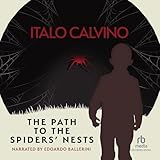
- Audible Audiobook
- Italo Calvino (Author) - Edoardo Ballerini (Narrator)
- English (Publication Language)
- 08/21/2018 (Publication Date) - Recorded Books (Publisher)
What to Check First
- Authorial Intent: Calvino himself stated the novel aimed to present the war and partisans through a child’s limited, often crude understanding, where violence becomes a normalized aspect of existence. This framing is crucial for managing reader expectations.
- Historical Context: The novel is situated in Liguria, Italy, during World War II, detailing the partisan struggle. A basic understanding of this historical period will enhance comprehension of the narrative’s setting and stakes.
- Narrative Perspective: The story is filtered through Pin, an orphaned boy whose observations are frequently blunt, curious, and emotionally detached, establishing a unique and sometimes unsettling narrative voice.
- Tone and Style: Prepare for a detached, unsentimental tone, often punctuated by dark humor. The focus is on survival and the erosion of innocence, not on idealized notions of heroism.
Step-by-Step Plan for Understanding The Path to the Nest of Spiders
1. Engage with Pin’s Limited Perspective:
- Action: Actively note how events and adult behaviors are interpreted through Pin’s immature understanding and his often inappropriate curiosity.
- What to Look For: Instances where Pin misinterprets adult motivations, employs crude language, or exhibits a surprising lack of emotional response to violence.
- Mistake: Assuming Pin’s observations represent objective reality or a mature moral judgment; his perspective is inherently skewed by his age and environment, making him an unreliable, though fascinating, narrator.
2. Analyze the Portrayal of Partisans:
- Action: Examine the adult partisans not solely as combatants, but as complex individuals with their own motivations, flaws, and vulnerabilities.
- What to Look For: Their interpersonal conflicts, moments of weakness, questionable ethical decisions, and their varied, often transactional, relationships with Pin.
- Mistake: Expecting idealized, heroic figures; the novel presents them as flawed, often desperate individuals navigating a brutal conflict, mirroring the complexities of human nature under duress.
3. Deconstruct the Symbolism of the “Nest of Spiders”:
- Action: Pay close attention to the recurring motif of the spiders and their hidden, private world, which serves as Pin’s sanctuary.
- What to Look For: How Pin’s secret hiding place and his connection to the spiders symbolize his isolation, his quest for belonging, and his personal refuge from the chaotic adult world.
- Mistake: Dismissing this central symbol as mere childish fancy, overlooking its deeper thematic significance concerning privacy, autonomy, and the need for a personal space in a world of constant intrusion.
4. Assess the Novel’s Historical Contribution:
- Action: Reflect on the novel as a product of its time and Calvino’s early engagement with political and social themes, noting its departure from contemporary literary trends.
- What to Look For: The novel’s stark realism and its divergence from more romanticized or overtly propagandistic depictions of war and resistance prevalent during the post-war period.
- Mistake: Judging the book solely by contemporary literary standards without acknowledging its historical context and Calvino’s early experimental phase in portraying the realities of war.
5. Identify Emerging Stylistic Elements:
- Action: Note the nascent qualities that foreshadow Calvino’s later, more experimental and philosophical works, such as his distinctive narrative voice and thematic concerns.
- What to Look For: The unique narrative voice, the blend of the mundane and the peculiar, and the underlying intellectual curiosity that would define his career.
- Mistake: Expecting the fully developed surrealism or intricate structural complexity found in later novels like Invisible Cities and overlooking the seeds of these elements present here.
The Path to the Nest of Spiders by Italo Calvino: A Contrarian Perspective
While The Path to the Nest of Spiders is undeniably a significant work for understanding Italo Calvino’s literary journey, its initial reception and long-term relevance can be polarizing. Its primary strength—the unvarnished, child’s-eye perspective on war—simultaneously serves as its most significant barrier for readers anticipating a more conventional narrative of heroism or direct emotional engagement. Calvino deliberately eschews sentimentality, rendering the violence and moral ambiguity of the Italian Resistance through the often-uncomprehending gaze of young Pin. This narrative choice, while artistically bold, means that readers seeking a straightforward, emotionally resonant war story may experience a sense of detachment from the characters and events. The novel’s value lies in its historical authenticity and literary innovation, but its limitation stems from a potential disconnect for audiences unprepared for its unflinching, unsentimental realism.
Common Myths About The Path to the Nest of Spiders
- Myth: The novel is a straightforward adventure story featuring child partisans.
- Why it matters: This assumption leads to disappointment when the narrative diverges from expected plot progression or fails to deliver conventional heroic arcs.
- Fix: Approach the novel as a psychological study of a child navigating extreme circumstances and a historical snapshot of the Resistance’s less idealized realities.
- Myth: Pin functions as a reliable narrator, offering clear moral judgments.
- Why it matters: Pin’s innocence and limited comprehension mean his narration is inherently subjective and morally ambiguous, not a source of definitive ethical guidance.
- Fix: Recognize Pin’s perspective as a deliberate narrative device designed to highlight the absurdity and brutality of war, rather than a straightforward moral commentary.
- Myth: The novel unequivocally celebrates the Italian Resistance.
- Why it matters: While the Resistance is the backdrop, Calvino’s portrayal is complex and unsentimental, depicting the partisans as flawed individuals rather than national heroes.
- Fix: Understand that Calvino’s aim was to depict the war and its impact on individuals, particularly children, rather than to produce a piece of partisan propaganda.
Expert Tips for Reading The Path to the Nest of Spiders
- Tip 1: Embrace the Child’s Perspective.
- Action: Actively identify instances where Pin’s limited understanding shapes the narrative. Note his fascination with adult behaviors he does not fully comprehend.
- Common Mistake to Avoid: Imposing adult logic or moral frameworks onto Pin’s actions and observations, which can lead to misinterpretations of his character and the novel’s thematic intent.
- Tip 2: Contextualize the Depiction of Violence.
- Action: Remind yourself that the violence, while starkly presented, is viewed through the eyes of a child who is becoming desensitized. It is part of the environment, not necessarily the focus of explicit moral outrage.
- Common Mistake to Avoid: Expecting graphic depictions of violence to elicit a specific emotional response; the novel’s power often derives from its restraint and the surrounding context of Pin’s limited comprehension.
- Tip 3: Recognize Early Calvino Stylings.
- Action: Appreciate the novel as a foundational work that foreshadows Calvino’s later stylistic innovations, such as his enduring interest in perspective and the nature of reality.
- Common Mistake to Avoid: Comparing it too directly to his more surreal or allegorical later works and expecting the same level of complexity or fantastical elements from the outset, thus missing its unique strengths as a debut.
BLOCKQUOTE_0
Frequently Asked Questions
- Q: Is The Path to the Nest of Spiders a difficult book to read?
- A: It can be challenging due to its unsentimental tone and the child narrator’s perspective, which may feel disorienting. However, its prose is generally straightforward, and its historical setting makes it accessible if approached with appropriate expectations.
- Q: What is the significance of the title, The Path to the Nest of Spiders?
- A: The title refers to Pin’s secret hiding place, which serves as a metaphor for his internal world and a sanctuary from the chaotic adult reality of war. It represents his search for a personal space and understanding amidst violence.
- Q: Is this book a good introduction to Italo Calvino’s work?
- A: It is his debut novel and displays early indications of his unique voice, but it stylistically differs significantly from his later, more famous works such as If on a winter’s night a traveler or Invisible Cities. Readers new to Calvino might find his later novels more representative of his mature style.
- **Q: Does the novel offer a
Quick Comparison
| Option | Best for | Pros | Watch out |
|---|---|---|---|
| The Path to the Nest of Spiders by Italo Calvino Quick Answer | General use | <em>The Path to the Nest of Spiders</em> is Italo Calvino’s debut novel, offering a… | Mistake: Assuming Pin’s observations represent objective reality or a mature… |
| Who This Is For | General use | This novel serves as a foundational text in Calvino’s bibliography, providing… | Mistake: Expecting idealized, heroic figures; the novel presents them as flaw… |
| What to Check First | General use | Readers expecting traditional heroic arcs, clear moral clarity, or immediate… | Mistake: Dismissing this central symbol as mere childish fancy, overlooking i… |
| Step-by-Step Plan for Understanding The Path to the Nest of Spiders | General use | Individuals seeking to understand the developmental trajectory of Italo Calvi… | Mistake: Judging the book solely by contemporary literary standards without a… |
Decision Rules
- If reliability is your top priority for The Path to the Nest of Spiders by Italo Calvino, choose the option with the strongest long-term track record and support.
- If value matters most, compare total ownership cost instead of headline price alone.
- If your use case is specific, prioritize fit-for-purpose features over generic ‘best overall’ claims.