Eckhart Tolle’s Teachings on Presence: Stillness Speaks
Quick Answer
- Stillness Speaks offers a curated collection of aphorisms and short passages designed to guide readers toward present-moment awareness.
- Its primary utility lies in serving as a contemplative tool for those familiar with Eckhart Tolle’s teachings on presence and the ego.
- Readers seeking narrative, in-depth philosophical arguments, or external problem-solving strategies may find its fragmented style limiting.
Who This Is For
- Individuals who have previously engaged with Eckhart Tolle’s work and seek brief, daily reminders of his core principles.
- Readers who benefit from short, meditative texts that can be easily integrated into a busy schedule for moments of reflection.
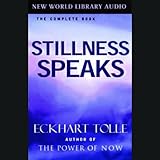
- Audible Audiobook
- Eckhart Tolle (Author) - Eckhart Tolle (Narrator)
- English (Publication Language)
- 10/10/2003 (Publication Date) - New World Library (Publisher)
What to Check First
- Prior Exposure to Tolle: If you are new to Eckhart Tolle, it is advisable to read “The Power of Now” first to establish a foundational understanding of his concepts.
- Reading Objective: Determine if you are looking for a structured philosophical exploration or short, digestible prompts for daily mindfulness.
- Format Preference: Stillness Speaks is composed of disconnected aphorisms. If you prefer a narrative or argument-driven structure, this book may not align with your preferences.
- Engagement Style: Consider whether you are looking for a book to read cover-to-cover or one to dip into for brief, reflective moments.
Step-by-Step Plan for Engaging with Stillness Speaks
1. Select a Passage:
- Action: Open the book to any page, or choose a passage that visually or intuitively draws your attention.
- What to Look For: Identify a single sentence or a short paragraph that resonates with your current state or sparks curiosity.
- Mistake to Avoid: Overthinking the selection process; the intention is to find a point of entry, not necessarily the “most important” passage.
2. Read and Absorb:
- Action: Read the selected passage slowly, allowing the words to sink in without immediate analysis.
- What to Look For: Notice any subtle shifts in your internal state – a momentary quieting of the mind, a sense of calm, or a physical sensation. Tolle’s language often aims for direct experience.
- Mistake to Avoid: Rushing the reading or immediately judging the content. The goal is absorption, not critique.
3. Observe Your Inner State:
- Action: After reading, pause and become aware of your thoughts, emotions, and bodily sensations without judgment.
- What to Look For: Evidence of heightened awareness, a reduction in mental chatter, or a feeling of being more grounded in the present moment.
- Mistake to Avoid: Expecting a dramatic, immediate transformation. The subtle shifts are often the most profound.
4. Carry the Essence:
- Action: Throughout your day, recall the essence of the passage you read.
- What to Look For: Opportunities to bring your awareness back to the present, especially during routine tasks or moments of stress.
- Mistake to Avoid: Treating the reading as a separate event rather than a practice to be integrated into your daily life.
5. Journal (Optional):
- Action: If you find it helpful, briefly note the passage and any insights or feelings it evoked in a journal.
- What to Look For: Recurring themes or patterns in your responses over time, which can highlight areas of personal growth or persistent mental habits.
- Mistake to Avoid: Turning journaling into an intellectual exercise that distracts from the felt sense of presence.
Understanding Stillness Speaks by Eckhart Tolle
This book functions as a distillation of Eckhart Tolle’s core teachings, primarily focused on the realization of the present moment. Unlike his more extensive works, which build a philosophical case for presence, Stillness Speaks offers aphoristic fragments designed to act as direct pointers. Each short passage aims to disrupt habitual thought patterns and guide the reader toward an experiential understanding of inner stillness. The book’s structure is intentionally non-linear, allowing readers to engage with it on a daily basis, using each excerpt as a focal point for meditation or mindful reflection. The central tenet is that true peace and awareness are not found in the past or future, but in the direct experience of the Now.
Expert Tips for Practicing Presence
- Tip 1: Cultivate the Art of the Pause.
- Actionable Step: Before reacting to a stimulus or engaging in a task, consciously introduce a brief pause. Use this moment to feel your body and observe your breath.
- Common Mistake to Avoid: Feeling compelled to respond or act instantaneously, which reinforces habitual, reactive patterns of behavior. The pause is a crucial space for conscious choice.
- Tip 2: Shift Focus to the Aliveness Within.
- Actionable Step: During any activity, gently direct your attention from the doing to the feeling of being alive in your body. Notice the subtle sensations of aliveness.
- Common Mistake to Avoid: Becoming excessively focused on the content of your thoughts or the outcome of your actions, as this pulls your awareness away from the present moment experience.
- Tip 3: Recognize Egoic Resistance.
- Actionable Step: When you encounter feelings of impatience, frustration, or resistance, acknowledge them as potential manifestations of the ego’s attachment to its beliefs and desires.
- Common Mistake to Avoid: Identifying with these negative emotions or believing they are an inherent part of your identity, rather than transient mental formations.
Common Myths About Stillness
- Myth 1: Stillness Speaks provides concrete solutions to life’s external problems.
- Why it Matters: This misunderstanding can lead to disappointment if readers expect the book to offer practical advice for specific issues like financial hardship or relationship conflicts. Tolle’s focus is on transforming one’s internal state, which then influences how one engages with external challenges.
- Fix: Approach the book with the understanding that its purpose is to cultivate inner awareness and presence, which are the foundation for navigating life’s circumstances with greater equanimity.
- Myth 2: Practicing stillness requires complete detachment from worldly activities and responsibilities.
- Why it Matters: This can create a false dichotomy between spiritual practice and daily life, leading some to believe they must withdraw from their existing commitments to find peace. Tolle’s teachings emphasize bringing presence to all activities, not escaping them.
- Fix: Integrate the practice of presence into your current life. The goal is to be fully engaged with what you are doing, moment by moment, regardless of the activity’s nature.
- Myth 3: Achieving a state of stillness is an extremely difficult and lengthy process.
- Why it Matters: This perception can be a significant barrier, making the practice seem unattainable. While consistent effort deepens awareness, the fundamental state of presence is accessible in any given moment. The primary obstacle is often the mind’s resistance to letting go of conceptual thought.
- Fix: Understand that stillness is not something to be achieved as a future goal, but rather a state to be remembered or uncovered. The book’s short passages are intended to facilitate these moments of remembrance.
Stillness Speaks by Eckhart Tolle: A Contrarian View
While Stillness Speaks offers clear insights into the nature of presence, its aphoristic format presents a distinct challenge for readers who prefer a structured, linear approach to learning. The absence of extended argumentation or narrative development means that the reader is primarily responsible for making connections between the individual passages. This can be a significant hurdle for those unaccustomed to introspective contemplation or who are seeking a comprehensive philosophical framework. The book’s effectiveness hinges on a reader’s pre-existing receptivity to its core message, potentially rendering it less impactful as a standalone intellectual exercise.
A crucial decision criterion that significantly influences the recommendation for Stillness Speaks is the reader’s primary learning objective. For individuals seeking a foundational grasp of Eckhart Tolle’s philosophy and its practical applications, commencing with a more comprehensive work like “The Power of Now” is generally more advisable. However, if the objective is to find accessible, daily anchors for mindfulness and brief moments of spiritual reflection, Stillness Speaks excels. Its brevity makes it an ideal tool for integration into busy schedules, acting as a pocket guide to inner peace. Readers who find longer texts overwhelming or who prefer to engage with spiritual concepts in short, potent doses will likely find this book particularly valuable.
Decision Rules
- For Foundational Understanding: If a comprehensive philosophical grounding is your priority, prioritize works that build arguments systematically, such as “The Power of Now,” before engaging with Stillness Speaks.
- For Daily Practice: If your goal is to integrate brief moments of mindfulness into your daily routine, Stillness Speaks is highly recommended due to its accessible, fragmented structure.
- For Contrarian Readers: If you are skeptical of spiritual teachings or prefer empirical evidence, approach this book with an open mind but be aware that its value is primarily experiential rather than intellectual.
Quick Comparison
| Book Title | Best For | Strengths | Limitations |
|---|---|---|---|
| Stillness Speaks by Eckhart Tolle | Daily mindfulness practice | Concise, impactful pointers; easy integration into busy schedules | Lacks narrative structure; requires reader’s active engagement |
| The Power of Now | Foundational understanding of Tolle’s philosophy | Comprehensive arguments; builds a strong conceptual framework | Longer and more demanding than Stillness Speaks |
| Other Mindfulness Guides | Varied approaches to meditation | Diverse techniques; may offer different entry points | May not align with Tolle’s specific emphasis on ego and presence |
FAQ
- Q: How should I approach reading Stillness Speaks if I’m new to Eckhart Tolle?
- A: While it can be read by newcomers, it is most impactful when read after familiarizing yourself with Tolle