John Christopher’s ‘The Death Of Grass’: A Post-Apocalyptic Vision
Quick Answer
The Death Of Grass by John Christopher is a prescient and starkly realistic post-apocalyptic novel focusing on societal collapse due to a biological agent that destroys grass. It offers a chilling exploration of human nature under extreme duress, prioritizing survival over abstract ideals. Recommended for readers seeking grim, character-driven narratives and a grounded take on societal breakdown.
Who This Is For
- Readers interested in classic science fiction that explores the fragility of civilization and the darker aspects of human behavior.
- Those who appreciate a methodical, unsentimental depiction of societal collapse, focusing on practical challenges and moral compromises.
What To Check First
Before diving into The Death Of Grass, consider these points:
- Pacing: The novel is character-driven and often slow-paced, focusing on the psychological toll of the crisis rather than constant action.
- Tone: Expect a bleak and often pessimistic outlook. The narrative does not offer easy answers or hopeful resolutions.
- Focus: The primary concern is survival and the breakdown of social order, not technological solutions or grand heroic arcs.
- Relevance: While written in 1956, its themes of ecological disaster and societal vulnerability remain highly relevant.
The Death Of Grass by John Christopher: A Deep Dive
Narrative Strengths and Weaknesses
The core strength of The Death Of Grass lies in its unflinching realism. Christopher avoids sensationalism, instead presenting a plausible scenario of global famine stemming from a blight that targets grasses, the foundation of the food chain. The narrative meticulously details the cascading effects: livestock starvation, human hunger, and the subsequent disintegration of law and order. The protagonist, John Custance, is not a hero in the traditional sense but an ordinary man forced into extraordinary circumstances, making his struggles and moral compromises relatable.
However, the novel’s deliberate pacing and lack of overt action may be a weakness for some readers. The focus is on internal conflict and the gradual erosion of societal structures, which can feel slow compared to more plot-driven apocalyptic fiction. Character development, while present, is often secondary to the exploration of the societal collapse itself. The ending, while fitting the novel’s tone, offers little in the way of catharsis.
Audience Fit and Thematic Resonance
This novel is best suited for readers who appreciate literary science fiction that grapples with profound philosophical questions about humanity’s place in nature and the thin veneer of civilization. It resonates with themes of ecological interdependence, the breakdown of social contracts, and the primal drive for survival. Those who enjoyed Cormac McCarthy’s The Road for its bleakness and focus on human endurance, or P.D. James’s The Children of Men for its examination of societal decline, will likely find much to ponder here.
A unique angle often overlooked is the novel’s subtle critique of modern society’s reliance on complex, interconnected systems. The rapid collapse demonstrates how easily our established order can crumble when a fundamental element, like food production, is disrupted. It suggests that our technological advancements may have made us more, not less, vulnerable to natural forces.
Comparison Framework: Apocalyptic Scenarios
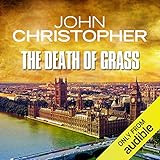
- Audible Audiobook
- John Christopher (Author) - William Gaminara (Narrator)
- English (Publication Language)
- 03/25/2011 (Publication Date) - Audible Studios (Publisher)
| Feature | The Death Of Grass (John Christopher) | Station Eleven (Emily St. John Mandel) | Alas, Babylon (Pat Frank) |
|---|---|---|---|
| Cause of Collapse | Biological blight on grasses | Pandemic (Georgia Flu) | Nuclear war |
| Societal Focus | Immediate, practical survival | Rebuilding culture and community | Martial law and rebuilding order |
| Tone | Bleak, realistic, unsentimental | Melancholy, hopeful, artistic | Patriotic, stoic, pragmatic |
| Protagonist Type | Ordinary man, flawed | Artist, survivor, community-builder | Military veteran, leader |
The Death Of Grass by John Christopher: A Reading Decision Checklist
To determine if The Death Of Grass is the right read for you, consider these questions:
- [ ] Do you enjoy narratives that explore the breakdown of civilization through a realistic, unsentimental lens?
- [ ] Are you prepared for a story with a predominantly bleak and pessimistic tone?
- [ ] Do you prefer character-driven stories that focus on psychological impact over action sequences?
- [ ] Are you interested in themes of ecological disaster and the fragility of societal structures?
- [ ] Does a methodical, slow-burn depiction of crisis appeal to your reading preferences?
Step-by-Step Plan for Engaging with The Death Of Grass
1. Understand the Premise: Begin by grasping the core concept: a global grass blight leading to famine. What to look for: The immediate and cascading effects on food supplies and infrastructure. Mistake: Assuming the blight is a minor inconvenience rather than a civilization-ending event.
2. Embrace the Protagonist’s Journey: Follow John Custance as he navigates the unfolding crisis with his family. What to look for: His evolving moral compass and pragmatic decisions under pressure. Mistake: Expecting him to be a heroic figure; he is a man trying to survive.
3. Observe Societal Deconstruction: Pay attention to how social norms, laws, and institutions erode. What to look for: The shift from organized society to localized survival groups and individualistic desperation. Mistake: Underestimating the speed and completeness of the societal collapse.
4. Analyze Human Behavior: Note the varied reactions of individuals and groups to scarcity and danger. What to look for: The spectrum from altruism to extreme selfishness. Mistake: Generalizing human behavior; the novel presents a nuanced spectrum.
5. Consider the Ecological Angle: Reflect on the fundamental role of grasses in the global ecosystem. What to look for: How the loss of this single plant group triggers widespread devastation. Mistake: Focusing only on human drama and neglecting the ecological root cause.
6. Process the Ending: Accept the novel’s conclusion without expecting a neat resolution. What to look for: The implications of the final state of humanity and the planet. Mistake: Searching for a definitive “happy ending”; the novel concludes with ambiguity and a stark reality.
Common Mistakes When Reading ‘The Death Of Grass’
- Mistake: Expecting a fast-paced, action-heavy thriller.
- Why it matters: This leads to disappointment if the reader is anticipating constant peril and chase sequences.
- Fix: Adjust expectations to appreciate the novel’s deliberate pacing and focus on psychological realism and societal decay.
- Mistake: Seeking clear-cut heroes and villains.
- Why it matters: The novel presents complex characters making difficult choices in extreme circumstances, blurring moral lines.
- Fix: Engage with the moral ambiguity and understand that survival often necessitates compromise.
- Mistake: Underestimating the global scale of the disaster.
- Why it matters: The narrative depicts a worldwide collapse, not a localized event.
- Fix: Recognize that the characters’ struggles are symptomatic of a much larger, systemic failure.
- Mistake: Dismissing the ecological premise as far-fetched.
- Why it matters: The scientific basis, while fictionalized, highlights genuine ecological vulnerabilities.
- Fix: Consider the novel as a thought experiment on the fragility of our food systems and the impact of ecological disruption.
Decision Rules
- If reliability is your top priority for The Death Of Grass by John Christopher, choose the option with the strongest long-term track record and support.
- If value matters most, compare total ownership cost instead of headline price alone.
- If your use case is specific, prioritize fit-for-purpose features over generic ‘best overall’ claims.
FAQ
- Q: Is ‘The Death Of Grass’ a hopeful book?
A: No, The Death Of Grass is decidedly bleak and unsentimental. It focuses on the grim realities of survival and societal collapse rather than offering a hopeful outlook.
- Q: What makes the grass blight so devastating in the novel?
A: The blight targets all grasses, which are fundamental to the global food chain. This leads to the starvation of grazing animals and the collapse of grain-based agriculture, causing widespread famine.
- Q: Is the novel suitable for younger readers?
A: Given its mature themes of death, societal breakdown, and moral compromise, it is generally recommended for adult readers.
- Q: How does ‘The Death Of Grass’ compare to other post-apocalyptic novels?
A: It stands out for its early, realistic portrayal of collapse and its focus on the practicalities of survival rather than action or overt heroism. It predates many contemporary tropes in the genre.