Helen Keller’s Inspiring Autobiography: The Story of My Life
Helen Keller’s autobiography, “The Story of My Life,” is a foundational text in inspirational literature. This review offers a balanced perspective, examining its literary merits, thematic depth, and practical takeaways for readers, while also addressing common misconceptions.
Quick Answer
- Core Insight: “The Story of My Life” is a profound exploration of human resilience, the power of communication, and the process of intellectual awakening, transcending a simple disability narrative.
- Reader Takeaway: Expect a meticulously crafted account of overcoming immense obstacles, offering insights into consciousness, language acquisition, and the human drive for connection.
- Critical Lens: While inspiring, the book’s narrative structure and occasional romanticized tone warrant critical consideration for a complete understanding of Keller’s experience.
Who This Is For
- Readers seeking inspirational memoirs that delve into the human spirit’s capacity to overcome adversity through detailed personal narrative.
- Individuals interested in the intricate process of language acquisition and the development of consciousness, offering a unique perspective on learning.
Helen Keller’s autobiography, ‘The Story of My Life,’ is a foundational text in inspirational literature. For those seeking to understand her remarkable journey, this book is an essential read.
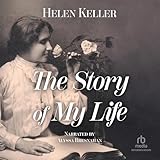
- Audible Audiobook
- Helen Keller (Author) - Alyssa Bresnahan (Narrator)
- English (Publication Language)
- 12/16/1999 (Publication Date) - Recorded Books (Publisher)
What to Check First
- Context of Early Illness: Examine the descriptions of Keller’s childhood illness and its immediate aftermath. This provides essential context for the profound isolation and communication barriers she faced.
- The “Water” Breakthrough: Focus on the detailed account of the moment Keller connected the word “water” with the physical sensation. This is the narrative’s pivotal event, illustrating the awakening of her intellect.
- Anne Sullivan’s Pedagogical Role: Analyze how Anne Sullivan is portrayed. Look for evidence of her innovative teaching methods and her crucial function as an interpreter of the world, not just a caregiver.
- Literary Sophistication: Assess the complexity of Keller’s prose. Despite her sensory limitations, her command of language, vocabulary, and imagery is remarkable and warrants close attention.
Step-by-Step Plan for Understanding The Story of My Life by Helen Keller
1. Initial Reading for Narrative Flow: Read the autobiography from beginning to end to grasp the overall chronological progression and emotional arc.
- Action: Complete a full read-through.
- What to Look For: The unfolding of Keller’s life story and her evolving perception of the world.
- Mistake: Overlooking the initial chapters detailing her pre-Sullivan life, which are critical for understanding the magnitude of her later achievements.
2. Analyze Pre-Sullivan Isolation: Revisit the early sections describing Keller’s life before Anne Sullivan’s arrival.
- Action: Scrutinize descriptions of her sensory deprivation and resulting communication challenges.
- What to Look For: Evidence of her intelligence struggling against profound isolation, highlighting the urgent need for a breakthrough.
- Mistake: Underestimating the psychological impact of her early environment, which shaped her initial interactions and understanding.
3. Deconstruct the “Water” Scene: Dedicate focused attention to the pivotal “water” moment at the well.
- Action: Reread and analyze the specific paragraphs describing this event in detail.
- What to Look For: The sensory input, the accompanying finger-spelled word, and the sudden cognitive leap as she makes the connection.
- Mistake: Treating this event as a mere anecdote rather than the fundamental catalyst for her intellectual awakening and subsequent learning.
4. Evaluate Anne Sullivan’s Methods: Trace the development of Keller’s relationship with her teacher and analyze Sullivan’s teaching strategies.
- Action: Note Sullivan’s patience, ingenuity, and the specific techniques she employed.
- What to Look For: How Sullivan systematically opened up the world of language and learning to Keller, fostering her intellectual growth.
- Mistake: Viewing Sullivan solely as a caregiver, rather than a highly skilled educator who provided the essential bridge to communication and knowledge.
5. Assess Literary Craftsmanship: Examine Keller’s writing style, vocabulary, and use of imagery.
- Action: Pay close attention to sentence structure, word choice, and descriptive passages.
- What to Look For: The sophistication of her prose, demonstrating her intellectual capacity and mastery of language despite her sensory limitations.
- Mistake: Assuming her writing would be simplistic, thereby underestimating her education and intellectual development.
6. Identify Counterpoint Themes: Reflect on aspects of the narrative that might invite critical interpretation or require further contextualization.
- Action: Identify passages that may appear romanticized or where her perspective is inherently limited.
- What to Look For: Instances where her reliance on Sullivan’s interpretations is evident or where societal structures are described through a singular lens.
- Mistake: Accepting the autobiography uncritically without acknowledging the inherent subjectivity and potential for narrative framing.
7. Synthesize Core Themes: Identify and list the overarching themes that emerge from the narrative.
- Action: List recurring ideas such as communication, resilience, the nature of consciousness, and the human need for connection.
- What to Look For: How these themes are developed throughout the book and their universal applicability beyond Keller’s personal story.
- Mistake: Focusing solely on biographical details without extracting the broader philosophical and psychological insights the book offers.
Common Mistakes
- Myth: Helen Keller’s autobiography is solely a story of overcoming physical disability.
- Why it matters: This narrow view overlooks the book’s deeper exploration of consciousness, language acquisition, and the fundamental human drive for connection.
- Fix: Read the book as an examination of the human mind’s capacity for learning and connection, with disability as a significant factor, but not the sole defining element.
- Myth: The “water” breakthrough was a sudden, unexplained miracle.
- Why it matters: This framing diminishes the years of dedicated teaching and Keller’s own persistent efforts that preceded the moment of understanding.
- Fix: Understand the “water” moment as the culmination of intense pedagogical work and Keller’s readiness to synthesize sensory input with language.
- Myth: The book’s prose is simplistic due to Keller’s sensory impairments.
- Why it matters: This assumption underestimates Keller’s intellectual capabilities and her mastery of language, developed through dedicated effort and education.
- Fix: Appreciate the sophisticated vocabulary, sentence structure, and descriptive power as a testament to her education and intellect.
- Myth: Anne Sullivan’s role was primarily that of a caregiver.
- Why it matters: This overlooks Sullivan’s groundbreaking pedagogical methods and her crucial role as an interpreter of the world, enabling Keller’s intellectual and social development.
- Fix: Recognize Sullivan as a highly skilled educator and facilitator who provided the essential bridge between Keller and the external world.
The Story of My Life by Helen Keller: Enduring Themes and Critical Reception
Helen Keller’s “The Story of My Life” is a seminal work, celebrated for its inspirational narrative and clear insights into the human behavior. However, a critical examination reveals nuances often overlooked in popular retellings. While undeniably a testament to resilience, the book also functions as a sophisticated inquiry into the nature of consciousness, the acquisition of language, and the fundamental human drive for connection.
The strength of the narrative lies in Keller’s meticulous reconstruction of her early life and the transformative impact of Anne Sullivan. The descriptions of her pre-Sullivan existence, marked by isolation and unarticulated frustration, serve as a stark contrast to the intellectual awakening that followed. The pivotal “water” scene, where the concept of language clicked into place, is rendered with a palpable sense of discovery. This moment is not merely a personal triumph but a powerful illustration of how language unlocks the mind and connects individuals to the world.
However, a contrarian perspective suggests that the book’s very success in portraying an extraordinary life can inadvertently obscure the systemic challenges faced by individuals with disabilities. Keller’s narrative, while deeply personal, is filtered through her unique experience and the dedicated support system she had. This doesn’t diminish her achievement but prompts readers to consider the broader societal structures and access to education that enabled her journey. Furthermore, while Keller’s prose is remarkably sophisticated, some passages can lean towards romanticism, a common characteristic of autobiographies aiming for emotional resonance.
BLOCKQUOTE_0
This quote underscores a central theme: the power of intentional effort and disciplined learning, not just for acquiring knowledge, but for shaping character and overcoming limitations. It highlights that Keller’s journey was not solely about external circumstances but also about the internal cultivation of her will.
The Narrative Arc of “The Story of My Life by Helen Keller”
The structure of “The Story of My Life” follows a chronological path, beginning with Keller’s infancy and early childhood illness, through the arrival of Anne Sullivan, and culminating in her academic achievements. This linear progression effectively showcases the dramatic arc of her development. The early chapters, detailing her sensory deprivation and the resulting behavioral challenges, are crucial for establishing the magnitude of the obstacles she faced. The narrative then shifts focus to the intense, dedicated work undertaken by Anne Sullivan, portraying her as a patient and ingenious instructor who devised innovative methods to teach Helen.
The book excels in its depiction of the moment when Helen grasped the connection between words and objects, particularly the famous “water” incident. This scene is rendered with vivid sensory detail and emotional intensity, making it a powerful illustration of intellectual awakening. The subsequent chapters detail her rapid progress in learning Braille, finger spelling, and eventually, spoken language. Keller’s descriptions of her experiences at Radcliffe College further demonstrate her academic prowess and her integration into the broader intellectual world.
A critical consideration of the narrative arc involves recognizing the inherent subjectivity of autobiography. Keller’s account is, by necessity, shaped by her memory, her understanding at the time of writing, and the narrative conventions of her era. While she strives for accuracy and emotional honesty, the portrayal of her relationship with Anne Sullivan, for instance, is naturally seen through her own lens. The book’s focus on individual triumph, while inspiring, may also overshadow the broader systemic issues related to disability support and education that were prevalent at the time.
Strengths and Limitations
| Strength | Detail |
|---|---|
| <strong>Profound Exploration of Communication:</strong> Detailed account of language acquisition. | Keller’s descriptions of learning to connect words with meaning provide a rare, in-depth look at the foundational process of communication, making it invaluable for understanding cognitive development. |
| <strong>Testament to Resilience and Will:</strong> Demonstrates extraordinary perseverance. | The narrative powerfully illustrates the human capacity to overcome seemingly insurmountable obstacles through sheer determination and intellectual drive. This theme resonates universally. |
| <strong>Sophisticated Prose:</strong> Articulate and vivid writing style. | Keller’s ability to articulate complex thoughts and emotions with rich imagery and precise language is remarkable, challenging preconceptions about writing with sensory impairments. |
| <strong>Historical Insight:</strong> Provides a window into late 19th/early 20th-century education and societal views on disability. | The book offers a valuable historical perspective on the educational methods and societal attitudes towards individuals with disabilities during her lifetime. |
| <strong>Limitation: Subjectivity of Narrative:</strong> Autobiography is inherently personal. | Keller’s account is filtered through her memory and perspective, potentially presenting a romanticized view of events or relationships, particularly concerning Anne Sullivan. Acknowledging this subjectivity is key to a balanced reading. |
| <strong>Limitation: Focus on Individual Triumph:</strong> May overshadow systemic issues. | While inspiring, the emphasis on individual achievement and a strong support system might inadvertently downplay the broader societal and systemic barriers faced by individuals with disabilities who lack similar resources. |
| <strong>Limitation: Romanticized Tone:</strong> Certain passages can be overly sentimental. | Like many autobiographies, the narrative occasionally adopts a tone that prioritizes emotional impact over objective reporting, which may not appeal to all readers seeking purely factual accounts. |
Expert Tips for Engaging with The Story of My Life by Helen Keller
- Tip 1: Focus on the Process, Not Just the Outcome.
- Actionable Step: When reading about Keller’s learning breakthroughs, pay close attention to the steps Anne Sullivan took and the repeated efforts involved, rather than just the final success.
- Common Mistake to Avoid: Viewing Keller’s achievements as solely a “miracle” without appreciating the methodical, patient, and often arduous pedagogical process.
- Tip 2: Analyze the Role of Language as a Connector.
- Actionable Step: Identify specific instances where acquiring a new word or concept directly changed Keller’s understanding of herself or the world around her.
- Common Mistake to Avoid: Reading the book primarily as a story of overcoming physical limitations, rather than as a profound exploration of how language unlocks human consciousness and connection.
- Tip 3: Consider the Narrative Through a Contemporary Lens.
- Actionable Step: Reflect on the societal context described in the book and compare it to modern understanding and support systems for individuals with disabilities.
- Common Mistake to Avoid: Accepting all aspects of the narrative and societal depiction uncritically, without considering how perspectives on disability and education have evolved.
Decision Rules
- If reliability is your top priority for The Story of My Life by Helen Keller, choose the option with the strongest long-term track record and support.
- If value matters most, compare total ownership cost instead of headline price alone.
- If your use case is specific, prioritize fit-for-purpose features over generic ‘best overall’ claims.
FAQ
- Q: Is “The Story of My Life” primarily an inspirational story or an educational text?
- A: It functions as both. It is deeply inspirational due to Keller’s extraordinary journey, but it also offers clear insights into the processes of language acquisition, cognitive development, and the human drive to learn.
- Q: How accurate is Helen Keller’s depiction of her early life, given she wrote it years later?
- A: While autobiographies are inherently subjective, Keller’s account is considered remarkably accurate, particularly concerning the emotional and intellectual impact of key events like her breakthrough with Anne Sullivan. She relied on diaries and her own detailed memories.
- Q: Can someone who has not read “The Story of My Life” understand its impact?
- A: While the book’s impact is widely recognized, reading it directly allows for a nuanced appreciation of Keller’s specific experiences, her sophisticated prose, and the detailed process of her intellectual awakening, which is difficult to grasp through summaries alone.
- Q: What is the most significant takeaway from reading “The Story of My Life by Helen Keller”?
- A: The most significant takeaway is the understanding of how communication and language are fundamental