Paula McLain’s ‘The Paris Wife’: A Novel About Ernest Hemingway’s First Wife
Quick Answer
- The Paris Wife by Paula McLain offers a compelling, character-driven portrait of Hadley Richardson, Ernest Hemingway’s first wife.
- It excels in its immersive portrayal of early 20th-century Paris and the complex dynamics of a burgeoning literary marriage.
- Readers seeking a nuanced exploration of the sacrifices made by women in artistic partnerships will find this novel particularly resonant.
Who This Is For
- Readers interested in literary biographies and the lives of famous authors, specifically Ernest Hemingway.
- Those who appreciate historical fiction that delves into the personal lives behind significant cultural movements.
What to Check First
- Historical Accuracy vs. Fictional Embellishment: McLain states this is a novel, not a biography. While based on real people, creative license is taken.
- Narrative Focus: The story is told from Hadley’s perspective, offering a specific, often sympathetic, viewpoint of her marriage to Hemingway.
- Tone and Style: Expect a lyrical, introspective style that emphasizes emotional landscapes and atmospheric descriptions of Paris.
- Portrayal of Hemingway: He is depicted as a complex, often self-absorbed figure, which may be challenging for some readers who admire his work.
Step-by-Step Plan: Understanding The Paris Wife by Paula McLain
1. Assess Hadley’s Agency: Observe Hadley’s decisions and reactions to Hemingway’s volatile behavior and artistic ambitions.
- What to look for: Instances where Hadley asserts her needs or compromises her own desires for the sake of the relationship or Hemingway’s career.
- Mistake to avoid: Assuming Hadley is purely a passive victim; note her resilience and moments of independent thought.
2. Examine the Parisian Setting: Pay attention to how Paris is depicted as both a muse and a crucible for the couple’s life.
- What to look for: Descriptions of cafes, studios, and the general bohemian atmosphere and how they reflect or contrast with the couple’s internal state.
- Mistake to avoid: Treating Paris as mere backdrop; recognize its role in shaping the characters’ experiences and aspirations.
3. Analyze Hemingway’s Characterization: Evaluate McLain’s portrayal of Ernest Hemingway, focusing on his artistic drive and personal flaws.
- What to look for: Hemingway’s ambition, his treatment of Hadley, and the author’s attempts to balance his genius with his often difficult personality.
- Mistake to avoid: Accepting Hemingway solely as the romanticized literary figure; consider the nuances presented from Hadley’s viewpoint.
4. Consider the Theme of Sacrifice: Identify moments where Hadley sacrifices her own comfort, dreams, or stability for Hemingway.
- What to look for: Specific instances of financial hardship, emotional strain, or deferred personal goals attributed to Hemingway’s pursuits.
- Mistake to avoid: Underestimating the cumulative impact of these sacrifices on Hadley’s well-being.
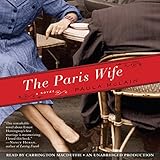
- Audible Audiobook
- Paula McLain (Author) - Carrington MacDuffie (Narrator)
- English (Publication Language)
- 02/22/2011 (Publication Date) - Random House Audio (Publisher)
5. Evaluate the Marriage’s Trajectory: Track the evolution of Hadley and Hemingway’s relationship from its passionate beginnings to its eventual dissolution.
- What to look for: The gradual erosion of their connection, the impact of external pressures, and the internal dynamics that lead to their separation.
- Mistake to avoid: Blaming one party exclusively; recognize the complex interplay of personalities and circumstances.
6. Reflect on the Novel’s Counterpoint: Consider the unspoken realities of women’s lives during this era, particularly those married to ambitious artists.
- What to look for: The societal expectations and limitations placed upon women that influence Hadley’s choices and experiences.
- Mistake to avoid: Judging Hadley by modern standards; contextualize her actions within the norms of the early 20th century.
Common Myths
- Myth: The Paris Wife is a straightforward biography of Ernest Hemingway.
- Why it matters: This misconception can lead to disappointment if readers expect a purely factual account of Hemingway’s life, rather than a novelized exploration through his first wife’s eyes.
- Fix: Approach the book as historical fiction, acknowledging that Paula McLain has taken creative liberties to craft a narrative arc and emotional depth.
- Myth: Hadley Richardson was a passive figure with no agency.
- Why it matters: This view overlooks her internal struggles, her attempts to support Hemingway, and the difficult choices she made within the constraints of her time and marriage.
- Fix: Look for moments of Hadley’s resilience, her quiet observations, and the sacrifices she consciously made, understanding these as forms of agency within her context.
- Myth: Ernest Hemingway is presented solely as a villain in the story.
- Why it matters: While his flaws are evident through Hadley’s perspective, the novel also hints at his magnetic personality and his undeniable talent, which were part of the initial attraction.
- Fix: Recognize that McLain aims for a complex portrait, showing Hemingway’s brilliance alongside his egocentrism, making him a multifaceted character rather than a caricature.
The Paris Wife by Paula McLain: A Deeper Dive
Paula McLain’s novel, The Paris Wife, plunges readers into the vibrant, often tumultuous, world of 1920s Paris through the eyes of Hadley Richardson, Ernest Hemingway’s first wife. This is not a straightforward biographical account, but rather a deeply empathetic character study that seeks to illuminate the life of a woman often overshadowed by her famous husband. McLain meticulously reconstructs Hadley’s journey, from her early life in the United States to her experiences as a young wife navigating the expatriate literary scene alongside a rapidly rising, yet deeply complex, Ernest Hemingway. The novel’s strength lies in its ability to evoke the atmosphere of the era – the smoky cafes, the intellectual ferment, and the precarious financial realities – while simultaneously exploring the intimate emotional landscape of a marriage under immense pressure.
The narrative is steeped in the details of daily life, from the struggle to find affordable housing to the exhilaration of artistic discovery. McLain’s prose is rich and sensory, drawing the reader into Hadley’s subjective experience. We feel her youthful optimism, her deep love for Hemingway, her anxieties about his infidelities and volatile temper, and her eventual heartbreak. The novel posits that Hadley was instrumental in Hemingway’s early development, providing the emotional stability and unwavering belief he needed to hone his craft. However, it also unflinchingly portrays the personal cost of this partnership for Hadley, as her own aspirations and well-being are often secondary to Hemingway’s all-consuming ambition.
Expert Tips for Reading The Paris Wife
- Tip: Focus on Hadley’s internal monologue.
- Actionable Step: As you read, actively note Hadley’s private thoughts and feelings, especially in scenes where she is observing Hemingway or interacting with others.
- Common Mistake to Avoid: Over-reliance on dialogue to understand Hadley’s character; her internal reflections are crucial to grasping her perspective.
- Tip: Contextualize Hadley’s choices within the era’s societal norms.
- Actionable Step: Consider the limited options available to women in the early 20th century regarding marriage, career, and independence when evaluating Hadley’s decisions.
- Common Mistake to Avoid: Applying contemporary feminist standards to judge Hadley’s actions without acknowledging the historical constraints she faced.
- Tip: Recognize the author’s sympathetic lens.
- Actionable Step: Be aware that McLain crafts Hadley as the primary protagonist, inherently shaping the reader’s perception of Hemingway and their relationship.
- Common Mistake to Avoid: Assuming the novel presents an entirely objective account of the marriage; it is a carefully constructed narrative from Hadley’s point of view.
BLOCKQUOTE_0
Quick Comparison
| Option | Best for | Pros | Watch out |
|---|---|---|---|
| Quick Answer | General use | The Paris Wife by Paula McLain offers a compelling, character-driven portrait… | Mistake to avoid: Assuming Hadley is purely a passive victim; note her resili… |
| Who This Is For | General use | It excels in its immersive portrayal of early 20th-century Paris and the comp… | Mistake to avoid: Treating Paris as mere backdrop; recognize its role in shap… |
| What to Check First | General use | Readers seeking a nuanced exploration of the sacrifices made by women in arti… | Mistake to avoid: Accepting Hemingway solely as the romanticized literary fig… |
| Step-by-Step Plan Understanding The Paris Wife by Paula McLain | General use | Readers interested in literary biographies and the lives of famous authors, s… | Mistake to avoid: Underestimating the cumulative impact of these sacrifices o… |
Decision Rules
- If reliability is your top priority for The Paris Wife by Paula McLain, choose the option with the strongest long-term track record and support.
- If value matters most, compare total ownership cost instead of headline price alone.
- If your use case is specific, prioritize fit-for-purpose features over generic ‘best overall’ claims.
FAQ
- Q: Is “The Paris Wife” historically accurate?
- A: It is a novel, meaning it is based on historical figures and events but incorporates fictional elements and dialogue to create a compelling narrative. McLain has stated her intention was to imagine Hadley’s inner life.
- Q: How is Ernest Hemingway portrayed in the book?
- A: He is depicted as a brilliant but often self-centered and demanding artist. The novel explores his ambition and charisma, as well as his infidelity and temper, primarily through Hadley’s experiences.
- Q: What are the main themes of “The Paris Wife”?
- A: Key themes include the sacrifices made by women in artistic partnerships, the complexities of marriage and ambition, the allure and challenges of expatriate life in Paris, and the enduring impact of first love.
- Q: Should I read Hemingway’s works before or after “The Paris Wife”?
- A: Reading “The Paris Wife” first can provide a unique context for understanding Hemingway’s early life and the personal relationships that may have influenced his writing. However, reading his works can also offer a richer appreciation of the literary world Hadley inhabited.