Exploring The Collected Stories Of Richard Matheson
Collected Stories Of Richard Matheson by Richard Matheson: Quick Answer
- Comprehensive Survey: This collection offers a broad and deep dive into Richard Matheson’s influential short fiction, spanning science fiction, horror, and psychological thrillers.
- Thematic Resonance: Matheson excels at exploring anxieties of the modern era, human resilience, and the uncanny, often through a lens of stark realism.
- Foundational Genre Work: Essential for understanding the development of speculative fiction, this collection showcases stories that have profoundly impacted subsequent literature and film.
Who This Is For
- Readers seeking a foundational understanding of modern genre fiction’s roots and key architects.
- Individuals who appreciate tightly constructed narratives that blend psychological depth with speculative premises.
What to Check First
- Matheson’s Signature Style: Observe his talent for grounding extraordinary events in mundane reality, using precise language to build suspense and explore character.
- Recurring Themes: Identify his consistent engagement with isolation, societal breakdown, the nature of fear, and the darker aspects of human psychology.
- Genre Fluidity: Note how Matheson masterfully combines elements of science fiction, horror, and thriller, often defying strict genre categorization.
- Cultural Impact: Consider the lineage of stories like “Duel” and “I Am Legend” and their significant influence on cinema and television.
Step-by-Step Plan: Engaging with the Collected Stories Of Richard Matheson by Richard Matheson
1. Initiate with “Born of Man and Woman”:
- Action: Begin your reading with this unsettling early story.
- What to Look For: Matheson’s early command of atmosphere and his willingness to explore taboo subjects within a domestic setting. The narrative centers on a family concealing a monstrous child.
- Failure Mode: Overlooking its thematic weight by focusing solely on the shock value, thus missing the exploration of parental fear and societal ostracism.
For a comprehensive dive into Richard Matheson’s influential short fiction, this collection is essential. It spans science fiction, horror, and psychological thrillers, showcasing his foundational genre work.
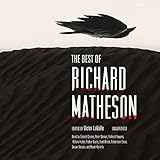
The Best of Richard Matheson
- Audible Audiobook
- Richard Matheson (Author) - Donald Corren, Peter Berkrot, Richard Powers (Narrators)
- English (Publication Language)
- 10/10/2017 (Publication Date) - Blackstone Audio, Inc. (Publisher)
2. Analyze “The Shrinking Man”:
- Action: Proceed to this iconic narrative of existential transformation.
- What to Look For: The meticulous depiction of Scott Carey’s physical and psychological ordeal as he diminishes. Matheson’s focus on the familiar becoming alien and threatening.
- Failure Mode: Underestimating the philosophical implications of Scott’s diminishing physical form and his struggle for autonomy and identity in a world that no longer accommodates him.
3. Examine “Duel”:
- Action: Read this taut tale of man versus an implacable, anonymous force.
- What to Look For: The escalating tension and the primal fear of being relentlessly pursued. Matheson’s skill in building dread from a simple, relatable premise.
- Failure Mode: Focusing exclusively on the external conflict (man vs. truck) and neglecting the story’s underlying commentary on male aggression and the loss of rational control.
4. Explore “I Am Legend”:
- Action: Engage with this seminal work that redefined vampire lore.
- What to Look For: Robert Neville’s profound isolation and his struggle to maintain his humanity in a world transformed by a new, contagious plague. Matheson’s innovative reinterpretation of the vampire as a biological threat.
- Failure Mode: Treating it as a conventional monster narrative and missing its exploration of loneliness, survival, and the subjective nature of “normalcy” and monstrosity.
5. Consider “Button, Button”:
- Action: Read this concise, morally complex ethical dilemma.
- What to Look For: The chilling premise of a device that grants wealth at the cost of a stranger’s life. Matheson’s examination of human greed and its devastating consequences.
- Failure Mode: Attributing the events solely to a supernatural mechanism and failing to recognize the story’s sharp critique of human willingness to inflict harm for personal gain.
6. Review “The Conqueror”:
- Action: Read this character study of ambition and its ultimate emptiness.
- What to Look For: The psychological portrait of a man driven by an insatiable need for power and control, and the hollow nature of his achievements.
- Failure Mode: Interpreting the protagonist’s relentless drive as purely heroic, rather than recognizing its ultimately self-destructive and isolating trajectory.
7. Conclude with “A Stir of Echoes”:
- Action: Finish with this story of the uncanny subtly intruding upon domestic life.
- What to Look For: Matheson’s nuanced portrayal of seemingly minor supernatural events and their psychological impact on a family. The way the uncanny mirrors or amplifies existing tensions.
- Failure Mode: Dismissing the supernatural elements as mere plot devices and failing to grasp their function as manifestations of deeper anxieties and unspoken truths within the family dynamic.
Common Myths About Collected Stories Of Richard Matheson by Richard Matheson
- Myth: Matheson’s stories are primarily about overt horror and shock.
- Evidence: Many of Matheson’s most impactful stories, such as “The Shrinking Man” or “I Am Legend,” derive their power from psychological dread, existential questions, and the slow erosion of a character’s reality, rather than gratuitous gore or jump scares.
- Correction: Approach Matheson’s work with an expectation of nuanced character studies and explorations of societal fears, recognizing that the horror often stems from the breakdown of the familiar and the psychological toll on individuals.
- Myth: “I Am Legend” is simply a classic vampire tale.
- Evidence: Matheson’s novel radically recontextualizes the vampire as a product of a scientific (or pseudo-scientific) contagion and fundamentally questions the definition of “human” versus “monster” from the perspective of the last remaining human.
- Correction: Read “I Am Legend” as a philosophical exploration of survival, loneliness, and the subjective nature of identity and monstrosity, rather than a straightforward genre piece.
- Myth: The science fiction elements in Matheson’s work are merely window dressing for horror.
- Evidence: Matheson consistently utilizes speculative concepts as a framework to examine deeply human anxieties. For example, the shrinking man’s plight is a metaphor for loss of control and identity, and the technological premise in “Button, Button” serves to amplify a moral quandary.
- Correction: Recognize the symbiotic relationship between the speculative premise and the human drama; the “science” or the “fiction” is integral to amplifying the emotional and psychological stakes of the narrative.
Expert Tips for Reading Collected Stories Of Richard Matheson by Richard Matheson
- Tip 1: Focus on the Mundane Made Terrifying.
- Actionable Step: Pay close attention to Matheson’s detailed descriptions of everyday environments and routines before introducing the speculative element.
- Common Mistake to Avoid: Rushing past these details, assuming they are mere setup, and missing how they establish a baseline of normalcy that makes the subsequent disruption more impactful.
- Tip 2: Analyze Character Motivation Under Duress.
- Actionable Step: When characters face extraordinary circumstances, examine their rationalizations, their moral compromises, and their underlying psychological drivers.
- Common Mistake to Avoid: Accepting characters’ actions at face value without questioning their deeper motivations, particularly when they exhibit selfishness, denial, or a loss of control.
- Tip 3: Note Matheson’s Economy of Language.
- Actionable Step: Appreciate the precision and conciseness of Matheson’s prose, observing how he conveys significant atmosphere and character development with minimal exposition.
- Common Mistake to Avoid: Expecting lengthy explanations or overt emotional declarations; Matheson often relies on implication and subtext to create his unsettling effects.
BLOCKQUOTE_0
Quick Comparison
| Option | Best for | Pros | Watch out |
|---|---|---|---|
| Collected Stories Of Richard Matheson by Richard Matheson Quick Answer | General use | Comprehensive Survey: This collection offers a broad and deep dive into Richa… | Common Mistake to Avoid: Rushing past these details, assuming they are mere s… |
| Who This Is For | General use | Thematic Resonance: Matheson excels at exploring anxieties of the modern era,… | Common Mistake to Avoid: Accepting characters’ actions at face value without… |
| What to Check First | General use | Foundational Genre Work: Essential for understanding the development of specu… | Common Mistake to Avoid: Expecting lengthy explanations or overt emotional de… |
| Step-by-Step Plan Engaging with the Collected Stories Of Richard Matheson by Richard Matheson | General use | Readers seeking a foundational understanding of modern genre fiction’s roots… | Common Mistake to Avoid: Rushing past these details, assuming they are mere s… |
Decision Rules
- If reliability is your top priority for Collected Stories Of Richard Matheson by Richard Matheson, choose the option with the strongest long-term track record and support.
- If value matters most, compare total ownership cost instead of headline price alone.
- If your use case is specific, prioritize fit-for-purpose features over generic ‘best overall’ claims.
FAQ
- Q: What is the primary appeal of the Collected Stories Of Richard Matheson by Richard Matheson?
- A: The collection’s primary appeal lies in its comprehensive presentation of Matheson’s influential short fiction, showcasing his mastery of suspense, psychological depth, and his pioneering contributions to science fiction and horror. Readers gain insight into the foundational works that shaped modern genre storytelling.
- Q: Are all the stories in this collection focused on extreme horror?
- A: No. While horror is a significant component, the collection also features strong science fiction narratives, psychological thrillers, and even elements of the uncanny that blur genre lines. Matheson frequently used speculative premises to explore human psychology and societal anxieties.
- Q: Which story is often cited as the most influential from this collection?
- A: “I Am Legend” is frequently highlighted for its groundbreaking reinterpretation of the vampire mythos and its profound impact on post-apocalyptic and zombie literature. “The Shrinking Man” and “Duel” are also considered highly significant for their respective explorations of existential dread and primal conflict.
- Q: Is this collection a good starting point for readers new to Richard Matheson?
- A: Yes, this collection serves as an excellent introduction. It provides a broad overview of Matheson’s thematic concerns and stylistic range, allowing new readers to discover his most celebrated works and understand his lasting legacy in speculative fiction.
- Q: How does Matheson’s writing style compare to contemporary genre authors?
- A: Matheson’s style is often characterized by its stark realism and economy of language, even within speculative frameworks. He prioritizes psychological plausibility and the consequences of human actions, often creating unsettling atmospheres through implication rather than explicit detail, distinguishing him from more verbose or overtly sensational contemporary approaches.
- **Q: What