Joan Lindsay’s Picnic At Hanging Rock Unpacked
Picnic At Hanging Rock by Joan Lindsay: Quick Answer
This guide helps readers understand the enduring mystery and thematic depth of Joan Lindsay’s Picnic At Hanging Rock. It focuses on identifying potential points of reader disconnect and offers strategies to deepen engagement with the novel’s ambiguities. The primary failure mode readers encounter is an expectation of narrative resolution that clashes with the book’s deliberate open-endedness.
Picnic At Hanging Rock by Joan Lindsay: Who This Is For
- Readers who have finished Picnic At Hanging Rock and are seeking to unpack its lingering questions and thematic resonances.
- Those who appreciate literary mysteries that prioritize atmosphere and character over plot closure.
What to Check First
Before diving into the analysis, consider these points:
- Your expectation of resolution: Did you anticipate a definitive explanation for the disappearances? Picnic At Hanging Rock by Joan Lindsay is not a mystery in the traditional sense; its power lies in its unanswered questions.
- The role of setting: Hanging Rock itself is a character. Note how the landscape influences the girls’ actions and the overall mood.
- Character motivations: Observe the subtle, often unstated, desires and pressures affecting the characters, particularly Irma, Marion, and Hester.
- Symbolism: Consider the recurring motifs like the white dress, the ticking watch, and the heat. These are keys to the novel’s thematic concerns.
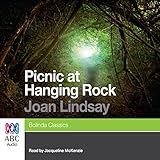
- Audible Audiobook
- Joan Lindsay (Author) - Jacqueline McKenzie (Narrator)
- English (Publication Language)
- 02/03/2012 (Publication Date) - Bolinda Publishing Pty Ltd (Publisher)
Step-by-Step Plan for Deeper Understanding
Engaging with Picnic At Hanging Rock by Joan Lindsay requires an acceptance of its deliberate ambiguity. Follow these steps to navigate its complexities:
1. Re-examine the picnic scene: Actively look for the subtle shifts in mood and the underlying tensions among the girls and staff.
- What to look for: The contrast between the outward appearance of a pleasant outing and the unspoken anxieties.
- Mistake: Assuming the picnic is purely idyllic, overlooking the foreshadowing of discord.
2. Analyze the disappearances: Focus on the how and why as presented, not as a puzzle to be solved.
- What to look for: The lack of any clear external force and the girls’ own volition, however subconscious.
- Mistake: Searching for a rational, external perpetrator or event that explains the vanishing.
3. Consider the aftermath: Pay close attention to the impact of the disappearances on those left behind, particularly Mrs. Appleyard and Sara.
- What to look for: The psychological unraveling and the ways characters cope with the inexplicable.
- Mistake: Dismissing the post-disappearance narrative as less important than the event itself.
4. Evaluate Irma’s return: Analyze her fragmented memories and her altered state.
- What to look for: The subtle changes in Irma and the unreliability of her account.
- Mistake: Taking Irma’s narrative at face value without questioning its completeness or accuracy.
5. Explore thematic threads: Identify recurring ideas like the clash between societal expectations and primal urges, the power of nature, and the nature of memory.
- What to look for: How these themes are woven into the characters’ experiences and the narrative’s progression.
- Mistake: Focusing solely on the plot events and neglecting the deeper symbolic meanings.
6. Embrace the ambiguity: Accept that the novel is designed to leave the reader with questions.
- What to look for: The satisfaction derived from contemplating possibilities rather than demanding definitive answers.
- Mistake: Feeling frustrated by the lack of closure, which indicates a misunderstanding of the novel’s artistic intent.
Common Misconceptions About Picnic At Hanging Rock
- Myth: The novel is a straightforward mystery with a hidden solution.
- Why it matters: This expectation leads to disappointment and a missed appreciation of the novel’s literary merit.
- Fix: Approach the book as an exploration of atmosphere, psychological states, and the limits of rational explanation, rather than a whodunit.
- Myth: The girls were abducted by an external force.
- Why it matters: This interpretation overlooks the text’s subtle suggestions of the girls’ own agency or a more elemental pull.
- Fix: Re-read passages describing the girls’ behavior before and during their ascent, noting their apparent willingness or trance-like state.
- Myth: Sara Waybourne’s fate is clearly defined.
- Why it matters: Sara’s storyline is as ambiguous as the disappearances, contributing to the overall sense of unease.
- Fix: Recognize that Sara’s departure and subsequent fate remain open to interpretation, mirroring the central mystery.
- Myth: The novel is primarily about the supernatural.
- Why it matters: While elements can feel uncanny, the focus is more on the psychological and primal aspects of human experience.
- Fix: Consider the “supernatural” as a manifestation of repressed desires, the overwhelming power of nature, or the breakdown of social order, rather than literal ghosts or spirits.
Quick Comparison
| Option | Best for | Pros | Watch out |
|---|---|---|---|
| Quick Answer | General use | Readers who have finished Picnic At Hanging Rock and are seeking to unpack… | Mistake: Assuming the picnic is purely idyllic, overlooking the foreshadowing… |
| Who This Is For | General use | Those who appreciate literary mysteries that prioritize atmosphere and charac… | Mistake: Searching for a rational, external perpetrator or event that explain… |
| What to Check First | General use | Your expectation of resolution: Did you anticipate a definitive explanation f… | Mistake: Dismissing the post-disappearance narrative as less important than t… |
| Step-by-Step Plan for Deeper Understanding | General use | The role of setting: Hanging Rock itself is a character. Note how the landsca… | Mistake: Taking Irma’s narrative at face value without questioning its comple… |
Decision Rules
- If reliability is your top priority for Picnic At Hanging Rock by Joan Lindsay, choose the option with the strongest long-term track record and support.
- If value matters most, compare total ownership cost instead of headline price alone.
- If your use case is specific, prioritize fit-for-purpose features over generic ‘best overall’ claims.
FAQ
- Q: Why does Joan Lindsay leave the central mystery unresolved?
A: Lindsay intentionally crafts an open-ended narrative to explore themes of the unknowable, the power of nature, and the limitations of human understanding. The unresolved mystery is the engine of the novel’s lasting impact and its ability to provoke thought.
- Q: Is there any “official” explanation for what happened at Hanging Rock?
A: No official explanation is provided by the author. While many theories exist among readers and critics, Joan Lindsay herself maintained the ambiguity, suggesting that the event transcends simple rationalization.
- Q: What is the significance of the heat in the novel?
A: The intense heat serves as a powerful symbol of oppressive societal expectations, primal urges, and the disruptive force that can lead characters to abandon convention and seek escape. It contributes to the dreamlike, disorienting atmosphere.
- Q: How does the Australian landscape contribute to the novel’s themes?
A: Hanging Rock is presented as an ancient, formidable, and almost sentient presence. It represents a primal force that dwarfs human concerns and societal structures, acting as a catalyst for the girls’ inexplicable departure and a stark contrast to the rigid Victorian boarding school environment.
Expert Tips for Reading Picnic At Hanging Rock
- Tip 1: Embrace the Unsaid. Actively look for what is not explicitly stated by the characters or narrator.
- Actionable Step: When reading dialogue, consider the subtext. What are the characters implying rather than stating directly?
- Common Mistake to Avoid: Assuming that the absence of explicit information means the information isn’t important or present in the narrative’s design.
- Tip 2: Focus on Atmosphere Over Plot. Prioritize the mood, sensory details, and emotional undercurrents over a need for sequential, logical plot progression.
- Actionable Step: Take notes on descriptive passages that evoke a strong feeling or sense of place, even if they don’t advance the plot directly.
- Common Mistake to Avoid: Becoming frustrated by narrative digressions or a lack of direct cause-and-effect, which are integral to the book’s style.
- Tip 3: Consider the Psychological Landscape. View the characters’ actions and the events of the novel through the lens of subconscious desires, repressed feelings, and the impact of oppressive environments.
- Actionable Step: Analyze how the boarding school’s strict rules and the societal expectations of the era might be influencing the girls’ behavior and their eventual actions.
- Common Mistake to Avoid: Attributing all actions to rational decision-making, ignoring the powerful influence of unconscious drives and emotional states.
Picnic At Hanging Rock: A Contrarian’s Perspective
The long-term relevance of Picnic At Hanging Rock by Joan Lindsay is undeniable, yet a critical examination reveals a common reader failure mode: the expectation of a solvable puzzle. Many approach this novel seeking the satisfying click of narrative resolution, only to find themselves adrift in deliberate ambiguity. This contrarian perspective suggests that the novel’s strength lies precisely in its refusal to provide easy answers, forcing readers to confront the limits of rational explanation and the power of the unknown.
The text offers compelling evidence for this interpretation. The girls’ ascent is described with an almost dreamlike quality, their motivations shrouded in a haze of heat and nascent desires. There is no clear villain, no discernible external force compelling their actions. Instead, Lindsay presents a scenario where the characters seem to step out of reality, drawn by something elemental and ineffable within the landscape itself.
Thematic Resonance and Reading Context
Picnic At Hanging Rock resonates today because it taps into a universal human fascination with the inexplicable. The novel probes themes of societal constraint versus primal freedom, the allure of the wild, and the subjective nature of memory. It challenges the reader’s reliance on concrete causality, suggesting that some experiences transcend logical dissection.
When considering Picnic At Hanging Rock, it’s crucial to understand its place within literary traditions that embrace ambiguity. Unlike a procedural mystery, it functions more as a mood piece and a psychological study. The author’s deliberate withholding of definitive answers is not a flaw, but a core artistic choice designed to provoke ongoing contemplation.
BLOCKQUOTE_0
The impact of this approach is evident in the lasting discussions surrounding the novel. Readers often find themselves returning to its pages, not to find answers, but to re-experience the disquieting atmosphere and to ponder the myriad possibilities left open by Lindsay’s masterful prose. The true “reading” of Picnic At Hanging Rock involves accepting its mysteries, not solving them.