Discovering Kim Stanley Robinson’s Vision In Green Mars
Kim Stanley Robinson’s Green Mars is the second installment in his seminal Mars trilogy, a work that meticulously charts the transformation of a barren planet into a verdant world. This novel is not merely a story of colonization but a deep dive into the ecological, social, and political ramifications of terraforming. It demands patient engagement, rewarding readers with a profound exploration of humanity’s capacity for change and its responsibility to new environments.
Green Mars by Kim Stanley Robinson: Who This Is For
- Readers seeking a scientifically rigorous and philosophically deep exploration of planetary engineering and societal evolution. Green Mars offers a detailed, multi-generational account of creating a new world, making it an ideal choice for those who value intellectual depth in their science fiction.
- Those who appreciate complex, character-driven narratives where ideas and the environment play central roles. The novel prioritizes the intellectual and ethical dimensions of colonization over fast-paced action, appealing to readers who enjoy intricate thematic development.
What to Check First
- Your tolerance for detailed scientific and engineering exposition. Robinson integrates extensive technical descriptions of terraforming processes, which are crucial to the novel’s realism and thematic exploration.
- Your interest in political philosophy and social commentary. The novel features significant discussions on governance, ethics, and the nature of a new society, forming a core part of its narrative.
- Your familiarity with Red Mars. While Green Mars can be approached independently, understanding the foundational events and character introductions from the first book will significantly enhance comprehension and appreciation of the ongoing narrative.
- Your preference for deliberate pacing. The narrative unfolds over decades, with a focus on development and reflection rather than constant plot acceleration, which may not suit all readers.
Step-by-Step Plan for Engaging With Green Mars
1. Establish Foundational Context: Begin by reviewing the key events, characters, and unresolved tensions from Red Mars.
- What to look for: The initial settlement of Mars, the formation of the First Hundred, and the early political schisms that set the stage for future conflicts.
- Mistake to avoid: Attempting to read Green Mars as a standalone work, which can lead to confusion regarding character relationships and the historical backdrop crucial for understanding the motivations and conflicts presented.
2. Immerse Yourself in the Terraforming Process: Pay close attention to Robinson’s detailed descriptions of Mars’s environmental transformation.
- What to look for: The specific technologies, biological introductions, and geological changes that contribute to the planet’s growing habitability, understanding these as the physical manifestation of the narrative’s core theme.
- Mistake to avoid: Skimming over the scientific explanations; these are integral to the novel’s credibility and thematic core, providing the tangible basis for the societal and political changes that follow.
3. Analyze Societal Evolution: Observe the development of Martian culture, governance, and identity as the planet becomes more Earth-like.
- What to look for: The emergence of distinct Martian political factions, social movements, and philosophical debates that reflect the unique challenges and opportunities of life on a developing world.
- Mistake to avoid: Underestimating the significance of the political and ideological conflicts; they are central to the narrative’s progression and reveal the complexities of building a new civilization.
4. Track Character Development Across Generations: Follow the personal journeys of both the original colonists and the new generations born on Mars.
- What to look for: How individuals adapt to long-term colonization, technological advancement, and societal upheaval, noting the evolving perspectives and priorities of each generation.
- Mistake to avoid: Focusing solely on plot points and neglecting the internal struggles and philosophical growth of the characters, as their personal arcs are deeply intertwined with the larger planetary narrative.
5. Engage with Ethical Dilemmas: Reflect on the moral questions surrounding terraforming, resource control, and intergenerational equity.
- What to look for: Robinson’s exploration of the “right” way to colonize and develop a world, and the ethical costs involved, such as the impact on potential indigenous Martian life or the distribution of planetary resources.
- Mistake to avoid: Accepting the terraforming narrative without critically examining its ethical implications and potential consequences, which can lead to a superficial understanding of the novel’s depth.
6. Appreciate the Narrative Structure: Recognize the novel’s episodic nature and its reliance on descriptive passages and dialogue to convey information and themes.
- What to look for: How Robinson balances scientific exposition, character introspection, and the unfolding of the larger planetary narrative, noting the deliberate pacing as a feature that allows for deep exploration.
- Mistake to avoid: Expecting a conventional, action-driven plot; the novel’s deliberate pacing is a feature, not a bug, designed to allow for thorough examination of its complex themes.
7. Connect to Broader Themes: Understand Green Mars as an extended meditation on humanity’s relationship with its environment and its future potential.
- What to look for: Recurring motifs of growth, adaptation, ecological stewardship, and the search for meaning in a transformed world, recognizing the novel as a commentary on sustainability and societal progress.
- Mistake to avoid: Reading the novel solely as a science fiction adventure, thereby missing its profound commentary on sustainability and societal progress that resonates with contemporary environmental concerns.
Understanding Green Mars by Kim Stanley Robinson: A Critical Perspective
Green Mars is a novel that thrives on its ambitious scope and intellectual rigor. Kim Stanley Robinson masterfully expands upon the foundation laid in Red Mars, shifting the focus from the initial, often violent, takeover of the planet to the intricate, multi-decade process of making it habitable and fostering a unique Martian civilization. The book’s strength lies in its detailed, scientifically grounded depiction of terraforming, treating it not as a magical event but as a complex, painstaking engineering and ecological project. This commitment to realism lends a unique weight to the narrative, making the transformation of Mars feel both plausible and profoundly significant.
For those eager to dive into the intricate world-building and profound themes of planetary transformation, Kim Stanley Robinson’s Green Mars is an essential read. It continues the epic saga of humanity’s efforts to reshape the Red Planet.
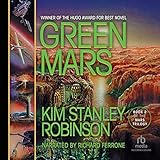
- Audible Audiobook
- Kim Stanley Robinson (Author) - Richard Ferrone (Narrator)
- English (Publication Language)
- 03/31/2008 (Publication Date) - Recorded Books (Publisher)
The novel excels in exploring the philosophical and political consequences of large-scale environmental intervention and colonization. It delves into the emergent identities of Martians, their evolving relationship with Earth, and the fundamental questions of self-determination and governance. However, this depth comes at the cost of a more conventional narrative pace. Readers expecting a plot driven by constant action may find the extensive scientific exposition and philosophical debates challenging. The characters, while central to exploring these themes, can sometimes feel like conduits for ideas, their personal arcs interwoven with the grander tapestry of planetary change.
Strengths of Green Mars
- Unrivaled Scientific and Ecological Detail: The novel provides an exceptionally thorough and believable account of terraforming, making it a benchmark for hard science fiction. The intricate descriptions of atmospheric, geological, and biological changes are a primary draw, grounding the speculative elements in plausible science. For example, the detailed breakdown of how atmospheric pressure is increased and the introduction of specific extremophile organisms showcase Robinson’s meticulous research.
- Profound Thematic Exploration: Green Mars grapples with critical questions about humanity’s role in shaping its environment, the ethics of colonization, and the long-term sustainability of civilization. It offers a rich landscape for philosophical reflection on progress and responsibility. The central conflict over the planet’s future, pitting those who wish to preserve its nascent wilderness against those pushing for full Earth-like development, exemplifies this.
- Complex Societal Development: The evolution of Martian society, from its nascent stages to a distinct civilization with its own culture, politics, and conflicts, is depicted with remarkable depth. The generational shifts and the emergence of new ideologies are central to the novel’s enduring power. The rise of distinct political blocs, such as the “Separatists” and the “Terrans,” illustrates this societal fragmentation and evolution.
Limitations of Green Mars
- Deliberate Pacing and Extensive Exposition: The novel’s measured pace, characterized by detailed scientific explanations and philosophical discussions, can be a barrier for readers accustomed to faster-moving narratives. Certain sections, like the lengthy descriptions of atmospheric processing plants or geological surveys, may feel slow or overly technical for some.
- Character as Vehicle for Ideas: While characters are essential, they often serve primarily as instruments for exploring the novel’s complex themes and scientific concepts. Their individual journeys can sometimes be overshadowed by the grand narrative of planetary transformation. For instance, Ann Clayborne’s extensive geological work, while vital to the plot, can sometimes overshadow her personal emotional arc.
- Narrative Density: The sheer volume of information, interwoven political machinations, and philosophical arguments require significant reader investment. It is a book that demands active engagement rather than passive consumption, and readers may find themselves needing to re-read passages to fully grasp the interconnectedness of events and ideas.
Common Mistakes When Reading Green Mars
- Mistake: Expecting a fast-paced, action-oriented plot.
- Why it matters: This mismatch in expectation can lead to frustration and a perception that the book is slow or boring, diminishing engagement with its substantive strengths.
- Fix: Adjust your reading approach to appreciate the detailed world-building, scientific exposition, and philosophical debates as the primary drivers of the narrative’s richness. Focus on the intellectual and environmental transformation as the central “action.”
- Mistake: Skipping the scientific and technical explanations.
- Why it matters: These details are fundamental to the novel’s premise and the credibility of the terraforming process. Omitting them weakens the impact of the story and its exploration of human ingenuity and ecological responsibility.
- Fix: Engage with the scientific descriptions; they are not mere filler but integral components that build the world and its possibilities, contributing to the novel’s unique appeal and Robinson’s signature hard science fiction approach.
- Mistake: Underestimating the significance of political and philosophical debates.
- Why it matters: The conflicts and discussions about governance, ethics, and societal structure are central to the narrative and drive much of the character interaction and plot development. They are not side plots but the very fabric of Martian society’s evolution.
- Fix: Pay close attention
Quick Comparison
| Option | Best for | Pros | Watch out |
|---|---|---|---|
| Green Mars by Kim Stanley Robinson Who This Is For | General use | Readers seeking a scientifically rigorous and philosophically deep exploratio… | Mistake to avoid: Attempting to read Green Mars as a standalone work, which… |
| What to Check First | General use | Those who appreciate complex, character-driven narratives where ideas and the… | Mistake to avoid: Skimming over the scientific explanations; these are integr… |
| Step-by-Step Plan for Engaging With Green Mars | General use | Your tolerance for detailed scientific and engineering exposition. Robinson i… | Mistake to avoid: Underestimating the significance of the political and ideol… |
| Understanding Green Mars by Kim Stanley Robinson A Critical Perspective | General use | Your interest in political philosophy and social commentary. The novel featur… | Mistake to avoid: Focusing solely on plot points and neglecting the internal… |
Decision Rules
- If reliability is your top priority for Green Mars by Kim Stanley Robinson, choose the option with the strongest long-term track record and support.
- If value matters most, compare total ownership cost instead of headline price alone.
- If your use case is specific, prioritize fit-for-purpose features over generic ‘best overall’ claims.