Exploring Memory and Society in Lois Lowry’s The Giver
Lois Lowry’s The Giver presents a society meticulously engineered to eliminate pain, conflict, and choice, achieved through the eradication of memory. This analysis explores the novel’s thematic depth, its societal mechanisms, and its enduring relevance for readers interested in speculative fiction, ethics, and the fundamental aspects of human experience.
The Giver by Lois Lowry: Who This Is For
- Readers seeking a thought-provoking exploration of dystopian societies, focusing on the trade-offs between safety and freedom.
- Individuals interested in how memory shapes identity, culture, and the very definition of a meaningful life.
What to Check First
- The Concept of Sameness: Understand that the community has achieved peace by eliminating individual differences, including color, weather, and strong emotions. This is the foundational principle of their society.
- The Role of the Receiver of Memory: Recognize that one individual bears the burden of all past memories to guide the community’s leaders, a crucial element that sets the protagonist on his path.
- Thematic Conflict: Identify the central tension between the community’s desire for a pain-free existence and the inherent value of a full spectrum of human experience, including suffering and joy.
- Jonas’s Perspective: Note that the narrative is primarily filtered through Jonas, a young boy on the cusp of adulthood, whose gradual awakening to the world’s suppressed truths drives the story.
Step-by-Step Plan for Understanding The Giver
1. Examine the Community’s Rules and Structure: Observe the daily life, language, and prescribed roles within Jonas’s community. What to look for: The emphasis on politeness, precision in speech, and the absence of personal choice in career or family. Mistake to avoid: Interpreting this order as inherently positive; recognize the underlying control and suppression.
2. Engage with Jonas’s Training as Receiver: Follow Jonas’s experiences as he receives memories from the Giver. What to look for: The introduction of color, music, love, joy, and importantly, pain, hunger, and war. Mistake to avoid: Underestimating the profound emotional and psychological impact these memories have on Jonas; they are designed to be overwhelming.
3. Analyze the Rationale Behind Sameness: Understand why the community adopted Sameness and its direct consequences. What to look for: The Elders’ justification (elimination of conflict) versus the actual cost (loss of individuality, deep connection, and genuine happiness). Mistake to avoid: Focusing solely on the negative aspects of memory; consider the positive dimensions of human experience that are also lost.
4. Consider the Giver’s Burden and Ethical Dilemma: Reflect on the immense responsibility and weariness carried by the Giver. What to look for: His past attempts to influence the system and his ultimate decision to aid Jonas. Mistake to avoid: Viewing the Giver as a passive observer; he is an active, albeit constrained, participant in the system.
5. Deconstruct Jonas’s Decision to Escape: Follow Jonas’s choice to flee the community with Gabriel. What to look for: The desperation driving his actions, the risks involved, and the ambiguous hope at the story’s conclusion. Mistake to avoid: Expecting a clear, definitive resolution; the ending is crafted to provoke continued thought.
6. Ponder the Significance of “Elsewhere”: Reflect on the meaning of Jonas’s final journey and the music he hears. What to look for: The symbolism of the music and the potential for a different kind of existence. Mistake to avoid: Interpreting “Elsewhere” as a guaranteed paradise; it represents a possibility and a hope, not a certainty.
Common Myths About The Giver by Lois Lowry
- Myth: The Giver’s society is a successful utopia because it has eliminated suffering.
- Why it matters: This perspective overlooks the fundamental trade-off: the eradication of pain also eliminates the capacity for deep joy, love, and genuine human connection. True societal flourishing typically involves not only the absence of hardship.
- Fix: Recognize that the society prioritizes order and comfort over authentic experience and individual freedom, leading to a sterile existence.
- Myth: Jonas’s escape is a straightforward victory against an oppressive regime.
- Why it matters: The ending is deliberately ambiguous. The physical journey is perilous, and the ultimate fate of Jonas and Gabriel remains uncertain, underscoring the immense difficulty of breaking free from deeply entrenched systems.
- Fix: Consider the escape as a profound act of rebellion and a desperate search for a better way, rather than a guaranteed triumph.
- Myth: The novel is solely a cautionary tale about the dangers of government control.
- Why it matters: While government control is a significant element, the book delves deeper into the human psyche, the necessity of memory for identity, and the inherent value of emotional complexity, even its painful aspects.
- Fix: Engage with the philosophical questions about what constitutes a meaningful human life, beyond mere survival and comfort.
For those looking to dive into this thought-provoking narrative, Lois Lowry’s ‘The Giver’ is the essential starting point. It masterfully sets the stage for the societal exploration that follows.
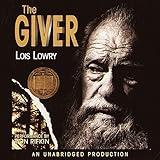
- Audible Audiobook
- Lois Lowry (Author) - Ron Rifkin (Narrator)
- English (Publication Language)
- 5 Pages - 11/07/2003 (Publication Date) - Listening Library (Publisher)
Expert Tips for Analyzing The Giver by Lois Lowry
- Tip: Focus on the novel’s exploration of memory as the bedrock of identity.
- Actionable Step: Identify specific instances where Jonas’s understanding of himself or others changes dramatically after receiving a memory.
- Common Mistake to Avoid: Underestimating how the community’s lack of memory directly leads to their inability to form deep personal bonds or understand complex emotions.
- Tip: Analyze the language and euphemisms used by the community.
- Actionable Step: Note how terms like “release” are used to mask harsher realities, and how precise language aims to control thought.
- Common Mistake to Avoid: Accepting the community’s language at face value without questioning its manipulative intent.
- Tip: Consider the ethical implications of eliminating pain.
- Actionable Step: Discuss whether a life without suffering, but also without true joy or love, is ultimately desirable or human.
- Common Mistake to Avoid: Focusing only on the negative consequences of pain and failing to acknowledge its role in empathy, growth, and appreciation for happiness.
Decision Criteria for The Giver by Lois Lowry
- Unique Decision Criterion: If your primary interest is in exploring the philosophical necessity of suffering for human growth and the appreciation of joy, The Giver is an essential read. However, if you prefer narratives with clear resolutions and unambiguous happy endings, the novel’s ambiguous conclusion may present a limitation.
Quick Comparison
| Option | Best for | Pros | Watch out |
|---|---|---|---|
| The Giver by Lois Lowry Who This Is For | General use | Readers seeking a thought-provoking exploration of dystopian societies, focus… | Common Mistake to Avoid: Underestimating how the community’s lack of memory d… |
| What to Check First | General use | Individuals interested in how memory shapes identity, culture, and the very d… | Common Mistake to Avoid: Accepting the community’s language at face value wit… |
| Step-by-Step Plan for Understanding The Giver | General use | The Concept of Sameness: Understand that the community has achieved peace by… | Common Mistake to Avoid: Focusing only on the negative consequences of pain a… |
| Common Myths About The Giver by Lois Lowry | General use | The Role of the Receiver of Memory: Recognize that one individual bears the b… | Common Mistake to Avoid: Underestimating how the community’s lack of memory d… |
Decision Rules
- If reliability is your top priority for The Giver by Lois Lowry, choose the option with the strongest long-term track record and support.
- If value matters most, compare total ownership cost instead of headline price alone.
- If your use case is specific, prioritize fit-for-purpose features over generic ‘best overall’ claims.
FAQ
- Q: What is the primary theme of The Giver?
- A: The primary theme is the vital importance of memory, individuality, and the full spectrum of human emotions—both joy and pain—for a meaningful and authentic life.
- Q: Is The Giver considered a dystopia?
- A: Yes, The Giver is classified as a dystopian novel because it depicts a seemingly perfect society that, upon closer examination, is deeply flawed and oppressive, prioritizing conformity and control over individual freedom and genuine human experience.
- Q: What does “Sameness” signify in the book?
- A: Sameness is the societal system in The Giver designed to eliminate differences, including color, weather, and strong emotions, to prevent conflict and ensure predictability. This is achieved by suppressing individual memory and experience.
- Q: Who is the Giver?
- A: The Giver is the sole member of the community who holds all the memories of the past, both positive and negative. He serves as an advisor to the Elders and trains the Receiver of Memory.
BLOCKQUOTE_0
The Giver by Lois Lowry: Strengths and Limitations
- Strengths:
- Thematic Depth: The novel excels in exploring complex themes of memory, identity, and the cost of societal control. The concept of Sameness provides a powerful, albeit unsettling, framework for these discussions.
- Narrative Voice: Jonas’s innocent yet increasingly aware perspective allows readers to discover the world and its flaws alongside him, creating a compelling emotional journey.
- Provocative Questions: The Giver consistently prompts readers to question the nature of happiness, the definition of a good society, and the essential role of suffering in human growth.
- Limitations:
- Pacing in the Middle: Some readers may find the middle section, detailing Jonas’s memory acquisition, to be slower as it focuses on descriptive passages of past experiences.
- Ambiguous Ending: While thematically effective, the unresolved and ambiguous ending can leave some readers desiring a more concrete conclusion to Jonas’s journey.
Expert Insight on The Giver by Lois Lowry
When considering the societal structure presented in The Giver, it is crucial to evaluate the definition of “well-being” adopted by the community. Their focus on the absence of pain and conflict, while seemingly beneficial on the surface, fundamentally misunderstands human flourishing. True well-being necessitates the capacity for a full range of emotional experiences, the freedom to make choices, and the cultivation of deep personal relationships, all of which are deliberately suppressed in the name of Sameness. The novel serves as a potent reminder that a life devoid of hardship may also be a life devoid of meaning and genuine connection.