Exploring Hatchet By Gary Paulsen
Gary Paulsen’s Hatchet is a foundational text in young adult adventure literature, detailing the harrowing survival of thirteen-year-old Brian Robeson after a plane crash in the Canadian wilderness. This analysis delves into the novel’s narrative construction, thematic resonance, and its specific appeal to readers, offering a critical examination of its development and lasting impact.
Hatchet by Gary Paulsen: Quick Answer
- Hatchet presents a stark, character-driven account of a young boy’s solitary struggle for survival in the wilderness, emphasizing resilience and self-discovery.
- The novel’s primary strength lies in its unflinching portrayal of Brian’s physical and psychological transformation, though its intensity may challenge some younger readers.
- It serves as a potent exploration of the primal human need for self-reliance and the often-overlooked connection to the natural world.
Who This Is For
- Readers aged 10 and up who are drawn to adventure narratives that explore themes of personal growth and overcoming adversity.
- Individuals interested in a focused examination of psychological adaptation and the development of practical skills under extreme pressure.
What to Check First
Before engaging with Hatchet, consider these points for a more informed reading experience:
- Emotional Intensity: The narrative details a plane crash, the protagonist’s immediate fear, and prolonged isolation. Assess a reader’s readiness for potentially distressing content.
- Pacing and Focus: The story prioritizes Brian’s internal development and the methodical process of survival over constant external action. Readers seeking rapid plot progression might find the deliberate pace challenging.
- Thematic Depth: Hatchet is as much about Brian’s mental and emotional evolution as it is about physical survival. Understand that the internal journey is central to the novel’s impact.
- Authorial Style: Gary Paulsen employs direct, unadorned prose. This clarity enhances accessibility but may not appeal to those who prefer more elaborate literary styles.
Step-by-Step Plan: Understanding Brian’s Survival in Hatchet
This plan outlines key elements to analyze while reading Hatchet, focusing on the protagonist’s journey and the author’s techniques.
1. Initial Impact and Immediate Needs: Observe Brian’s state post-crash and his most urgent actions.
- Action: Note Brian’s first responses to the crash and his immediate search for essential resources.
- What to Look For: The raw, instinctual reactions that precede any conscious planning.
- Mistake: Assuming Brian possesses immediate survival expertise; his early actions are a mix of panic and rudimentary instinct.
2. The Hatchet as a Catalyst: Analyze the significance of the hatchet as Brian’s primary tool.
- Action: Track how Brian utilizes the hatchet for shelter, fire, food, and self-defense.
- What to Look For: The hatchet’s evolution from a simple object to a symbol of Brian’s growing competence and will to live.
- Mistake: Underestimating the psychological weight of a reliable tool; it represents not only utility.
3. The Struggle for Fire: Examine the process and importance of Brian learning to make fire.
- Action: Pay attention to the repeated failures and eventual success in igniting a fire.
- What to Look For: The profound emotional and practical shift fire represents—warmth, safety, cooking capability, and a sense of control.
- Mistake: Overlooking the fire-making sequence; it is a pivotal moment signifying a major step in Brian’s self-sufficiency.
For those eager to dive into Brian Robeson’s gripping survival story, the book ‘Hatchet’ by Gary Paulsen is an essential read. It masterfully details his transformation in the Canadian wilderness.
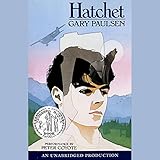
- Audible Audiobook
- Gary Paulsen (Author) - Peter Coyote (Narrator)
- English (Publication Language)
- 10/31/2003 (Publication Date) - Listening Library (Publisher)
4. Environmental Acclimation: Assess Brian’s learning curve in understanding and adapting to the wilderness.
- Action: Observe Brian’s observations of flora, fauna, and weather patterns.
- What to Look For: His gradual transition from viewing nature as an adversary to understanding its systems and his place within them.
- Mistake: Perceiving Brian’s learning as instantaneous; it is a slow, arduous process of trial and error.
5. The Psychological Toll of Solitude: Analyze the effects of prolonged isolation on Brian’s mental state.
- Action: Note Brian’s internal monologues and his evolving thoughts about his past and future.
- What to Look For: The emergence of despair, fear, and ultimately, mental fortitude born from his solitude.
- Mistake: Focusing solely on physical challenges; the development of mental and emotional resilience is equally critical.
6. The “Thin Secret” Revelation: Understand Brian’s core realization about survival.
- Action: Identify the moments where Brian articulates this fundamental understanding.
- What to Look For: His epiphany that survival hinges on a fundamental connection to and willingness to engage with the environment, not just complex knowledge.
- Mistake: Missing this thematic crux; it is the author’s intended message about human potential and connection.
Common Myths About Hatchet by Gary Paulsen
- Myth: Hatchet is a light adventure story suitable for all young readers.
- Why it matters: This categorization can lead to the book being given to children unprepared for its depiction of intense fear, isolation, and the constant threat of death.
- Fix: Recognize that while the prose is accessible, the themes are mature. Evaluate a reader’s emotional maturity and their capacity to handle challenging, potentially frightening scenarios.
- Myth: Brian Robeson is an innately skilled survivor from the beginning.
- Why it matters: This view diminishes the novel’s central theme of transformation through learning and adaptation. It reduces Brian’s journey from one of development to one of inherent talent.
- Fix: Focus on Brian’s mistakes, his learning process, and his gradual acquisition of skills. His survival is a testament to his developing resourcefulness, not pre-existing expertise.
- Myth: The narrative is primarily concerned with the physical act of surviving in the wilderness.
- Why it matters: This perspective overlooks the novel’s significant exploration of psychological resilience, self-discovery, and the profound relationship between humans and the natural world.
- Fix: Pay close attention to Brian’s internal monologues and emotional arc. His mental fortitude and evolving perspective are as crucial to his survival as his physical actions.
Expert Tips for Engaging with Hatchet
These practical tips enhance the reader’s understanding of Hatchet and its narrative construction.
- Tip 1: Immerse in Sensory Details.
- Actionable Step: Actively note the descriptions of the wilderness’s sounds, smells, sights, and textures as Brian experiences them.
- Common Mistake to Avoid: Skimming descriptive passages; these details are vital for understanding Brian’s isolated world and his developing connection to nature.
- Tip 2: Track Brian’s Internal Monologue.
- Actionable Step: Pay close attention to Brian’s thoughts, fears, and reflections, particularly those concerning his past and family.
- Common Mistake to Avoid: Concentrating solely on external plot events; the novel’s true impact lies in Brian’s psychological evolution.
- Tip 3: Analyze the Hatchet’s Symbolism.
- Actionable Step: As you read, note the various ways the hatchet is used and what it symbolizes at different stages of Brian’s journey.
- Common Mistake to Avoid: Treating the hatchet merely as a tool; it transforms into a symbol of hope, capability, and Brian’s growing mastery over his environment.
A Contrarian View: The Illusion of Self-Reliance
While Hatchet is lauded for its depiction of self-reliance, a deeper look suggests Brian’s survival is not solely an act of individual will. His eventual rescue, facilitated by the presence of a pilot searching for a tornado, introduces an external element that undermines the narrative’s purest interpretation of solitary survival. This counterpoint highlights that even in the most isolated scenarios, the possibility of external intervention or the reliance on pre-existing societal structures (like search and rescue operations) remains a factor. The novel’s power lies in Brian’s attempt at absolute self-reliance, but the resolution subtly reminds us of our interconnectedness, even if that connection is only realized through eventual rescue.
Key Takeaways from Hatchet by Gary Paulsen
- Transformation through Adversity: Brian’s journey from a scared city kid to a capable survivor demonstrates the profound capacity for human adaptation when faced with extreme challenges.
- The Primal Connection: The novel underscores the idea that humans possess an innate connection to the natural world, which can be rediscovered and utilized for survival.
- Internal Strength: Ultimately, Brian’s survival is a testament to his mental fortitude, his ability to process fear, and his unwavering will to live.
| Aspect | Evaluation | Supporting Detail |
|---|---|---|
| Narrative Arc | Strong, character-focused development | Brian’s transition from fear to resourcefulness is meticulously detailed. |
| Thematic Depth | Explores resilience, nature, and self-discovery | The “thin secret” of survival is a central philosophical takeaway. |
| Pacing | Deliberate, emphasizes process over constant action | The fire-making sequence, for example, is detailed and reflects a slow learning curve. |
| Reader Engagement | High for those who appreciate character development and survival themes | The stark realism and internal focus create a compelling, immersive experience. |
| Potential Drawback | Intense situations may be challenging for younger/sensitive readers | Depictions of crash aftermath and prolonged isolation require reader maturity. |
BLOCKQUOTE_0
Decision Rules
- If reliability is your top priority for Hatchet by Gary Paulsen, choose the option with the strongest long-term track record and support.
- If value matters most, compare total ownership cost instead of headline price alone.
- If your use case is specific, prioritize fit-for-purpose features over generic ‘best overall’ claims.
FAQ
*