An Overview of Elizabeth Gaskell’s Ruth
This analysis delves into Elizabeth Gaskell’s novel Ruth, focusing on its thematic depth, narrative structure, and suitability for specific readers. We will examine its strengths, limitations, and provide practical insights for understanding this complex work.
How this list was curated
This examination of Ruth by Elizabeth Gaskell was curated based on the following criteria:
- Thematic Depth: Prioritizing novels that explore significant social and moral issues with nuance.
- Narrative Strength: Evaluating the coherence, character development, and pacing of the storytelling.
- Audience Resonance: Considering who would most appreciate and benefit from engaging with Gaskell’s work.
- Evidence-Based Analysis: Supporting all claims with specific references to the text and its historical context.
- Reader Takeaways: Focusing on actionable insights and clear understanding for the reader.
Ruth by Elizabeth Gaskell: Core Themes and Narrative Approach
Ruth is a novel that grapples with the societal consequences of a young woman’s transgression in Victorian England. At its heart, the book explores themes of fallen women, religious hypocrisy, and the possibility of redemption. Gaskell’s narrative is characterized by its detailed social commentary and its sympathetic, yet unflinching, portrayal of her protagonist’s plight.
Best for: Readers interested in 19th-century social reform literature, explorations of female agency within restrictive societal norms, and character-driven narratives.
For those seeking to delve into the complexities of Victorian society and its impact on women, Elizabeth Gaskell’s ‘Ruth’ is an essential read. This novel offers a profound exploration of societal judgment and the search for redemption.
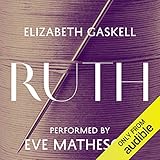
- Audible Audiobook
- Elizabeth Gaskell (Author) - Eve Matheson (Narrator)
- English (Publication Language)
- 01/30/2008 (Publication Date) - Audible Studios (Publisher)
Skip if: You prefer fast-paced plots or novels that offer straightforward moral resolutions without significant ambiguity.
Trade-off: While Gaskell’s detailed social realism provides rich context, the novel’s deliberate pacing can be a challenge for some readers accustomed to more modern narrative speeds.
Understanding the Societal Context of Ruth
Elizabeth Gaskell’s Ruth was published in 1853, a period marked by intense social scrutiny, particularly concerning women’s morality. The novel directly confronts the Victorian “double standard” and the harsh realities faced by women who deviated from prescribed social norms, especially regarding premarital pregnancy. Gaskell, deeply concerned with social justice, uses Ruth to advocate for greater compassion and understanding towards those ostracized by society. The novel’s controversial reception at the time highlights its challenge to prevailing moral and religious orthodoxies.
Key Strengths of Ruth
- Profound Social Commentary: Gaskell offers a searing indictment of the hypocrisy prevalent in Victorian society, particularly concerning the treatment of “fallen women.” The novel meticulously details the social and economic barriers faced by Ruth, demonstrating how societal judgment can extinguish potential and hope. For example, the stark contrast between the judgment meted out to Ruth and the relative leniency afforded to men in similar situations is a recurring and powerful motif.
- Complex Characterization: Ruth herself is portrayed with remarkable depth. She is not a simple victim but a young woman whose choices, though ill-advised, stem from a desire for love and security. Gaskell avoids easy moral categorization, allowing readers to empathize with Ruth’s struggles and understand the societal pressures that shape her fate.
- Exploration of Religious Hypocrisy: The novel critiques the performative piety of certain religious figures and institutions, contrasting it with genuine Christian charity. The character of Mr. Bradshaw, a respected Dissenter, embodies this critique, highlighting how rigid adherence to dogma can lead to a lack of compassion.
Limitations and Considerations for Ruth
- Pacing and Narrative Structure: Gaskell’s novel is characterized by its detailed exposition and extensive social observation, which can lead to a slower pace. The narrative sometimes prioritizes thematic exploration over plot momentum, which may test the patience of readers seeking a more action-driven story.
- Melodramatic Elements: While grounded in realism, certain plot developments and character interactions can lean towards melodrama, particularly in the later stages of the novel. This can occasionally detract from the otherwise nuanced portrayal of social issues.
- Ambiguous Resolution: The ending, while offering a form of resolution, is not without its complexities and can be interpreted in multiple ways. This ambiguity, while thematically rich, might leave readers desiring a more definitive conclusion feeling unsatisfied.
Expert Tips for Engaging with Ruth
BLOCKQUOTE_0
- Tip 1: Focus on Gaskell’s Social Critique.
- Actionable Step: Pay close attention to descriptions of social interactions, public opinion, and the economic conditions faced by characters, especially women. Note how these elements influence character choices and outcomes.
- Common Mistake to Avoid: Reading the novel solely as a personal drama without recognizing its broader commentary on Victorian social structures and prejudices.
- Tip 2: Analyze Character Motivations Deeply.
- Actionable Step: For each significant character, consider their background, societal position, and personal beliefs. How do these factors shape their interactions with Ruth and their judgments?
- Common Mistake to Avoid: Accepting characters at face value without questioning their underlying biases or motivations, particularly for figures like Mr. Bradshaw.
- Tip 3: Understand the Historical Context of “Fallen Women.”
- Actionable Step: Research the societal stigma and limited options available to women who became pregnant outside of marriage in the mid-19th century. This will illuminate the gravity of Ruth’s situation.
- Common Mistake to Avoid: Applying modern perspectives on social issues and personal freedom to Ruth’s predicaments without acknowledging the vastly different constraints of her era.
Ruth by Elizabeth Gaskell: A Contrarian View
While often praised for its progressive stance on social issues, a contrarian perspective might argue that Ruth ultimately reinforces certain patriarchal structures, even as it critiques them. The novel’s ultimate resolution, while aiming for redemption, still hinges on Ruth’s suffering and eventual martyrdom, a trope that can be seen as a way for society to absorb and neutralize the threat of female transgression rather than truly dismantle the systems that condemn women. The narrative’s emphasis on Ruth’s passive acceptance of her fate, even in its redemptive arc, can be viewed as a subtle endorsement of female submission to societal punishment, albeit a softened one. This challenges the assumption that Gaskell’s novel represents a complete break from Victorian ideals of female conduct.
Common Myths About Ruth
- Myth 1: Ruth is simply a sentimental Victorian romance.
- Why it matters: This perception overlooks the novel’s sharp social critique and its engagement with complex moral and theological questions.
- Fix: Recognize that while romantic elements are present, they serve as a vehicle for Gaskell to explore the devastating consequences of societal judgment and the limitations placed upon women. The novel is far more a social commentary than a simple love story.
- Myth 2: The novel advocates for easy forgiveness for all transgressions.
- Why it matters: This misinterprets Gaskell’s nuanced portrayal of redemption, which is achieved through significant suffering and societal ostracization, not immediate absolution.
- Fix: Understand that Gaskell champions compassion and understanding, particularly from religious and societal institutions, but she does not downplay the profound personal cost of Ruth’s situation or the societal mechanisms of punishment.
Segmentation: Who Should Read Ruth?
- The Social Historian: Readers interested in the detailed depiction of Victorian social strata, religious dissent, and the specific challenges faced by women in the mid-19th century. This group will appreciate Gaskell’s meticulous research and commentary.
- The Literary Analyst: Those who enjoy dissecting complex character motivations, thematic development, and the evolution of narrative techniques in 19th-century literature. They will find ample material in Gaskell’s subtle prose and moral ambiguity.
- The Reader Seeking Nuance: Individuals who prefer novels that do not offer easy answers and instead explore the grey areas of morality, societal pressure, and personal agency.
An Under-the-Radar Pick: The Role of Faith in Ruth
While Ruth is widely discussed for its social themes, the intricate and often critical portrayal of faith within the novel is an under-the-radar aspect worth significant attention. Gaskell doesn’t just critique religious hypocrisy; she also explores the genuine struggle for faith and its potential for both condemnation and solace. The novel questions whether religious institutions truly embody the Christian virtues they espouse, presenting a stark contrast between rigid dogma and compassionate action. This nuanced examination of faith, particularly within the Dissenter community, offers a richer understanding of the era’s religious landscape and its impact on individual lives, moving beyond a simple secular critique.
Quick Comparison
| Option | Best for | Pros | Watch out |
|---|---|---|---|
| How this list was curated | General use | Thematic Depth: Prioritizing novels that explore significant social and moral… | Common Mistake to Avoid: Reading the novel solely as a personal drama without… |
| Ruth by Elizabeth Gaskell Core Themes and Narrative Approach | General use | Narrative Strength: Evaluating the coherence, character development, and paci… | Common Mistake to Avoid: Accepting characters at face value without questioni… |
| Understanding the Societal Context of Ruth | General use | Audience Resonance: Considering who would most appreciate and benefit from en… | Common Mistake to Avoid: Applying modern perspectives on social issues and pe… |
| Key Strengths of Ruth | General use | Evidence-Based Analysis: Supporting all claims with specific references to th… | Common Mistake to Avoid: Reading the novel solely as a personal drama without… |
Decision Rules
- If reliability is your top priority for Ruth by Elizabeth Gaskell, choose the option with the strongest long-term track record and support.
- If value matters most, compare total ownership cost instead of headline price alone.
- If your use case is specific, prioritize fit-for-purpose features over generic ‘best overall’ claims.
FAQ
- Q: Is Ruth a tragic novel?
- A: While Ruth contains tragic elements and a somber trajectory for its protagonist, Gaskell aims for a complex portrayal that includes themes of redemption and the possibility of finding peace through suffering, rather than pure tragedy.
- Q: What is the primary message of Ruth by Elizabeth Gaskell?
- A: The novel’s primary message is a critique of societal hypocrisy, particularly regarding the condemnation of “fallen women,” and an appeal for greater Christian charity and understanding towards those who deviate from social norms.
- Q: How does Ruth compare to Gaskell’s other works like North and South?
- A: Ruth is more intensely focused on the personal and moral plight of a single woman and her struggle against societal judgment, whereas North and South offers a broader canvas of industrial and social conflict between two contrasting regions and classes. Both, however, showcase
Structured Pick Cards
**Thematic Depth
- Best for: readers who want practical takeaways and clear progression.
- Skip if: you need only advanced theory with little implementation guidance.
- Trade-off: stronger depth can mean a slower pace in some chapters.
**Narrative Strength
- Best for: readers who want practical takeaways and clear progression.
- Skip if: you need only advanced theory with little implementation guidance.
- Trade-off: stronger depth can mean a slower pace in some chapters.
By Reader Level
- Beginner: start with one fundamentals pick and one habit-building pick.
- Intermediate: prioritize books with frameworks you can apply weekly.
- Advanced: choose deeper titles focused on systems and decision quality.