Leonid Andreyev’s The Red Laugh
The Red Laugh by Leonid Andreyev: A Stark Psychological Portrait
- The Red Laugh by Leonid Andreyev is an allegorical novella that plunges into the psychological abyss of war, prioritizing emotional fragmentation and existential dread over realistic battlefield depiction.
- This work is recommended for readers interested in early 20th-century Russian literature, Symbolism, and Expressionism, who are prepared for an intensely subjective and often bleak narrative experience.
- Approach this text with the understanding that its power lies in its symbolic resonance and visceral portrayal of trauma, not in conventional plot or character arcs.
Who This Is For
- Readers seeking to explore the philosophical and psychological ravages of war through an experimental literary lens, characteristic of early 20th-century Russian modernism.
- Those interested in how literary form can mirror internal states of chaos and trauma, valuing thematic depth and symbolic representation over narrative realism.
What to Check First
- Authorial Context: Leonid Andreyev was a prominent Russian writer associated with Symbolism and Expressionism. His work often delves into themes of death, despair, and the irrationality of human existence, which is crucial for understanding The Red Laugh.
- Literary Movement: This novella is a prime example of Expressionism, a movement that emphasized subjective experience, distorted reality, and heightened emotional states. It is not a historical account of the Russo-Japanese War.
- Thematic Focus: The central concern of The Red Laugh is the psychological disintegration and dehumanization caused by war. The titular “red laugh” serves as a powerful symbol of this existential terror.
- Narrative Style: Expect a fragmented, often dreamlike narrative that prioritizes conveying the feeling of war’s chaos and its mental toll. Reliability of narration is deliberately undermined.
Step-by-Step Plan for Engaging with The Red Laugh
1. Understand Andreyev’s Philosophical Underpinnings: Before beginning, research Andreyev’s known philosophical leanings and his engagement with themes of existential dread and societal breakdown.
- Action: Read a brief biographical overview of Andreyev, noting his association with Symbolism and Expressionism.
- What to Look For: Andreyev’s consistent exploration of human vulnerability, the fragility of sanity, and the darker aspects of human behavior.
- Mistake to Avoid: Assuming Andreyev’s intent is to provide a factual or strategic account of the Russo-Japanese War; his focus is allegorical and psychological.
2. Adopt an Allegorical Reading Strategy: Approach the novella with the understanding that characters, events, and imagery often function as symbols for broader concepts like suffering, madness, and the collapse of order.
- Action: Read with an openness to metaphorical interpretation rather than a strict adherence to literal meaning.
- What to Look For: Recurring motifs, abstract representations of fear, and characters whose psychological states embody larger anxieties.
- Mistake to Avoid: Becoming overly concerned with the verisimilitude of specific plot points; the narrative’s impact stems from its symbolic resonance.
3. Trace Psychological Fragmentation: Closely observe how the war systematically erodes the characters’ mental stability, leading to disorientation, hallucinations, and a profound loss of self.
- Action: Note instances of fractured perception, unreliable narration, and the blurring of internal and external realities.
- What to Look For: The breakdown of coherent thought processes, the manifestation of trauma through altered consciousness, and the subjective experience of horror.
- Mistake to Avoid: Expecting consistent character development or rational motivations; the characters’ disintegration is central to the novella’s thematic purpose.
4. Deconstruct the Symbolism of “The Red Laugh”: Analyze the titular “red laugh” as the novella’s central metaphor, representing the absurd, terrifying, and dehumanizing essence of war.
- Action: Identify where and how this “laugh” manifests and what it signifies in relation to death, chaos, and the loss of humanity.
- What to Look For: Its connection to overwhelming suffering, the irrationality inherent in conflict, and the collapse of established meaning.
- Mistake to Avoid: Interpreting the “red laugh” as a literal auditory phenomenon; its power is symbolic, denoting a profound existential terror.
5. Embrace the Novella’s Unrelenting Bleakness: Acknowledge that The Red Laugh offers no easy resolutions or comforting perspectives. Its power is derived from its unflinching portrayal of despair and the destructive nature of conflict.
- Action: Allow the pervasive atmosphere of dread and horror to shape your reading experience.
- What to Look For: The emotional weight of the prose, the exploration of human vulnerability, and the pervasive sense of existential dread.
- Mistake to Avoid: Searching for a redemptive arc or a clear moral lesson; the novella aims to expose the raw, destructive impact of war.
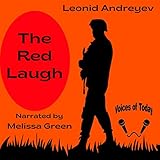
- Audible Audiobook
- Leonid Andreyev (Author) - Melissa Green (Narrator)
- English (Publication Language)
- 11/18/2021 (Publication Date) - Spoken Realms (Publisher)
6. Appreciate the Experimental Narrative Structure: Recognize that the novella’s unconventional form—fragmented, non-linear, and often shifting perspectives—is integral to conveying the chaos and psychological disintegration of war.
- Action: Observe how the narrative structure mirrors the mental states of the characters and the disorienting nature of their experience.
- What to Look For: The use of abrupt transitions, subjective viewpoints, and the deliberate disruption of traditional storytelling conventions.
- Mistake to Avoid: Criticizing the novella for lacking a conventional plot; the unconventional structure is a deliberate artistic choice to enhance thematic expression.
7. Engage with Existential Questions: Reflect on the profound philosophical inquiries the novella raises about the meaning of life, the nature of humanity, and the irrationality that drives widespread conflict.
- Action: Consider the implications of the characters’ experiences and the war’s impact on their understanding of existence.
- What to Look For: Andreyev’s exploration of human limits, the search for meaning in a chaotic universe, and the fundamental absurdity of pervasive violence.
- Mistake to Avoid: Viewing the work solely as a political or historical commentary; its primary concern is the human and existential cost of war.
Common Myths and Corrections
- Myth: The Red Laugh provides a factual account of the Russo-Japanese War.
- Correction: While inspired by the war, the novella is fundamentally an expressionistic and allegorical work. It prioritizes the psychological and existential horror over historical accuracy, aiming to depict the feeling of war’s madness.
- Myth: The novella features traditional plot development and character arcs.
- Correction: The Red Laugh is characterized by its fragmented structure and psychological focus. Characters often serve as embodiments of mental states rather than fully developed individuals, and the narrative prioritizes emotional impact over linear progression.
- Myth: The “red laugh” is a literal sound that can be identified within the narrative.
- Correction: The “red laugh” is a potent symbol. It represents the absurd, terrifying, and dehumanizing essence of war itself—a manifestation of overwhelming suffering and the collapse of reason, rather than a tangible event.
Expert Tips for Reading The Red Laugh
- Tip 1: Prioritize Psychological Resonance Over Plot Cohesion.
- Action: Focus on the emotional impact and psychological states evoked by the narrative, rather than attempting to construct a conventional sequence of events.
- Common Mistake: Becoming frustrated by the lack of a clear, linear plot, which can distract from the novella’s thematic strengths.
- Tip 2: Embrace Symbolism and Ambiguity.
- Action: Actively seek out recurring symbols, especially the titular “red laugh,” and consider their broader thematic implications rather than seeking definitive explanations.
- Common Mistake: Dismissing symbolic elements as mere stylistic choices, thereby missing a core layer of the novella’s meaning.
- Tip 3: Contextualize within Literary Movements.
- Action: Briefly research Russian Symbolism and Expressionism to understand the artistic and philosophical currents that informed Andreyev’s writing style and thematic concerns.
- Common Mistake: Reading The Red Laugh in isolation without appreciating its place within a broader artistic and intellectual movement, which can lead to misinterpretations of its experimental nature.
The Red Laugh by Leonid Andreyev: A Thematic Examination
The Red Laugh by Leonid Andreyev stands as a stark testament to the early 20th century’s disillusionment with conflict. Written in the immediate aftermath of the Russo-Japanese War, it eschews traditional battlefield narratives for a deeply psychological and allegorical exploration of war’s impact on the human psyche. Andreyev, a prominent figure in Russian Symbolism, uses expressionistic techniques to convey not the glory or strategy of war, but its descent into madness, its inherent irrationality, and the profound fragmentation of the self. The novella’s strength lies in its visceral portrayal of trauma, making it a powerful, albeit bleak, commentary on the dehumanizing effects of violence.
BLOCKQUOTE_0
Strengths and Limitations of The Red Laugh
Strengths:
- Profound Psychological Depiction: The novella excels at conveying the terror and disorientation of individuals caught in the maelstrom of war, particularly the descent into madness. The fragmented narrative structure effectively mirrors the shattered mental states of its characters.
- Evocative Symbolism: Andreyev’s use of recurring motifs and potent symbols, such as the titular “red laugh,” creates a haunting and unforgettable atmosphere that speaks to the abstract horrors of conflict.
- Unique Literary Style: For readers appreciative of Symbolist and Expressionist literature, the novella’s experimental prose, intense imagery, and blurring of reality and hallucination offer a compelling artistic experience.
Limitations:
- Lack of Narrative Cohesion: The deliberate fragmentation and focus on psychological states over plot can be challenging for readers seeking a traditional, linear narrative
Quick Comparison
| Option | Best for | Pros | Watch out |
|---|---|---|---|
| The Red Laugh by Leonid Andreyev A Stark Psychological Portrait | General use | The Red Laugh by Leonid Andreyev is an allegorical novella that plunges into… | Mistake to Avoid: Assuming Andreyev’s intent is to provide a factual or strat… |
| Who This Is For | General use | This work is recommended for readers interested in early 20th-century Russian… | Mistake to Avoid: Becoming overly concerned with the verisimilitude of specif… |
| What to Check First | General use | Approach this text with the understanding that its power lies in its symbolic… | Mistake to Avoid: Expecting consistent character development or rational moti… |
| Step-by-Step Plan for Engaging with The Red Laugh | General use | Readers seeking to explore the philosophical and psychological ravages of war… | Mistake to Avoid: Interpreting the “red laugh” as a literal auditory phenomen… |
Decision Rules
- If reliability is your top priority for The Red Laugh by Leonid Andreyev, choose the option with the strongest long-term track record and support.
- If value matters most, compare total ownership cost instead of headline price alone.
- If your use case is specific, prioritize fit-for-purpose features over generic ‘best overall’ claims.