An Analysis of ‘Dangerous Liaisons’ by Laclos
Dangerous Liaison by Pierre Choderlos de Laclos: Quick Answer
This analysis is for readers seeking a deeper understanding of the thematic complexity and narrative structure of Dangerous Liaisons. It highlights the novel’s critical examination of societal hypocrisy and the psychological manipulation of its characters. Readers should be prepared for a challenging but rewarding engagement with epistolary form and moral ambiguity.
Dangerous Liaison by Pierre Choderlos de Laclos: Who This Is For
- Readers interested in the psychological underpinnings of manipulation and the societal critiques embedded in 18th-century French literature.
- Students and scholars of literature who require a structured breakdown of the novel’s key themes, narrative techniques, and lasting impact.
What to Check First
- Epistolary Structure: Understand that the narrative unfolds entirely through letters. This form is crucial to the novel’s suspense and character revelation.
- Character Motivations: Recognize that all characters, particularly Madame de Merteuil and the Vicomte de Valmont, operate from complex, often self-serving, motivations. Their stated intentions rarely align with their true goals.
- Societal Context: Familiarize yourself with the moral landscape of the French aristocracy in the late 18th century, a period of decadence and strict social codes that the novel both reflects and critiques.
- The Nature of Vice: Note that the novel does not present simple morality. Vice is often intertwined with wit, intelligence, and social grace, making the characters’ actions disturbingly compelling.
Step-by-Step Plan: Analyzing Dangerous Liaisons by Pierre Choderlos de Laclos
This plan outlines a structured approach to dissecting the novel’s intricate layers.
1. Identify the Central Conflict:
- Action: Pinpoint the core dispute between Madame de Merteuil and the Vicomte de Valmont.
- What to Look For: The letters exchanged between them reveal their pacts, rivalries, and the escalating stakes of their manipulative games.
- Mistake: Overlooking the nuanced power dynamics and subtle shifts in their alliance.
2. Deconstruct the Epistolary Form:
- Action: Analyze how the letter format shapes reader perception and builds suspense.
- What to Look For: Note the distinct voices of each correspondent, the selective information presented, and the dramatic irony created by readers knowing more than individual characters.
- Mistake: Treating the letters as straightforward factual accounts rather than biased perspectives.
3. Examine Madame de Merteuil’s Strategy:
- Action: Trace Merteuil’s meticulously planned seductions and manipulations.
- What to Look For: Her letters to Valmont and her private journal entries (though not explicitly presented as such, her letters function similarly) reveal her strategic thinking and her desire for control.
- Mistake: Underestimating her intelligence or viewing her actions as purely emotional rather than calculated.
For those looking to delve into the intricate world of Laclos’s masterpiece, acquiring a copy of ‘Dangerous Liaisons’ is essential. This edition provides the full epistolary experience.
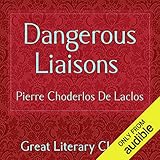
- Audible Audiobook
- Pierre-Ambroise-François Choderlos de Laclos (Author) - Gabriel Woolf (Narrator)
- English (Publication Language)
- 01/05/2009 (Publication Date) - RNIB (Publisher)
4. Analyze the Vicomte de Valmont’s Tactics:
- Action: Evaluate Valmont’s methods of seduction and his interactions with his victims.
- What to Look For: His correspondence showcases his charm, his vanity, and his ruthlessness, particularly in his pursuit of Cécile de Volanges and the Marquise de Tourvel.
- Mistake: Accepting his superficial charm at face value without recognizing the underlying exploitation.
5. Assess the Impact on the Victims:
- Action: Track the psychological and social consequences for characters like Cécile de Volanges and Madame de Tourvel.
- What to Look For: Their letters, and the descriptions of their states by other characters, illustrate the devastating effects of the predators’ schemes.
- Mistake: Focusing solely on the manipulators and neglecting the profound suffering of their targets.
6. Identify Thematic Threads:
- Action: Isolate recurring themes such as hypocrisy, virtue, innocence, and the corrupting influence of power.
- What to Look For: The contrast between outward appearances and inner realities, the subversion of societal ideals, and the commentary on the limitations placed on women.
- Mistake: Reducing the novel to a simple morality tale without acknowledging its sophisticated critique of social structures.
7. Evaluate the Novel’s Moral Ambiguity:
- Action: Consider the absence of clear heroes and the complex portrayal of even the most villainous characters.
- What to Look For: The reader’s potential for sympathy or even admiration for Merteuil and Valmont, despite their heinous actions, is a key element of the novel’s enduring power.
- Mistake: Seeking a straightforward judgment or condemnation of characters, rather than appreciating the nuanced exploration of human nature.
Common Myths
- Myth: Dangerous Liaisons is simply a story about scandalous affairs.
- Why it Matters: This view reduces the novel to titillation and misses its incisive social and psychological critique.
- Fix: Recognize that the “affairs” are instruments of power, control, and social commentary. The novel dissects the mechanisms of manipulation and the hypocrisy of the aristocracy.
- Myth: Madame de Merteuil and the Vicomte de Valmont are purely evil.
- Why it Matters: Labeling them as simple villains prevents an understanding of their complexity, their intelligence, and the societal conditions that may have shaped them.
- Fix: Analyze their motivations, their wit, and their strategic brilliance. The novel challenges readers to confront the unsettling aspects of human nature that can coexist with intelligence and sophistication.
- Myth: The novel endorses the libertine lifestyle.
- Why it Matters: Such an interpretation ignores the severe consequences faced by the victims and the ultimate downfall of the primary manipulators.
- Fix: Observe the narrative arc; while the libertines are cunning, their actions lead to destruction and expose the hollowness of their pursuits. The novel serves as a cautionary tale.
Decision Rules
- If reliability is your top priority for Dangerous Liaison by Pierre Choderlos de Laclos, choose the option with the strongest long-term track record and support.
- If value matters most, compare total ownership cost instead of headline price alone.
- If your use case is specific, prioritize fit-for-purpose features over generic ‘best overall’ claims.
FAQ
- Q: What is the primary literary device used in Dangerous Liaisons?
- A: The novel exclusively employs the epistolary form, meaning the entire narrative is conveyed through letters exchanged between characters. This technique allows for multiple perspectives and creates suspense as readers piece together events.
- Q: Why is Madame de Merteuil considered such a significant literary character?
- A: Merteuil is a groundbreaking female antagonist who embodies strategic intelligence, ambition, and a profound understanding of social manipulation. She challenges traditional gender roles and explores the limitations and potential for power within a patriarchal society.
- Q: Is Dangerous Liaisons a historical novel?
- A: While set in a specific historical period (pre-Revolutionary France), it is more accurately described as a novel of manners and morals. It uses its setting to explore universal themes of human nature, deception, and societal critique rather than focusing on historical events.
- Q: What makes the novel’s ending so impactful?
- A: The ending is impactful due to its swift and devastating unraveling of the manipulators’ schemes. The carefully constructed facades crumble, leading to public disgrace and personal ruin, serving as a stark consequence for their actions.
Analyzing Dangerous Liaisons by Pierre Choderlos de Laclos: A Deeper Dive
This section explores the novel’s enduring relevance and its unique contribution to literary discourse.
Laclos’s Dangerous Liaisons, published in 1782, remains a potent examination of human psychology, societal hypocrisy, and the corrupting influence of power. Through its innovative epistolary structure, the novel immerses the reader in the intricate webs of manipulation spun by its central characters, Madame de Merteuil and the Vicomte de Valmont. The work functions not merely as a sensational account of aristocratic intrigue but as a profound philosophical inquiry into virtue, vice, and the performance of morality in a world obsessed with appearances.
The novel’s strength lies in its refusal to offer easy answers or clear moral dichotomies. Merteuil and Valmont are depicted with a chilling intelligence and a sophisticated understanding of human weakness. Their machinations, while reprehensible, are often presented with a wit and strategic brilliance that can, disturbingly, elicit a form of admiration. This complexity forces readers to confront the uncomfortable truth that villainy can be articulate, charming, and deeply calculating. The narrative’s true power emerges from this tension: the reader is simultaneously repulsed by the characters’ actions and fascinated by their cunning.
Thematic Strengths and Narrative Weaknesses
The novel excels in its exploration of several key themes. The pervasive hypocrisy of the French aristocracy is laid bare, revealing a society where outward adherence to virtue masks widespread corruption and self-interest. The contrasting fates of characters like the innocent Cécile de Volanges and the virtuous Marquise de Tourvel highlight the vulnerability of genuine goodness in the face of calculated malice.
However, the epistolary form, while a significant strength, can also present a challenge. The sheer volume of correspondence and the need to meticulously track multiple narrative threads can be demanding for some readers. The delayed revelation of certain plot points, inherent to the format, requires patience and close attention.
Here is a table outlining key characters and their primary roles in the narrative:
| Character | Primary Role | Key Motivations | Narrative Impact |
|---|---|---|---|
| Madame de Merteuil | Master manipulator, strategist | Power, control, revenge, maintaining reputation | Drives much of the plot through her schemes |
| Vicomte de Valmont | Seducer, agent of Merteuil | Pleasure, conquest, vanity, social dominance | Executes Merteuil’s plans, pursues own desires |
| Cécile de Volanges | Innocent victim, pawn | Youthful naivety, desire for love | Her seduction serves as an early target for Merteuil |
| Marquise de Tourvel | Virtuous target, symbol of moral integrity | Piety, marital duty, genuine love | Her moral struggle and eventual downfall are central |
| Madame de Rosemonde | Benevolent figure, moral compass (often ignored) | Concern for her niece, adherence to social propriety | Provides a contrast to the libertines’ amorality |
Failure Modes in Reading Dangerous Liaisons
A significant failure mode readers encounter with Dangerous Liaisons by Pierre Choderlos de Laclos is the tendency to become overly invested in the intellectual prowess of the manipulators, Merteuil and Valmont, to the detriment of recognizing the profound ethical breaches occurring. This occurs when the reader becomes so captivated by the cleverness of their schemes that the actual harm inflicted on other characters is minimized or overlooked.
Detection: Early signs include finding oneself rooting for Merteuil and Valmont, admiring their audacity without sufficiently condemning their cruelty, or feeling impatient with the suffering of their victims. A reader might also dismiss the victims’ pain as a necessary consequence of their naivety, rather than the result of deliberate, malicious action.
Correction: To counteract this, consciously shift focus to the letters and experiences of the victims, particularly Cécile de Volanges and the Marquise de Tourvel. Analyze the emotional and psychological toll their manipulation takes. Remind yourself that the novel’s critique is not of intelligence, but of intelligence weaponized for selfish and destructive ends. The narrative’s ultimate condemnation of the manipulators—their public exposure and ruin—serves as the authorial corrective, underscoring that their intellectual games have devastating real-world consequences.
BLOCKQUOTE_0
This quote from Madame de Merteuil encapsulates the novel’s exploration of performative emotion and the erosion of genuine connection within a society driven by artifice. It serves as a crucial reminder to question the sincerity of characters’ declarations.
Expert Tips for Engaging with Dangerous Liaisons
- Tip 1: Prioritize Victim Perspectives:
- Action: Dedicate specific reading sessions to the letters written by Cécile de Volanges and the Marquise de Tourvel.
- Mistake to Avoid: Focusing solely on the correspondence between Merteuil and Valmont, thereby missing the devastating impact of their actions on those they target.
- Tip 2: Track Character Arcs and Consequences:
- Action: Keep a running tally or mental note of how each character’s actions lead to specific outcomes, especially the negative ones.
- Mistake to Avoid: Admiring the characters’ cunning in isolation without considering the ultimate, often ruinous, consequences of their behavior for themselves and others.
- Tip 3: Analyze the Unsaid:
- Action: Pay close attention to what characters omit from their letters or how they subtly frame events to manipulate the recipient.
- Mistake to Avoid: Accepting characters’ accounts at face value without considering their underlying agendas and the potential for self-deception or outright lies.