Exploring Relationships And Modern Life
Both Ways Is The Only Way I Want It by Maile Meloy: Quick Answer
- Maile Meloy’s collection, “Both Ways Is The Only Way I Want It,” offers a series of finely wrought short stories that explore the inherent tensions and compromises within modern relationships.
- The collection’s strength lies in its precise prose and keen observation of human behavior, particularly the subtle emotional negotiations that define intimate connections.
- Readers who appreciate literary fiction that delves into the complexities of desire, autonomy, and the often-ambiguous nature of commitment will find this work resonant.
Both Ways Is The Only Way I Want It by Maile Meloy: Who This Is For
- Readers seeking thoughtful, character-driven short fiction that examines the intricacies of interpersonal dynamics and the challenges of balancing personal needs with relational expectations.
- Those who enjoy literary explorations of everyday life, where significant emotional shifts are conveyed through quiet observation and nuanced dialogue rather than dramatic plot points.
What to Check First
- Authorial Style: Maile Meloy’s writing is characterized by its understated elegance, precise language, and deep empathy for her characters. Familiarity with her previous works can set expectations for her distinctive narrative voice.
- Thematic Core: The collection consistently revolves around the inherent conflicts within relationships, focusing on how individuals navigate their desires, compromises, and the often-unspoken agreements that bind them.
- Narrative Approach: The stories vary in structure and focus, frequently zeroing in on pivotal moments or subtle shifts in understanding rather than grand plot machinations.
- Emotional Resonance: Meloy excels at capturing the quiet interiority of her characters, making the emotional stakes of their situations palpable even in seemingly mundane settings.
Step-by-Step Plan for Understanding Both Ways Is The Only Way I Want It
1. Engage with the Title’s Premise:
- Action: Begin by considering the implications of the title, “Both Ways Is The Only Way I Want It,” as a lens for the collection.
- What to Look For: Identify instances where characters express or embody a desire for two seemingly incompatible states or outcomes simultaneously. Note the inherent tension this creates.
- Mistake: Dismissing the title as merely a catchy phrase. This overlooks its central thematic importance, which underpins the characters’ struggles and motivations throughout the book.
2. Analyze Character Motivations and Desires:
- Action: For each story, identify the primary characters and their core desires, both stated and unstated.
- What to Look For: Observe the internal conflicts characters face when their personal aspirations clash with relational obligations or expectations. Look for how they attempt to reconcile these competing needs.
- Mistake: Assuming characters’ actions are driven by simple choices. Meloy often depicts characters torn between genuine, equally valid but opposing desires, making their situations complex rather than indecisive.
3. Examine the Nature of Compromise:
- Action: Pay attention to the compromises characters make within their relationships and personal lives.
- What to Look For: Note whether compromises are freely given, grudgingly accepted, or lead to resentment. Observe the long-term impact of these concessions on individual happiness and relational dynamics.
- Mistake: Viewing compromise solely as a negative sacrifice. Meloy often portrays it as a necessary, albeit sometimes painful, element of sustained connection, highlighting its dual nature.
For those who appreciate literary fiction that delves into the complexities of desire and autonomy, Maile Meloy’s “Both Ways Is The Only Way I Want It” is a collection that offers profound insights into modern relationships.
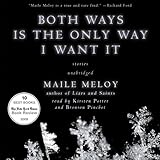
- Audible Audiobook
- Maile Meloy (Author) - Kirsten Potter, Bronson Pinchot (Narrators)
- English (Publication Language)
- 07/22/2010 (Publication Date) - Blackstone Audio, Inc. (Publisher)
4. Identify the Author’s Narrative Voice and Tone:
- Action: Read actively, paying attention to Meloy’s prose style, sentence structure, and overall tone.
- What to Look For: Notice the precision of her language, the understated delivery of emotional weight, and the empathetic, non-judgmental perspective she offers.
- Mistake: Expecting overt melodrama or explicit emotional declarations. Meloy’s power lies in subtlety; missing this can lead to underestimating the depth of feeling conveyed.
5. Assess the Ambiguity of Endings:
- Action: Consider the resolutions offered at the conclusion of each story.
- What to Look For: Recognize that many endings are open-ended, prompting the reader to ponder the characters’ futures and the ongoing nature of their struggles. Observe how these unresolved elements contribute to the collection’s realism.
- Mistake: Demanding neat, conclusive endings for every narrative. This can lead to frustration if the reader is not prepared for Meloy’s deliberate use of ambiguity to reflect life’s complexities.
6. Connect Stories Through Recurring Themes:
- Action: As you progress through the collection, note any thematic threads that reappear across different narratives.
- What to Look For: Common themes include the passage of time, the search for fulfillment, the impact of familial bonds, and the inherent difficulties in truly knowing another person.
- Mistake: Treating each story as an isolated unit. Recognizing the thematic connections allows for a richer understanding of Meloy’s overarching commentary on human experience.
Common Mistakes in Reading Both Ways Is The Only Way I Want It
- Mistake: Expecting straightforward narratives with clear resolutions.
- Why it matters: Meloy’s strength lies in exploring the messy, often unresolved aspects of human relationships and desires. A reader anticipating tidy conclusions might feel unsatisfied.
- Fix: Approach the collection with an openness to ambiguity and a willingness to engage with characters’ internal conflicts rather than solely their external actions.
- Mistake: Overlooking the significance of subtext and unspoken emotions.
- Why it matters: Meloy’s prose is economical and precise; much of the emotional weight and character development occurs through what is implied rather than explicitly stated.
- Fix: Read actively, paying close attention to silences, hesitations, and subtle shifts in dialogue and description that reveal deeper feelings and tensions.
- Mistake: Interpreting characters’ desires as indecisiveness rather than complexity.
- Why it matters: The title itself suggests a desire for duality. Characters often genuinely want conflicting things, which is a reflection of complex human experience, not necessarily a flaw.
- Fix: Understand that the “both ways” concept highlights the human tendency to yearn for incompatible states, and view characters’ struggles through this lens of inherent complexity.
- Mistake: Focusing exclusively on romantic relationships.
- Why it matters: While romance is a significant theme, the collection also deeply explores familial bonds, friendships, and individual identity outside of romantic partnerships.
- Fix: Ensure a holistic reading that acknowledges the spectrum of human connections presented, recognizing how different relationships inform and impact one another.
Exploring Themes in Both Ways Is The Only Way I Want It
Maile Meloy’s collection, “Both Ways Is The Only Way I Want It,” offers a profound and often poignant examination of human behavior, particularly as it plays out within the intricate landscape of modern relationships. The stories skillfully navigate the persistent tension between the desire for connection and the equally potent need for individual autonomy. Meloy excels at capturing the subtle emotional undercurrents that define our interactions, revealing how individuals grapple with compromise, longing, and the often-unspoken expectations that shape their lives. The title itself serves as a potent distillation of this central theme: the human tendency to want things in contradictory ways, highlighting the complexities of desire and the difficult choices that often ensue.
One of the collection’s most significant strengths is its unflinching portrayal of ambiguity. Meloy does not shy away from the messiness of real life, where clear-cut answers are rare and characters are frequently caught between equally compelling, yet mutually exclusive, paths. This approach allows for a deeper, more nuanced understanding of her characters, who feel authentic in their struggles and their capacity for both love and self-preservation. The collection invites readers to reflect on their own experiences of navigating the duality of wanting both intimacy and independence, stability and adventure, presence and space.
A Failure Mode: The Illusion of Simple Choice
A common failure mode for readers engaging with “Both Ways Is The Only Way I Want It” is the tendency to interpret the situations presented as simple binary choices, leading to a frustration with perceived indecisiveness in the characters. This occurs when a reader approaches the stories expecting clear-cut paths and definitive outcomes, mirroring a desire for the same in their own lives. However, Meloy’s genius lies in depicting the inherent complexity and often paradoxical nature of human desire. Characters are not necessarily indecisive; rather, they are often caught in situations where multiple valid, yet conflicting, desires exist simultaneously.
Detection: This failure mode can be detected early if a reader finds themselves repeatedly labeling characters as “confused,” “weak,” or “unable to commit” without acknowledging the legitimate pull of opposing forces within their lives. If the narrative’s exploration of nuance feels like a lack of direction, this is a sign.
Example: Consider a story where a character longs for the comfort of a stable partnership but also feels a deep yearning for solitary travel and self-exploration. A reader falling into this failure mode might see this as a simple choice between “staying” or “leaving,” failing to appreciate the character’s genuine desire for both experiences, even if they are mutually exclusive in the short term.
Correction: To avoid this, cultivate an appreciation for the concept of “both ways.” Recognize that Meloy is not presenting dilemmas with one “right” answer, but rather exploring the human behavior of wanting what cannot always be had simultaneously. This perspective shift allows for a deeper understanding and appreciation of the characters’ emotional struggles and the richness of Meloy’s thematic exploration.
Expert Tips for Reading “Both Ways Is The Only Way I Want It”
- Tip 1: Embrace the Unsaid.
- Action: Pay close attention to what characters don’t say, as well as their silences and hesitations.
- Mistake to Avoid: Assuming that dialogue and explicit actions are the sole conveyors of meaning. Meloy often uses subtext and implication to reveal character depth and relationship dynamics.
- Tip 2: Map Character Arcs Within Each Story.
- **Action
Quick Comparison
| Option | Best for | Pros | Watch out |
|---|---|---|---|
| Both Ways Is The Only Way I Want It by Maile Meloy Quick Answer | General use | Maile Meloy’s collection, “Both Ways Is The Only Way I Want It,” offers a ser… | Mistake: Dismissing the title as merely a catchy phrase. This overlooks its c… |
| Who This Is For | General use | The collection’s strength lies in its precise prose and keen observation of h… | Mistake: Assuming characters’ actions are driven by simple choices. Meloy oft… |
| What to Check First | General use | Readers who appreciate literary fiction that delves into the complexities of… | Mistake: Viewing compromise solely as a negative sacrifice. Meloy often portr… |
| Step-by-Step Plan for Understanding Both Ways Is The Only Way I Want It | General use | Readers seeking thoughtful, character-driven short fiction that examines the… | Mistake: Expecting overt melodrama or explicit emotional declarations. Meloy’… |
Decision Rules
- If reliability is your top priority for Both Ways Is The Only Way I Want It by Maile Meloy, choose the option with the strongest long-term track record and support.
- If value matters most, compare total ownership cost instead of headline price alone.
- If your use case is specific, prioritize fit-for-purpose features over generic ‘best overall’ claims.