Toni Morrison’s Novel ‘A Mercy’ Deep Dive
This guide provides a structured examination of Toni Morrison’s novel, A Mercy. It focuses on thematic elements, narrative construction, and reader suitability, offering practical steps for engagement and addressing common interpretations.
Quick Answer
- Thematic Core: A Mercy delves into the brutal realities of 17th-century colonial America, exploring themes of survival, freedom, and the elusive nature of mercy through marginalized characters.
- Narrative Approach: The novel employs a fragmented, multi-voiced perspective that requires active reader participation to synthesize the story and its emotional weight.
- Audience Fit: It is best suited for readers seeking challenging literary fiction that grapples with historical trauma and complex moral questions, rather than those preferring straightforward plots.
Who This Is For
- Readers interested in Toni Morrison’s later works and her continued examination of American history through a critical, often unflinching, lens.
- Those who appreciate literary fiction that prioritizes thematic depth and stylistic innovation over conventional plot progression.
What to Check First
- Historical Context: Familiarize yourself with the late 17th-century colonial American setting. Understanding the social stratification, racial subjugation, and nascent nation-building is crucial for grasping character motivations and constraints.
- Morrison’s Stylistic Signature: Be prepared for Morrison’s lyrical prose and non-linear storytelling. The narrative shifts perspectives and is not always chronological, demanding active reader synthesis.
- Thematic Expectations: Approach the novel with an openness to confronting difficult subjects. A Mercy addresses slavery, abuse, and the profound impact of societal structures on individual lives.
Step-by-Step Plan: Engaging with A Mercy by Toni Morrison
This plan outlines a methodical approach to reading and appreciating the nuances of A Mercy by Toni Morrison.
1. Initial Immersion and Atmosphere:
- Action: Read the novel through once, focusing on sensory details, emotional tone, and initial character impressions without excessive annotation.
- What to Look For: The palpable desperation, stark natural environments, and immediate presentation of each character’s core struggle. For instance, the initial description of Florens’s life with the Mistress establishes a tone of harsh servitude.
- Mistake to Avoid: Getting bogged down in deciphering every narrative ambiguity on the first pass. The cumulative effect of the story is more important initially.
2. Character and Relationship Mapping:
- Action: Reread, focusing on the relationships between characters and their individual journeys, noting how they interact and influence each other.
- What to Look For: Complex bonds that form between characters on different social strata, such as the connection between Florens and the unnamed daughter of Jacob and Dina. Observe how these relationships offer glimpses of agency or solace.
- Mistake to Avoid: Assuming characters are solely defined by their initial roles or circumstances. Morrison often reveals deeper complexities and hidden histories over time.
3. Thematic Identification:
- Action: Identify recurring motifs and central themes as you reread specific passages or sections.
- What to Look For: The concept of mercy itself—its scarcity, unexpected manifestations, and absence. Also, note how freedom is defined and pursued by characters like Lina and Sorrow, often in profound and unconventional ways.
- Mistake to Avoid: Limiting thematic interpretation to obvious plot points. Morrison’s themes are often woven into the language and subtext.
4. Narrative Voice Deconstruction:
- Action: Pay close attention to shifts in narration and perspective. Consider why Morrison chooses to present certain events from particular viewpoints.
- What to Look For: The distinct voices of Florens, Rebekka, Isaac, and Sophia. Analyze how each narrator’s perspective shapes the reader’s understanding of events and their reliability. For example, Florens’s perspective is colored by her trauma and quest for instruction.
- Mistake to Avoid: Treating all narrative voices as equally objective or authoritative. Each narrator filters reality through their unique experiences and limitations.
Dive deep into Toni Morrison’s powerful novel, A Mercy, a profound exploration of survival and humanity in colonial America. This book offers a challenging yet rewarding literary experience.
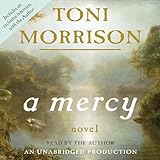
- Audible Audiobook
- Toni Morrison (Author) - Toni Morrison (Narrator)
- English (Publication Language)
- 11/11/2008 (Publication Date) - Random House Audio (Publisher)
5. Historical Contextualization:
- Action: Research specific historical details or societal practices mentioned if they remain unclear.
- What to Look For: Information on early colonial land ownership, indigenous peoples’ roles, and the legal/social status of various groups in the 17th century. This illuminates power dynamics, such as the precarious position of indentured servants and the enslaved.
- Mistake to Avoid: Projecting modern understandings of race and freedom onto the historical context. The novel requires an appreciation of the era’s specific injustices.
6. Symbolic Interpretation:
- Action: Note recurring symbols and consider their potential meanings within the narrative.
- What to Look For: The significance of the sea, the land, and the concept of building or decay. For instance, the act of building a house for Sorrow can be seen as an attempt to create stability in a chaotic world.
- Mistake to Avoid: Assigning fixed, singular meanings to symbols. Morrison’s symbols are often multifaceted and open to interpretation.
7. Final Reflection:
- Action: Reflect on the novel’s overall impact and its contribution to literature. Consider how it challenges or expands your understanding of the presented themes.
- What to Look For: The lasting emotional resonance of the characters’ struggles and triumphs. Assess how the novel prompts reflection on humanity, resilience, and the enduring quest for dignity.
- Mistake to Avoid: Rushing to judgment or dismissing the novel due to its challenging nature. Allow time for its complexities to reveal their full significance.
A Mercy by Toni Morrison: Unpacking the Novel’s Core
This section delves into the thematic and stylistic elements that define A Mercy by Toni Morrison, offering a deeper understanding of its literary merit and impact.
Themes of Freedom and Survival
Morrison masterfully crafts a narrative where survival is not merely physical but an act of reclaiming humanity in a world designed to strip it away. Characters’ pursuit of freedom is varied: Florens seeks intellectual liberation through learning, Lina yearns for a return to ancestral connections, and Sorrow embodies a primal instinct for self-preservation. Their individual quests highlight the multifaceted nature of freedom, often found in unexpected alliances and quiet acts of defiance.
Narrative Fragmentation and Voice
The novel’s power lies significantly in its fragmented, multi-voiced structure. Morrison deliberately employs shifting perspectives to mirror the fractured identities and experiences of her characters. Florens’s narrative, for example, is marked by her quest for literacy and her evolving understanding of her own agency, shaped by her initial servitude and later her pursuit of Jacob Vaark’s instruction. This technique forces readers to actively construct the narrative, piecing together truths from disparate accounts.
BLOCKQUOTE_0
This quote encapsulates the novel’s central tension: the pervasive harshness of existence juxtaposed with the possibility of grace.
Common Myths About A Mercy by Toni Morrison
- Myth: The novel is a straightforward historical account of early America.
- Why it Matters: This assumption overlooks Morrison’s artistic license and her focus on the interior lives and emotional truths of her characters rather than strict historical accuracy.
- Fix: Approach A Mercy as literary fiction that uses a historical setting to explore universal human experiences of trauma, resilience, and the search for meaning.
- Myth: The narrative is intentionally confusing to be difficult.
- Why it Matters: The fragmented structure serves a purpose, reflecting the characters’ disjointed experiences and the difficulty of understanding the past. It invites active reader participation.
- Fix: Embrace the narrative’s complexity as a feature, not a bug. Allow the story to unfold gradually, recognizing that clarity often emerges through patient engagement with the text.
Expert Tips for Reading A Mercy
- Tip: Pay close attention to the language used to describe the natural world.
- Actionable Step: Note descriptions of the flora, fauna, and weather. Consider how these elements reflect or contrast with the characters’ internal states and the societal conditions. For example, the harshness of the landscape often mirrors the harshness of colonial life.
- Common Mistake to Avoid: Treating the setting as mere background. Morrison imbues the natural world with symbolic weight, often serving as a silent witness or an active force in the characters’ lives.
- Tip: Consider the concept of “building” and “unbuilding” as it appears metaphorically and literally.
- Actionable Step: Track instances where characters attempt to construct something—a home, a relationship, a sense of self—and where these efforts are thwarted or decay. The act of Florens building a house for Sorrow, for instance, is a significant undertaking.
- Common Mistake to Avoid: Focusing only on physical construction. The novel explores the building and unbuilding of social structures, identities, and even language itself.
- Tip: Analyze the evolving understanding of “mercy” within the narrative.
- Actionable Step: Identify moments where characters experience or dispense mercy, and where it is conspicuously absent. Consider how different characters define or seek mercy. The title itself is a prompt for this exploration.
- Common Mistake to Avoid: Assuming a single, conventional definition of mercy. Morrison presents mercy in its various forms, from acts of kindness to the stark realities of survival.
Decision Criterion: Reader Constraint Impact on Recommendation
If your primary constraint is tolerance for ambiguity, A Mercy by Toni Morrison might present a significant challenge. While its thematic richness and stylistic innovation are considerable strengths, the novel’s fragmented narrative and open-ended resolutions require a reader comfortable with unresolved questions and multiple interpretations. For readers who prioritize narrative closure and explicit authorial guidance, alternative works might be a more suitable entry point into Morrison’s bibliography. However, for those who find value in wrestling with complex texts and drawing their own conclusions, A Mercy offers profound rewards.
Quick Comparison
| Option | Best for | Pros | Watch out |
|---|---|---|---|
| Quick Answer | General use | Thematic Core: <em>A Mercy</em> delves into the brutal realities of 17th-century col… | Mistake to Avoid: Getting bogged down in deciphering every narrative ambiguit… |
| Who This Is For | General use | Narrative Approach: The novel employs a fragmented, multi-voiced perspective… | Mistake to Avoid: Assuming characters are solely defined by their initial rol… |
| What to Check First | General use | Audience Fit: It is best suited for readers seeking challenging literary fict… | Mistake to Avoid: Limiting thematic interpretation to obvious plot points. Mo… |
| Step-by-Step Plan Engaging with A Mercy by Toni Morrison | General use | Readers interested in Toni Morrison’s later works and her continued examinati… | Mistake to Avoid: Treating all narrative voices as equally objective or autho… |
Decision Rules
- If reliability is your top priority for A Mercy by Toni Morrison, choose the option with the strongest long-term track record and support.
- If value matters most, compare total ownership cost instead of headline price alone.
- If your use case is specific, prioritize fit-for-purpose features over generic ‘best overall’ claims.
FAQ
*