Introduction to Rick Riordan’s ‘Percy Jackson’ Series
Rick Riordan’s Percy Jackson and the Olympians, Book One: The Lightning Thief serves as a foundational text in modern children’s literature, introducing a generation to Greek mythology through a contemporary, relatable lens. This analysis focuses on its narrative mechanics, thematic construction, and its specific impact on its target readership.
Percy Jackson and the Olympians, Book One by Rick Riordan: Quick Answer
- Core Appeal: The series effectively merges ancient Greek mythology with the everyday experiences of American adolescents, creating an accessible and engaging narrative framework.
- Reader Engagement: Its primary strength lies in a protagonist with whom young readers can identify, a briskly paced plot, and a clever integration of mythological elements into a modern context, making complex lore understandable.
- Key Consideration: A potential challenge for some readers is the significant creative liberties Riordan takes with established myths; this can be a point of friction for those expecting strict adherence to classical texts.
Percy Jackson and the Olympians, Book One by Rick Riordan: Who This Book Is For
- Middle-grade readers, typically aged 8-12, who are drawn to action-oriented stories, fantasy elements, and characters who navigate and overcome personal challenges.
- Individuals seeking an approachable introduction to Greek mythology, presented in an entertaining format rather than a purely academic one.
For those eager to dive into the world of demigods and monsters, Rick Riordan’s ‘Percy Jackson and the Olympians, Book One: The Lightning Thief’ is the essential starting point. It masterfully blends ancient mythology with modern adventure.
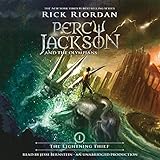
- Audible Audiobook
- Rick Riordan (Author) - Jesse Bernstein (Narrator)
- English (Publication Language)
- 07/01/2005 (Publication Date) - Listening Library (Publisher)
What to Check First
- Narrative Voice: Percy Jackson’s first-person narration is a blend of adolescent humor, confusion, and developing resolve. Assess if this voice resonates and effectively carries the story for the intended reader.
- Mythological Adaptation Strategy: Riordan significantly adapts Greek myths. It is crucial to recognize this as an interpretation designed for narrative impact and thematic relevance, not a scholarly retelling.
- Pacing and Exposition Integration: The initial chapters introduce Percy’s struggles and the demigod concept. Evaluate how seamlessly this foundational information is woven into the unfolding plot.
- Thematic Core: Identify the central themes of identity, friendship, and destiny. These are integral to the series’ lasting appeal and are consistently present.
Step-by-Step Plan: Analyzing Percy Jackson and the Olympians, Book One
1. Establish Percy’s Pre-Mythological Baseline: Observe Percy’s life and challenges prior to his awareness of the mythological world.
- Action: Read the initial 30 pages, focusing on Percy’s experiences at Yancy Academy.
- What to Look For: Percy’s academic difficulties (dyslexia, ADHD), his social isolation, and his encounters with unusual figures, such as Mrs. Dodds.
- Mistake: Interpreting Percy’s learning differences as mere character flaws, rather than as foundational elements that foreshadow his potential demigod nature.
2. Evaluate the Demigod Revelation Mechanism: Assess the effectiveness and clarity of the reveal that Percy is a demigod.
- Action: Read the section where Percy learns about his divine parentage and the existence of the Greek gods.
- What to Look For: The explanation of his father’s identity, the role of Chiron, and the introduction of Camp Half-Blood as a concept.
- Mistake: Underestimating the significance of the “divine parentage” concept; it functions as a central mechanic for character motivation and plot progression.
3. Analyze Camp Half-Blood as a World-Building Component: Assess the construction and function of Camp Half-Blood within the narrative.
- Action: Read the chapters detailing Percy’s arrival and initial experiences at the camp.
- What to Look For: Descriptions of the cabins, the training regimens, and the introduction of key characters like Annabeth Chase and Grover Underwood.
- Mistake: Treating Camp Half-Blood as solely a setting; it operates as a microcosm of the larger mythological world and a critical social environment for character development.
4. Examine the Quest Catalyst and Prophecy: Analyze the mechanism that initiates the central adventure.
- Action: Read the section where the Great Prophecy is revealed and Percy is assigned his quest.
- What to Look For: The precise wording of the prophecy and the specific objectives of the quest to retrieve Zeus’s lightning bolt.
- Mistake: Viewing the prophecy as a simple plot device; it is a foundational element that shapes character choices and foreshadows future conflicts.
5. Deconstruct Mythological Encounters: Examine how Riordan adapts and integrates mythological creatures and figures into the contemporary setting.
- Action: Identify specific encounters with monsters such as Medusa or the Furies.
- What to Look For: How these ancient beings are reimagined and integrated into the modern context and Percy’s journey.
- Mistake: Expecting a literal translation of ancient myths; Riordan prioritizes narrative impact and thematic relevance over strict adherence to classical sources.
6. Evaluate Character Dynamics and Relationship Arc: Assess the development of the relationships between Percy, Annabeth, and Grover.
- Action: Note key interactions and dialogue throughout the quest narrative.
- What to Look For: The progression of trust, conflict resolution strategies, and the formation of their core friendship.
- Mistake: Focusing exclusively on action sequences and overlooking the subtle character development and emotional arcs that underpin the narrative.
7. Assess Resolution and Foreshadowing: Evaluate the conclusion of the immediate quest and its implications for subsequent books in the series.
- Action: Read the final chapters of the book.
- What to Look For: The resolution of the lightning bolt retrieval and any lingering questions or hints regarding larger, overarching threats.
- Mistake: Assuming the narrative arc is fully concluded; recognize it as the initial segment of a larger, ongoing story.
Common Mistakes in Analyzing Percy Jackson and the Olympians, Book One
- Mistake: Expecting strict adherence to classical Greek mythology.
- Why it Matters: Riordan’s primary objective is to construct an engaging modern fantasy adventure. His adaptations are functional for the narrative’s needs, not scholarly.
- Fix: Approach the book as a creative reimagining where Greek myths serve as inspiration rather than a historical or academic text.
- Mistake: Dismissing Percy’s dyslexia and ADHD as mere character quirks.
- Why it Matters: These traits are intentionally linked to Percy’s demigod abilities, functioning as narrative tools that explain his unique strengths and perceptions.
- Fix: Recognize these characteristics as integral to Percy’s identity and his functional powers within the story’s established framework.
- Mistake: Focusing exclusively on plot and action, neglecting character development.
- Why it Matters: The series’ enduring relevance is rooted in the relatable growth and internal struggles of its characters, not solely their external conflicts.
- Fix: Pay close attention to Percy’s evolving self-understanding, his interpersonal relationships, and his developing moral compass.
- Mistake: Underestimating the thematic depth beneath the surface narrative.
- Why it Matters: Themes of identity, belonging, friendship, and destiny are crucial to the book’s impact, particularly for its target audience.
- Fix: Consider how these themes are explored through Percy’s specific experiences and his interactions with other characters.
- Mistake: Judging the prose by adult literary standards.
- Why it Matters: Riordan’s writing style is deliberately crafted for accessibility, directness, and rapid pacing to suit middle-grade readers.
- Fix: Appreciate the clarity and energy of the prose for its intended audience and narrative purpose.
Frequently Asked Questions
- Q: Is Percy Jackson and the Olympians, Book One: The Lightning Thief suitable for younger readers, or is it better for older ones?
- A: The book is generally recommended for readers aged 8-12. It contains mild peril and thematic complexity that resonates well within this age range, though many younger and older readers also enjoy it.
- Q: How faithful is the book to the original Greek myths?
- A: Riordan uses Greek myths as a foundation but takes significant creative liberties to adapt them for a modern narrative. Characters, plot points, and mythological creatures are reimagined to serve the story’s contemporary setting and themes.
- Q: What is a common reader pitfall when approaching Percy Jackson and the Olympians, Book One?
- A: A frequent failure mode is the expectation of a scholarly, literal retelling of Greek myths. Readers who approach the book seeking strict historical or mythological accuracy may find Riordan’s creative adaptations jarring. This can be detected if a reader’s primary engagement is with correcting the narrative against known myths rather than enjoying the story itself. Recognizing the book as a fantasy adventure that uses mythology as inspiration, rather than documents it, is key to avoiding this pitfall.
- Q: Is it necessary to read the books in order?
- A: Yes, reading the Percy Jackson and the Olympians series in publication order is strongly recommended. Each book builds upon the narrative, character development, and established world of the previous installment, creating a cohesive overarching story.
Thematic Exploration in Percy Jackson and the Olympians, Book One
The Lightning Thief masterfully introduces themes that define the Percy Jackson and the Olympians series. Central among these is the exploration of identity and self-discovery. Percy Jackson begins as an outsider, struggling with learning disabilities and a sense of not belonging. His journey into the world of demigods reveals that these perceived weaknesses are, in fact, indicators of his unique heritage and potential strengths. This narrative arc provides a powerful parallel for young readers navigating their own sense of self and place in the world, suggesting that perceived flaws can be transformed into assets.
Another significant theme is the power of friendship and loyalty. The bond forged between Percy, Annabeth, and Grover is not merely incidental; it is the engine driving much of the plot. Their reliance on each other, their
Quick Comparison
| Option | Best for | Pros | Watch out |
|---|---|---|---|
| Percy Jackson and the Olympians Book One by Rick Riordan Quick Answer | General use | Core Appeal: The series effectively merges ancient Greek mythology with the e… | Mistake: Interpreting Percy’s learning differences as mere character flaws, r… |
| Who This Book Is For | General use | Reader Engagement: Its primary strength lies in a protagonist with whom young… | Mistake: Underestimating the significance of the “divine parentage” concept;… |
| What to Check First | General use | Key Consideration: A potential challenge for some readers is the significant… | Mistake: Treating Camp Half-Blood as solely a setting; it operates as a micro… |
| Step-by-Step Plan Analyzing Percy Jackson and the Olympians Book One | General use | Middle-grade readers, typically aged 8-12, who are drawn to action-oriented s… | Mistake: Viewing the prophecy as a simple plot device; it is a foundational e… |
Decision Rules
- If reliability is your top priority for Percy Jackson and the Olympians, Book One by Rick Riordan, choose the option with the strongest long-term track record and support.
- If value matters most, compare total ownership cost instead of headline price alone.
- If your use case is specific, prioritize fit-for-purpose features over generic ‘best overall’ claims.