The History And Artistry Of Ballet
Jennifer Homans’ Apollo’s Angels: A History of Ballet is a meticulously researched and expansive exploration of ballet’s evolution. This work delves into the art form’s origins, its development through various historical periods, and its enduring impact on culture and society. It is a significant contribution to dance scholarship, offering a detailed and nuanced perspective for dedicated readers.
Apollo’s Angels by Jennifer Homans: Who This Is For
- Serious Ballet Aficionados: Readers seeking an in-depth, scholarly examination of ballet’s historical trajectory, from its Renaissance courtly beginnings to its 20th-century transformations.
- Dance Historians and Students: Individuals requiring a comprehensive, well-documented resource that contextualizes ballet’s artistic innovations within broader social, political, and cultural landscapes.
What to Check First
- Chronological Scope: The book covers ballet from its 16th-century European court origins through the early 20th century, detailing key eras like the Baroque, Romantic, and Classical periods.
- Author’s Scholarly Approach: Jennifer Homans, a dance historian, employs a rigorous academic methodology, prioritizing historical context and social influence alongside choreographic analysis.
- Thematic Focus: The narrative emphasizes ballet’s development as a codified art form, its relationship with power structures, and its reflection of societal ideals, particularly concerning gender and class.
- Depth of Detail: Expect extensive discussions on the evolution of technique, the establishment of major companies and academies, and the biographies of influential figures, grounded in primary source research.
For those seeking a deep dive into the art form, Jennifer Homans’ Apollo’s Angels: A History of Ballet is an essential read. This comprehensive work meticulously traces ballet’s journey from its origins to its modern iterations.
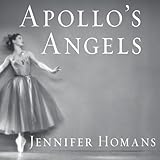
- Audible Audiobook
- Jennifer Homans (Author) - Kirsten Potter (Narrator)
- English (Publication Language)
- 02/10/2011 (Publication Date) - Tantor Audio (Publisher)
Step-by-Step Plan to Understanding Apollo’s Angels
1. Engage with Ballet’s Courtly Origins: Begin with the initial chapters that detail ballet’s emergence in the courts of Renaissance Europe.
- Action: Focus on how ballet functioned as a tool of diplomacy and aristocratic display.
- What to look for: The integration of dance, music, and poetry in court spectacles, and the rudimentary steps that formed the basis of early technique.
- Mistake to avoid: Underestimating the political and social functions of these early performances, viewing them solely as entertainment.
2. Trace the Formalization of Technique: Progress to the sections detailing the establishment of formal ballet academies and the professionalization of dancers.
- Action: Identify the roles of figures like Louis XIV and institutions such as the Académie Royale de Danse.
- What to look for: The codification of steps, the development of specific dance positions, and the shift from amateur noble performers to professional dancers.
- Mistake to avoid: Assuming a smooth, linear progression; acknowledge the periods of stagnation and the challenges faced by early professional dancers.
3. Analyze the Romantic and Classical Eras: Dedicate attention to the chapters covering the 19th century, a pivotal period for ballet’s stylistic evolution.
- Action: Study the characteristics of Romantic ballets, such as Giselle, and Classical ballets, like Swan Lake.
- What to look for: The rise of the ballerina, the development of pointe work, and the distinct choreographic vocabularies of each era.
- Mistake to avoid: Blurring the lines between Romanticism’s ethereal, supernatural themes and Classicism’s emphasis on structure, symmetry, and virtuosity.
4. Examine the Ballets Russes Revolution: Pay close attention to the transformative impact of Sergei Diaghilev and his Ballets Russes company.
- Action: Understand how this ensemble fostered groundbreaking collaborations with avant-garde artists, composers, and choreographers.
- What to look for: Innovations in staging, costume design, musical composition, and choreography that challenged traditional ballet conventions.
- Mistake to avoid: Viewing the Ballets Russes as an isolated phenomenon; connect its influence to the broader artistic movements of the early 20th century.
5. Consider Ballet’s Global Dissemination and Diversification: Read the later chapters that explore ballet’s expansion beyond its European origins and its adaptation in different cultural contexts.
- Action: Note the contributions of figures who shaped ballet in America and other regions.
- What to look for: The development of distinct national styles and the ongoing dialogue between tradition and innovation in contemporary ballet.
- Mistake to avoid: Perceiving ballet as a monolithic entity; recognize the diverse interpretations and evolutions it has undergone globally.
6. Synthesize Thematic Threads: Throughout your reading, actively consider Homans’ recurring themes, such as ballet’s intricate relationship with gender roles, social class, and national identity.
- Action: Keep a running tally of how these societal forces are depicted as influencing ballet’s creation and reception.
- What to look for: Evidence of how ballet both reinforced and challenged prevailing social norms across different historical periods.
- Mistake to avoid: Focusing solely on the aesthetic and technical aspects of dance, neglecting the profound socio-historical forces that shaped the art form.
Apollo’s Angels by Jennifer Homans: A Scholarly Perspective
Jennifer Homans’ Apollo’s Angels is a monumental work of dance scholarship that offers an unparalleled historical sweep. Its primary strength lies in its exhaustive research, drawing from a vast array of archival materials, contemporary accounts, and critical analyses to construct a narrative of ballet’s evolution. Homans excels at weaving together the technical advancements of choreography with the broader social, political, and artistic contexts of each era, providing a broad range of how ballet transformed from aristocratic spectacle to a complex, modern art form. The book’s detailed exploration of the Académie Royale de Danse’s founding, for instance, offers a concrete anchor for understanding the formalization of balletic practice.
However, the sheer density of information and the intricate web of relationships and stylistic shifts can present a challenge. For readers less familiar with ballet history, the scholarly tone and extensive cast of characters may prove overwhelming. While authoritative and accurate, the book sometimes prioritizes historical detail over immediate accessibility, which might alienate those seeking a more introductory overview.
Key Strengths
- Unrivaled Depth of Research: Homans’ commitment to primary sources provides unique insights into ballet’s development, offering a level of detail rarely found in general histories. Her examination of correspondence and financial records illuminates the practical challenges and patronage systems that underpinned ballet’s growth.
- Thematic Rigor: The book consistently analyzes ballet through lenses of gender, class, and nationalism, revealing how these societal forces shaped the art form and how ballet, in turn, reflected and influenced them. Homans’ analysis of the Romantic ballerina’s iconography, for example, connects the aesthetic to prevailing views on femininity and societal expectations.
- Narrative Cohesion: Despite its vast scope, the narrative maintains a strong chronological and thematic through-line, charting ballet’s journey with intellectual clarity and compelling prose.
Limitations
- Accessibility for Beginners: The detailed scholarly apparatus, extensive footnotes, and numerous historical figures can be daunting for casual readers or those new to ballet history. A reader unfamiliar with ballet terminology might require supplementary resources to fully grasp certain passages.
- Primary Focus on Western Tradition: While later chapters touch upon global developments, the book’s core narrative and most extensive detail focus on the lineage originating from France and Russia. This emphasis means less granular coverage of ballet’s impact and adaptation in other distinct cultural contexts.
Common Myths About Ballet History
- Myth: Ballet has always been perceived as a delicate, ethereal art form focused on grace.
- Why it matters: This perspective overlooks the physically demanding, often rigorous, and sometimes brutal training and performance conditions throughout ballet’s history. Early court ballets were also elaborate, potentially unwieldy, spectacles with different aesthetic aims.
- Fix: Understand that ballet’s aesthetic ideals have evolved significantly. Its early forms prioritized social display and narrative spectacle over the refined, codified technique associated with modern ballet.
- Myth: The Ballets Russes was an isolated Russian artistic movement that single-handedly revolutionized ballet.
- Why it matters: This view diminishes the crucial contributions of the international artists, composers, and designers who collaborated with Diaghilev and overlooks the pre-existing innovative currents in European dance and visual arts.
- Fix: Recognize the Ballets Russes as a vital nexus point where diverse artistic talents converged, accelerating and synthesizing existing trends in modern art and dance, rather than an isolated, self-contained revolution.
Expert Tips for Engaging with Ballet History
- Tip: Trace the evolution of specific choreographic elements and performance practices.
- Action: As you read about different eras, pay close attention to how steps, formations, use of space, and musical accompaniment changed. For instance, observe the shift from the structured ensemble work of Baroque ballets to the more individualized virtuosity and dramatic expression of the Romantic era.
- Common Mistake to Avoid: Treating ballet technique as static; understanding its development requires noting how individual movements, structures, and performance styles were invented, refined, or abandoned over time.
- Tip: Connect ballet’s development to broader artistic and intellectual movements of its time.
- Action: Actively look for how ballet mirrored, reacted to, or influenced trends in painting, music, literature, and theatre. Homans frequently links ballet innovations to movements like Neoclassicism, Romanticism, or Symbolism, providing concrete examples.
- Common Mistake to Avoid: Studying ballet history in isolation, without appreciating its interconnectedness with the wider cultural and intellectual landscape of each period.
- Tip: Analyze the economic and social structures that supported ballet’s existence and evolution.
- Action: Note the role of royal patronage, aristocratic sponsorship, and later, the formation of public-facing companies and their financial models. The patronage of Louis XIV was fundamental to the Académie Royale’s establishment and early success.
- Common Mistake to Avoid: Focusing solely on the artistic output and neglecting the often precarious financial and social underpinnings that allowed ballet to exist, develop, and thrive.
A Comparative Look at Ballet Histories
Quick Comparison
| Option | Best for | Pros | Watch out |
|---|---|---|---|
| Who This Is For | General use | Serious Ballet Aficionados: Readers seeking an in-depth, scholarly examinatio… | Mistake to avoid: Underestimating the political and social functions of these… |
| What to Check First | General use | Dance Historians and Students: Individuals requiring a comprehensive, well-do… | Mistake to avoid: Assuming a smooth, linear progression; acknowledge the peri… |
| Step-by-Step Plan to Understanding Apollos Angels | General use | Chronological Scope: The book covers ballet from its 16th-century European co… | Mistake to avoid: Blurring the lines between Romanticism’s ethereal, supernat… |
| Apollos Angels by Jennifer Homans A Scholarly Perspective | General use | Author’s Scholarly Approach: Jennifer Homans, a dance historian, employs a ri… | Mistake to avoid: Viewing the Ballets Russes as an isolated phenomenon; conne… |
Decision Rules
- If reliability is your top priority for Apollo’s Angels by Jennifer Homans, choose the option with the strongest long-term track record and support.
- If value matters most, compare total ownership cost instead of headline price alone.
- If your use case is specific, prioritize fit-for-purpose features over generic ‘best overall’ claims.