Stephen L. Carter’s The Emperor Of Ocean Park Reviewed
The Emperor Of Ocean Park by Stephen L. Carter: Quick Answer
- The Emperor Of Ocean Park by Stephen L. Carter is a complex, intellectually dense literary mystery that prioritizes intricate plotting, thematic depth, and character exploration over rapid pacing.
- It is best suited for readers who appreciate layered narratives, philosophical underpinnings, and a deliberate unfolding of events, particularly those interested in themes of race, class, and intellectualism within elite American society.
- Readers seeking a straightforward, action-driven plot or a quick resolution may find the novel’s extensive exposition and intricate structure challenging.
Who This Is For
- Readers who enjoy literary fiction that blends mystery with profound explorations of identity, legacy, and the complexities of race and class in America.
- Individuals who appreciate meticulously crafted, multi-layered plots and are willing to invest significant mental energy in deciphering intricate relationships, motivations, and thematic resonances.
What to Check First
Before beginning your journey into The Emperor Of Ocean Park, consider these critical factors:
- Pacing Preference: This novel is characterized by a deliberate, slow-burn pace. If you typically prefer fast-paced thrillers with constant action, this narrative’s gradual unfolding and extensive exposition may not align with your preferences.
- Tolerance for Exposition: Stephen L. Carter employs substantial exposition to build his intricate world and establish the deep histories of his characters. Be prepared for detailed background information that is crucial for understanding the plot’s complexities.
- Appreciation for Ambiguity: While a mystery at its core, The Emperor Of Ocean Park does not always offer immediate or simple answers. Many elements are designed to be pondered, requiring active reader engagement to construct understanding.
- Interest in Academic and Elite Circles: The story is deeply embedded within the world of Ivy League academia and the Black elite, exploring its unique dynamics, pressures, and historical context. Familiarity with or interest in these settings will significantly enhance comprehension and appreciation.
- Thematic Engagement: The novel delves into profound themes of race, class, family legacy, intellectualism, and the nature of truth. Your engagement with these subjects will directly impact your reading experience.
Step-by-Step Plan for Reading The Emperor Of Ocean Park
To navigate the intricate landscape of The Emperor Of Ocean Park effectively, consider this structured approach:
1. Engage Deeply with the Prologue: Read the prologue with careful attention, noting the initial enigmatic statements and the introduction of key figures and concepts.
- What to Look For: Early thematic foreshadowing, the author’s distinctive narrative voice, and the foundational elements of the central mystery.
- Mistake: Skimming or overlooking the prologue, which sets a specific tone and introduces crucial philosophical and narrative threads that are vital for later comprehension.
2. Identify the Central Enigma: As you begin the main narrative, focus on understanding the primary mystery Talcott is tasked with unraveling and the immediate stakes involved.
- What to Look For: The nature of the investigation, the characters directly implicated, and the initial obstacles Talcott faces.
- Mistake: Becoming sidetracked by secondary plotlines or character introductions without a firm grasp of the core problem Talcott is trying to solve.
3. Map the Intricate Network of Relationships: Pay close attention to the complex web of connections between Talcott, his family members, his deceased father’s associates, and other key players.
- What to Look For: Unspoken tensions, historical grievances, hidden allegiances, and how past events influence present actions.
- Mistake: Underestimating the significance of seemingly minor interactions or familial dynamics, as they often hold crucial keys to understanding motivations and plot developments.
4. Track Recurring Thematic Threads: Be consciously aware of the novel’s prominent themes, such as the burden of legacy, the complexities of Black identity in America, the pursuit of knowledge, and the performance of intellect.
- What to Look For: How these themes are woven into the plot, character arcs, and the novel’s philosophical discussions.
- Mistake: Treating the novel solely as a plot-driven mystery, thereby missing its deeper philosophical, social, and cultural commentary.
5. Analyze Character Motivations and Backstories: As characters are introduced and their histories gradually revealed, strive to understand their underlying drives, secrets, and potential biases.
- What to Look For: Inconsistencies in behavior, veiled intentions, past actions that explain present circumstances, and the influence of their social and academic positions.
- Mistake: Accepting characters at face value without questioning their stated purposes, allegiances, or the historical baggage they carry.
6. Embrace the Novel’s Deliberate Pace: Allow the narrative to unfold at its own rhythm. Resist the urge to rush through descriptive passages, dialogue, or philosophical digressions.
- What to Look For: Nuances in language, subtle shifts in atmosphere, the gradual layering of information, and the author’s careful construction of the world.
- Mistake: Becoming impatient with the slower pace, which can lead to overlooking critical details embedded within Carter’s prose that are essential for a full understanding.
7. Revisit Key Passages for Clarity: If a section feels particularly dense, confusing, or thematically significant, consider rereading it.
- What to Look For: Connections that may have been missed on the first read, clarifying exposition, or foreshadowing that gains new meaning in retrospect.
- Mistake: Forcing yourself to move forward when a passage requires deeper consideration, potentially leading to cumulative confusion later in the novel.
If you’re looking for a deeply engaging literary mystery that delves into complex themes of race, class, and intellectualism, Stephen L. Carter’s The Emperor Of Ocean Park is an excellent choice. This novel offers a rich tapestry of intricate plotting and character exploration for those who appreciate a deliberate narrative pace.
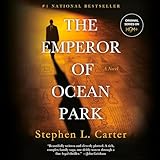
- Audible Audiobook
- Stephen L. Carter (Author) - Richard Allen (Narrator)
- English (Publication Language)
- 04/15/2004 (Publication Date) - Random House Audio (Publisher)
The Emperor Of Ocean Park by Stephen L. Carter: A Detailed Analysis
Stephen L. Carter’s The Emperor Of Ocean Park is an ambitious literary undertaking that operates on multiple intellectual and narrative levels. It masterfully blends elements of a complex mystery with a profound family saga and a deep philosophical inquiry into the nature of knowledge, identity, and legacy. Its primary strength lies in its intellectual rigor and the sheer depth of its thematic exploration, though this very complexity can present a significant challenge for readers accustomed to more conventional narratives. The novel demands a considerable investment of the reader’s attention, offering a rich, albeit demanding, reward for those willing to engage with its intricacies.
Carter constructs a narrative that is both meticulously plotted and sprawling in its thematic scope. The central mystery, revolving around the death of a powerful academic figure and the subsequent unraveling of long-buried secrets, serves as the primary engine for exploring profound questions about identity, inheritance, and the performance of intellect within elite American society. The world of the novel is rendered with exceptional detail, populated by characters who are deeply shaped by their histories, their social positions, and the weight of their intellectual pursuits. For instance, the protagonist, Talcott, is not merely an investigator; he is intrinsically a product of the very world he is investigating, profoundly burdened by his deceased father’s complex legacy and the immense expectations placed upon him. This internal conflict adds a significant and compelling layer to the external mystery.
The novel’s most critical decision criterion for potential readers hinges on their tolerance for deliberate pacing and intricate exposition. Unlike a conventional thriller that prioritizes immediate action and rapid plot progression, The Emperor Of Ocean Park dedicates substantial narrative space to the slow reveal of information and the exploration of thematic resonance. Carter invests considerable narrative energy into establishing the intricate social dynamics of the Black elite and the rarefied academic environment of an Ivy League institution. This detailed world-building is not merely decorative; it is essential for the plot’s eventual coherence and the full understanding of the characters’ motivations. However, this approach requires a reader who is patient and willing to absorb a considerable amount of background detail and philosophical contemplation. Those who find lengthy descriptions and abstract digressions taxing may struggle to maintain consistent engagement. Conversely, readers who relish intricate plotting, deep character studies, and substantial thematic depth will find ample material to dissect and contemplate. The novel implicitly asks its readers to be active participants, piecing together clues not just from dialogue and overt action, but from the very fabric of the richly constructed world Carter has created.
Comparison Framework: Literary Mysteries and Intellectual Depth
When considering The Emperor Of Ocean Park, it is helpful to compare its unique approach to other works within the literary mystery genre that also prioritize intellectual depth and complex themes. The table below highlights key differentiating factors:
| Feature | The Emperor Of Ocean Park (Stephen L. Carter) | The Secret History (Donna Tartt) | The Goldfinch (Donna Tartt) | Foucault’s Pendulum (Umberto Eco) |
|---|---|---|---|---|
| Pacing | Deliberate, slow-burn; emphasis on exposition and atmosphere | Measured, character-driven; builds suspense gradually | Episodic, sprawling; can be slow in sections | Dense, labyrinthine; requires sustained focus |
| Complexity | Highly intricate plot, dense philosophical themes, layered social commentary | Complex character psychology, moral ambiguity, academic setting | Intricate plot, exploration of art, grief, and fate | Encyclopedic knowledge, conspiracy theories, philosophical depth |
| Protagonist Role | Investigator burdened by personal history and legacy | Participant in the events, seeking to understand past actions | Central figure navigating a complex, often dangerous world | Investigator of historical/philosophical connections |
| Thematic Depth | Race, class, legacy, intellectualism, truth, Black identity | Morality, guilt, aesthetics, the corruption of ideals | Art, loss, fate, trauma, survival | Semiotics, history, conspiracy, truth, knowledge |
| Reader Expectation | Intellectual engagement, patience, thematic exploration | Character study, moral questioning, atmospheric immersion | Epic journey, exploration of art and human resilience | Deep intellectual dive, patience, tolerance for digression |
Checklist for Reading The Emperor Of Ocean Park
Use this checklist to determine if The Emperor Of Ocean Park aligns with your
Decision Rules
- If reliability is your top priority for The Emperor Of Ocean Park by Stephen L. Carter, choose the option with the strongest long-term track record and support.
- If value matters most, compare total ownership cost instead of headline price alone.
- If your use case is specific, prioritize fit-for-purpose features over generic ‘best overall’ claims.