Alan Garner’s Mythical Novel Treacle Walker
Quick Answer
- Treacle Walker by Alan Garner is a complex, layered novel that demands reader engagement, weaving together myth, history, and personal narrative.
- Its strengths lie in Garner’s distinctive prose and thematic depth, but its challenging structure may deter readers seeking straightforward plot.
- Recommended for those who appreciate intricate literary puzzles and a deep dive into British folklore.
Who This Is For
- Readers who enjoy literary fiction that prioritizes atmosphere, symbolism, and linguistic artistry over conventional narrative pacing.
- Those interested in British folklore, mythology, and how these ancient stories resonate in contemporary settings.
What to Check First
- Author’s Style: Alan Garner is known for his dense, allusive prose and non-linear storytelling. If you prefer direct, plot-driven narratives, this may not be your ideal starting point.
- Thematic Complexity: The novel engages with themes of time, memory, folklore, and the interconnectedness of past and present. Be prepared for a work that invites interpretation rather than providing easy answers.
- Pacing and Structure: Treacle Walker does not adhere to traditional plot structures. Readers should be comfortable with a more fragmented and associative approach to narrative.
Step-by-Step Plan: Engaging with Treacle Walker by Alan Garner
1. Initial Immersion: Begin reading without immediate expectation of linear plot. Focus on Garner’s distinctive prose and the sensory details he provides.
- What to look for: Rhythmic language, recurring motifs, and evocative imagery.
- Mistake to avoid: Trying to force a conventional plot structure onto the text too early; this can lead to frustration.
2. Identify Key Characters and Their Relationships: Pay close attention to the protagonist, the boy, and the other figures who appear. Note their interactions and the symbolic weight they carry.
- What to look for: The subtle ways characters are introduced and how their presence shifts the narrative’s focus.
- Mistake to avoid: Underestimating the significance of seemingly minor characters or brief encounters.
3. Track Recurring Symbols and Motifs: Garner heavily relies on recurring images and concepts (e.g., the Treacle Walker itself, specific animals, historical artifacts). Note these as they appear.
- What to look for: The context in which these symbols reappear and any subtle shifts in their meaning or presentation.
- Mistake to avoid: Dismissing repeated elements as mere stylistic quirks rather than crucial thematic anchors.
4. Engage with the Folklore Elements: Recognize that the novel draws heavily from ancient British myths and tales. Researching these briefly can enhance understanding.
- What to look for: Connections between the narrative events and known folkloric patterns or figures.
- Mistake to avoid: Treating the folkloric allusions as decorative rather than integral to the novel’s core meaning.
5. Embrace Ambiguity: Accept that not all questions will be answered explicitly. The novel thrives on suggestion and the reader’s active participation in constructing meaning.
- What to look for: Areas where the text invites multiple interpretations and where the “gaps” are as important as the “filled spaces.”
- Mistake to avoid: Seeking definitive explanations for every symbolic gesture or narrative turn.
6. Consider the Historical and Personal Layers: Garner often blends personal experience and historical events with myth. Reflect on how these layers interact.
- What to look for: Echoes of Garner’s own life or broader historical periods within the narrative’s fabric.
- Mistake to avoid: Isolating the mythical elements from the more grounded, human dimensions of the story.
7. Revisit Key Passages: After completing a section or the entire novel, reread significant passages. New connections and insights often emerge upon a second engagement.
- What to look for: Previously overlooked nuances in language or character motivation.
- Mistake to avoid: Assuming a single reading is sufficient to grasp the novel’s full scope.
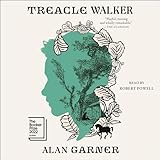
- Audible Audiobook
- Alan Garner (Author) - Robert Powell (Narrator)
- English (Publication Language)
- 11/14/2023 (Publication Date) - Simon & Schuster Audio (Publisher)
Treacle Walker by Alan Garner: Navigating Its Mythic Depths
Alan Garner’s Treacle Walker is not a novel that yields its secrets easily. It operates on multiple temporal and symbolic planes, demanding a reader willing to engage in a process of discovery. The narrative centers on a young boy who encounters a mysterious, ancient figure—the Treacle Walker—and through this encounter, is drawn into a complex web of myth, memory, and the very fabric of time. Garner’s prose is characteristically dense and evocative, creating an atmosphere that is both dreamlike and grounded in a palpable sense of place.
The novel’s strength lies in its intricate tapestry of folklore and its profound exploration of how ancient stories persist and transform. Garner masterfully blends elements of British mythology with a contemporary setting, suggesting that the past is not merely prologue but a living, breathing presence. The titular Treacle Walker itself is a figure steeped in ambiguity, representing perhaps the persistence of myth, the weight of history, or the elusive nature of truth.
However, this very complexity can also be a barrier. Readers accustomed to straightforward plot progression may find the novel’s associative leaps and fragmented structure disorienting. The narrative prioritizes thematic resonance and symbolic depth over conventional character arcs or plot resolution. This is a book that rewards patience and a willingness to delve into its layers, rather than one that offers immediate gratification.
BLOCKQUOTE_0
Common Myths About Treacle Walker by Alan Garner
- Myth: Treacle Walker is a simple children’s fantasy story.
- Why it matters: This misconception can lead to disappointment if readers approach it expecting a straightforward adventure narrative.
- Fix: Understand that while a young protagonist is involved, the novel’s themes, language, and structural complexity are aimed at a mature literary audience. Its engagement with folklore is sophisticated, not simplistic.
- Myth: The novel has a clear, linear plot that can be easily summarized.
- Why it matters: Expecting a conventional plot will lead to confusion and a feeling of being lost.
- Fix: Recognize that Garner employs a more fragmented, symbolic, and associative narrative style. The “plot” is often revealed through thematic connections and recurring motifs rather than a direct causal sequence of events.
Expert Tips for Reading Treacle Walker
- Tip 1: Deep Dive into Garner’s Prose: Treat Garner’s language as a primary element of the story.
- Actionable Step: Read aloud passages that resonate with you. Pay attention to the rhythm, word choice, and sonic qualities.
- Common Mistake to Avoid: Skimming over descriptive passages or complex sentences, assuming they are merely decorative rather than integral to the novel’s atmosphere and meaning.
- Tip 2: Embrace the Mythic Framework: Understand that the novel is built upon ancient British folklore.
- Actionable Step: Keep a notebook or digital document to jot down recurring symbols, characters, and events, and briefly research any folkloric references that pique your interest.
- Common Mistake to Avoid: Treating the mythological elements as background dressing rather than essential structural components of the narrative.
- Tip 3: Accept the Unanswered: Recognize that Garner deliberately leaves much unsaid and open to interpretation.
- Actionable Step: Allow yourself to sit with ambiguity. Focus on the questions the novel raises rather than demanding concrete answers.
- Common Mistake to Avoid: Frustration over the lack of explicit explanations for character motivations or plot developments; this is a feature, not a flaw, of Garner’s style.
Decision Rules
- If reliability is your top priority for Treacle Walker by Alan Garner, choose the option with the strongest long-term track record and support.
- If value matters most, compare total ownership cost instead of headline price alone.
- If your use case is specific, prioritize fit-for-purpose features over generic ‘best overall’ claims.
FAQ
- Q: Is Treacle Walker suitable for younger readers?
A: While it features a young protagonist, the novel’s dense prose, complex themes, and ambiguous structure make it more appropriate for adult readers who appreciate literary fiction and intricate storytelling.
- Q: What is the significance of the title, “Treacle Walker”?
A: The title refers to a spectral or folkloric figure. In the novel, the Treacle Walker embodies ancient forces, the persistence of myth, and the mysterious connections between past and present, though its exact nature remains open to interpretation.
- Q: How does Treacle Walker compare to other works by Alan Garner?
A: Like much of Garner’s oeuvre, Treacle Walker delves into the intersection of myth, history, and the landscape of Britain. It shares his characteristic dense prose and non-linear narrative approach, often considered one of his more challenging but rewarding later works.
| Aspect | Strength | Limitation | Reader Consideration |
|---|---|---|---|
| Narrative Style | Evocative, atmospheric prose; deep symbolic resonance. | Fragmented, non-linear structure; can be disorienting for some readers. | Requires patience and a willingness to engage with abstract connections rather than direct plot. |
| Thematic Depth | Rich exploration of myth, time, memory, and landscape. | Themes are complex and layered, demanding active interpretation. | Readers who enjoy deciphering meaning and exploring philosophical underpinnings will find it rewarding. |
| Folklore Integration | Masterful weaving of ancient British myths into contemporary setting. | Knowledge of folklore enhances but is not strictly required for appreciation. | A basic understanding of British myth can enrich the reading experience, but the text itself provides clues. |
| Pacing | Deliberate and immersive, allowing for deep engagement with atmosphere. | Slow-moving for those accustomed to action-driven plots. | Best approached when one has the time |