Sean O’Casey’s Juno and the Paycock: A Dublin Tragedy
Juno And The Paycock by Sean O’Casey: Core Insights
- Juno And The Paycock by Sean O’Casey is a seminal 1924 play depicting the devastating impact of the Irish Civil War on a working-class Dublin family, the Boyles.
- It masterfully blends biting social commentary, dark humor, and profound tragedy, exposing the human cost of political conflict and societal decay.
- The play remains crucial for understanding Irish theatre and O’Casey’s critical, often contrarian, perspective on nationalism and its consequences.
Who This Is For
- Readers interested in 20th-century Irish literature and drama, particularly works that critically engage with socio-political themes and national identity.
- Students and scholars of theatre seeking to analyze plays that challenge prevailing narratives and explore the complexities of domestic life during periods of intense societal upheaval.
What to Check First
- The Irish Civil War Context: Understand the period of conflict (1922-1923) that serves as the play’s backdrop. This war, a brutal schism following the Anglo-Irish Treaty, directly fuels the play’s tragic events and character disillusionment.
- Sean O’Casey’s Philosophical Stance: Investigate O’Casey’s personal experiences and his critical perspective on Irish nationalism, revolution, and the social injustices he witnessed in Dublin. His plays often question the romanticized ideals of political movements.
- O’Casey’s Blend of Realism and Symbolism: Recognize how O’Casey uses vivid, colloquial language and realistic settings to depict poverty, while simultaneously employing symbolic elements and heightened dramatic devices to convey deeper thematic concerns.
- The “Joxer” Archetype: Identify the character of Joxer Daly and his function as a parasitic commentator, representing a certain type of idle, opportunistic observer who thrives on others’ misfortunes.
Step-by-Step Plan: Analyzing Juno And The Paycock by Sean O’Casey
This methodical approach allows for a comprehensive understanding of the play’s intricate structure and thematic depth.
For a deeper dive into this seminal work, consider getting your own copy of Juno And The Paycock by Sean O’Casey.
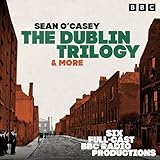
- Audible Audiobook
- Sean O'Casey (Author) - Sorcha Cusack, John Kavanagh, Elaine Cassidy (Narrators)
- English (Publication Language)
- 11/06/2025 (Publication Date) - BBC Digital Audio (Publisher)
1. Initial Reading for Narrative and Atmosphere: Undertake a full read of the play to absorb the immediate portrayal of the Boyle family’s domestic squalor and the introduction of external influences.
- Action: Read the entire play from start to finish.
- What to Look For: The initial impression of the Boyle family’s chaotic existence, the dialogue’s blend of humor and despair, and the first hints of the political forces encroaching on their lives.
- Mistake to Avoid: Dismissing the early comedic elements as mere levity; these often serve as a stark contrast to the impending tragedy and highlight the characters’ coping mechanisms.
2. Character Analysis and Motivation: Delve into the individual characters, paying close attention to their contradictions, desires, and their roles within the family unit and the broader societal context.
- Action: Reread key scenes, focusing on character interactions, monologues, and dialogue.
- What to Look For: The profound difference between Juno’s pragmatic resilience and Captain Boyle’s blustering inertia. Analyze Johnny’s internal conflict stemming from his past actions as a Republican volunteer.
- Mistake to Avoid: Viewing characters as purely good or evil; O’Casey presents complex individuals shaped by circumstance, ideology, and personal failings.
3. Thematic Exploration – Nationalism and Disillusionment: Examine how the play critiques romanticized notions of nationalism and the promises of revolution.
- Action: Identify instances where political ideals clash with domestic reality.
- What to Look For: The characters’ pronouncements on Ireland’s destiny versus their immediate struggles for survival. Note the consequences of political allegiances, particularly for Johnny.
- Mistake to Avoid: Accepting the characters’ patriotic rhetoric at face value; O’Casey uses it to expose hypocrisy and the devastating human cost of political fervor.
4. The Role of Fate and External Forces: Analyze how external factors, such as the inheritance and the legal system, disrupt the family’s fragile existence.
- Action: Track the impact of the unexpected inheritance and the subsequent legal entanglements.
- What to Look For: How the promise of wealth exacerbates existing tensions and ultimately leads to greater ruin. Observe the arbitrary nature of justice and fortune as depicted in the play.
- Mistake to Avoid: Believing the inheritance is a straightforward blessing; it acts as a catalyst for the play’s tragic trajectory.
5. O’Casey’s Language and Style: Appreciate O’Casey’s distinctive use of language, characterized by its vibrant Dublin vernacular, poetic imagery, and a deliberate juxtaposition of the comic and the tragic.
- Action: Pay close attention to the rhythm, idiom, and metaphorical richness of the dialogue.
- What to Look For: The use of “The Famous Flower of Doughnut” as a symbol of Boyle’s vanity, or the “red flag” as a representation of lost ideals.
- Mistake to Avoid: Overlooking the poetry within the colloquialisms; O’Casey elevates everyday speech to dramatic and thematic significance.
6. Thematic Exploration – Poverty and Dignity: Investigate the play’s unflinching portrayal of poverty and the characters’ desperate attempts to maintain dignity in the face of destitution.
- Action: Note descriptions of the Boyle’s living conditions and their interactions with creditors and neighbors.
- What to Look For: The stark contrast between the characters’ aspirations and their grim reality. Observe Juno’s persistent efforts to uphold family honor despite overwhelming odds.
- Mistake to Avoid: Seeing poverty solely as an economic condition; O’Casey presents it as a corrosive force that erodes morality and hope.
7. The Play’s Tragic Trajectory: Follow the escalating series of misfortunes that lead to the play’s devastating conclusion.
- Action: Trace the arc of the Boyle family’s fortunes from initial hope to utter despair.
- What to Look For: The cumulative effect of loss, betrayal, and violence. The ultimate isolation of the remaining family members.
- Mistake to Avoid: Expecting a conventional resolution; O’Casey’s tragedy lies in the enduring nature of suffering and the failure of grand ideals to offer solace.
Common Mistakes in Analyzing Juno And The Paycock
- Mistake: Viewing the play solely as a historical document of the Irish Civil War.
- Why it Matters: This limits the understanding of O’Casey’s broader critique of human nature, societal structures, and the universal consequences of conflict and poverty.
- Fix: Recognize that while the historical context is vital, the play transcends it to explore enduring themes of disillusionment, family breakdown, and the search for meaning.
- Mistake: Underestimating the significance of the comedic elements.
- Why it Matters: The dark humor is not mere comic relief; it serves to highlight the characters’ resilience, their absurd attempts to cope, and to create a jarring contrast with the profound tragedy.
- Fix: Analyze the humor’s function in revealing character, satirizing societal attitudes, and intensifying the dramatic impact of tragic events.
- Mistake: Interpreting Captain Boyle as simply a drunkard and a fool.
- Why it Matters: While he embodies many negative traits, Boyle also represents a certain type of Irish character caught between past glories and present realities, a figure of both pathos and critique.
- Fix: Consider Boyle’s pronouncements and actions within the context of O’Casey’s commentary on male ego, societal expectations, and the decline of traditional roles.
- Mistake: Overlooking Juno’s agency and strength.
- Why it Matters: Juno is often seen as the stoic matriarch, but her strength is not passive endurance; it is an active fight for survival and dignity against overwhelming odds.
- Fix: Appreciate Juno as the play’s moral and emotional anchor, whose resilience is a testament to the human spirit, even when faced with utter devastation.
- Mistake: Focusing only on the political message and ignoring the domestic drama.
- Why it Matters: The play’s power lies in the intersection of the personal and the political. The domestic sphere is where the abstract ideals of nationalism are tested and often shattered.
- Fix: Understand that the political conflict directly impacts the family unit, making the personal tragedies a direct consequence of the larger societal and political turmoil.
Expert Tips for Understanding Juno And The Paycock
- Tip 1: Analyze the “Talk.” Pay close attention to the characters’ dialogue, particularly Captain Boyle and Joxer Daly. O’Casey uses their bombastic, often nonsensical pronouncements to satirize empty rhetoric and the escapism found in patriotic or political slogans.
- Actionable Step: Isolate a scene featuring Boyle and Joxer and list the specific phrases they use that are detached from reality or practical concern.
- Common Mistake to Avoid: Treating their dialogue as mere drunken ramblings without recognizing its satirical and thematic purpose in critiquing idleness and false pride.
*
Quick Comparison
| Option | Best for | Pros | Watch out |
|---|---|---|---|
| Juno And The Paycock by Sean OCasey Core Insights | General use | Juno And The Paycock by Sean O’Casey is a seminal 1924 play depicting the dev… | Mistake to Avoid: Dismissing the early comedic elements as mere levity; these… |
| Who This Is For | General use | It masterfully blends biting social commentary, dark humor, and profound trag… | Mistake to Avoid: Viewing characters as purely good or evil; O’Casey presents… |
| What to Check First | General use | The play remains crucial for understanding Irish theatre and O’Casey’s critic… | Mistake to Avoid: Accepting the characters’ patriotic rhetoric at face value;… |
| Step-by-Step Plan Analyzing Juno And The Paycock by Sean OCasey | General use | Readers interested in 20th-century Irish literature and drama, particularly w… | Mistake to Avoid: Believing the inheritance is a straightforward blessing; it… |
Decision Rules
- If reliability is your top priority for Juno And The Paycock by Sean O’Casey, choose the option with the strongest long-term track record and support.
- If value matters most, compare total ownership cost instead of headline price alone.
- If your use case is specific, prioritize fit-for-purpose features over generic ‘best overall’ claims.