Samuel Beckett’s Existential Novel: ‘How It Is
Samuel Beckett’s How It Is is not a novel to be passively consumed. It is a deliberate dismantling of narrative convention, a deep dive into the fractured landscape of consciousness, and an unflinching examination of existence under duress. This guide offers a structured approach for readers seeking to engage with its profound, albeit demanding, territory.
How It Is by Samuel Beckett: Quick Answer
- Core Subject: An unflinching portrayal of consciousness, identity, and suffering in extreme conditions, characterized by fragmented narrative and existential inquiry.
- Reader Experience: Demands significant reader effort due to its minimalist style, repetition, and deliberate ambiguity.
- Recommendation: Best suited for dedicated readers of avant-garde literature and those with a strong interest in philosophical explorations of human behavior.
Who This Is For
- Readers who have previously engaged with and appreciated Samuel Beckett’s later prose works, such as Molloy or The Unnamable, and are prepared for a further deepening of his characteristic style.
- Individuals interested in literary experimentation that pushes the boundaries of conventional storytelling, exploring the limits of language, identity, and consciousness through sustained thematic and stylistic rigor.
What to Check First
- Beckett’s Oeuvre: Familiarity with Beckett’s thematic preoccupations—such as suffering, memory, identity dissolution, and the struggle for meaning—and his stylistic tendencies toward minimalism and repetition is crucial. Prior reading of his other novels or major plays is strongly advised for deeper comprehension.
- Tolerance for Ambiguity: How It Is deliberately avoids clear plot points, explicit character motivations, or conventional resolutions. Assess your comfort level with sustained ambiguity and the interpretation of abstract concepts.
- Patience with Repetition: Beckett employs extensive repetition not as a stylistic flaw, but as a deliberate technique to mirror the cyclical nature of thought and the oppressive monotony of existence. Understand this as a structural and thematic element.
- Philosophical Inclination: If you are drawn to existential questions regarding the nature of being, consciousness, the search for meaning in a void, and the human behavior, this novel will resonate more deeply.
Step-by-Step Plan for Engaging with How It Is by Samuel Beckett
Approaching How It Is requires a deliberate strategy to navigate its demanding structure and content. The following steps outline a methodical engagement process, emphasizing a shift from conventional reading habits to a more immersive experience.
1. Establish Foundational Context: Begin by understanding Samuel Beckett’s literary trajectory, particularly his move towards extreme minimalism in his later works, and the core tenets of existentialism.
- What to look for: An appreciation for Beckett’s consistent exploration of human endurance and the breakdown of self, alongside existentialist themes like absurdity, freedom, and the search for meaning in a seemingly indifferent universe. This context, as explored in analyses of Samuel Beckett’s How It Is: An Existential Narrative, provides a framework for the novel’s thematic concerns.
- Mistake: Starting the novel without any awareness of Beckett’s established thematic landscape or the philosophical underpinnings of existentialism, which can lead to immediate bewilderment regarding the text’s purpose and intent.
2. Initial Immersion in Sound and Rhythm: Read the opening sections not for plot, but for the sonic qualities and recurring linguistic patterns. Focus on the musicality of the prose.
- What to look for: The rhythmic flow of sentences, the impact of repeated phrases (e.g., “I can’t go on, I’ll go on”), and the almost incantatory effect of the prose. Beckett’s style here is akin to a minimalist musical composition.
- Mistake: Trying to decipher a coherent narrative or identify concrete events in this initial phase. This approach obstructs an appreciation of the text’s aural and atmospheric qualities, which are paramount to its initial impact.
3. Focus on the Narrator’s Immediate State: Identify the narrator’s primary sensations and immediate perceptions, which are often related to physical discomfort and a primal state of being.
- What to look for: Descriptions of mud, cold, hunger, and the narrator’s internal monologue, which forms the bulk of the text. The focus is on subjective experience rather than objective reality.
- Mistake: Over-emphasizing the need to pinpoint external circumstances or the identities of other figures. The novel prioritizes subjective, internal experience, rendering external details deliberately vague or absent.
4. Track Recurring Motifs and Phrases: Actively note the repetition of specific words, images, and short phrases throughout the text.
- What to look for: The recurring “mud,” the “bomb,” the concept of “travel,” and variations on the narrator’s struggle to proceed. These act as anchors within the text’s flux, reinforcing thematic concerns.
- Mistake: Dismissing repetition as mere redundancy. Recognize it as a deliberate technique reinforcing the narrator’s cyclical existence, psychological state, and the oppressive nature of his environment.
5. Embrace the Absence of Resolution: Accept that definitive explanations, character arcs, or narrative closures are intentionally absent. The novel is designed to resist such conventions.
- What to look for: The deliberate withholding of information and the refusal to provide stable identities or a coherent, linear progression of events. The narrative is a continuous present.
- Mistake: Seeking a traditional plot structure or expecting a resolution. This will inevitably lead to frustration and a misinterpretation of the novel’s fundamental design and purpose.
6. Internalize the “How It Is” Principle: Consider the title as an instruction to engage with the narrative as a state of being, rather than an external event to be analyzed or understood in conventional terms.
- What to look for: A shift from an analytical, detached reading to a more experiential, immersive engagement with the narrator’s subjective reality. The novel demands that the reader feel the state it describes.
- Mistake: Maintaining an objective distance that prevents the reader from fully experiencing the immersive quality of the narrator’s predicament. This detachment misses the novel’s core intent.
7. Consult Critical Analysis Selectively: After an initial reading attempt, consider engaging with scholarly essays or critical interpretations to deepen your understanding.
- What to look for: Insights into structural devices, thematic interpretations, and the novel’s place within Beckett’s oeuvre and
For those ready to delve into the challenging yet rewarding world of Samuel Beckett’s How It Is, securing a copy is the essential first step. This seminal work is a profound exploration of consciousness and existence.
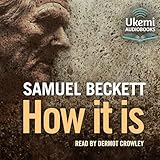
- Audible Audiobook
- Samuel Beckett (Author) - Dermot Crowley (Narrator)
- English (Publication Language)
- 02/17/2017 (Publication Date) - Ukemi Audiobooks from W. F. Howes Ltd (Publisher)
Quick Comparison
| Option | Best for | Pros | Watch out |
|---|---|---|---|
| Quick Answer | General use | Core Subject: An unflinching portrayal of consciousness, identity, and suffer… | Tolerance for Ambiguity: How It Is deliberately avoids clear plot points, e… |
| Who This Is For | General use | Reader Experience: Demands significant reader effort due to its minimalist st… | Mistake: Starting the novel without any awareness of Beckett’s established th… |
| What to Check First | General use | Recommendation: Best suited for dedicated readers of avant-garde literature a… | Mistake: Trying to decipher a coherent narrative or identify concrete events… |
| Step-by-Step Plan for Engaging with How It Is by Samuel Beckett | General use | Readers who have previously engaged with and appreciated Samuel Beckett’s lat… | Mistake: Over-emphasizing the need to pinpoint external circumstances or the… |
Decision Rules
- If reliability is your top priority for How It Is by Samuel Beckett, choose the option with the strongest long-term track record and support.
- If value matters most, compare total ownership cost instead of headline price alone.
- If your use case is specific, prioritize fit-for-purpose features over generic ‘best overall’ claims.