A. S. King’s Dig: Family Secrets Uncovered
Quick Answer
- For Whom: Young adult readers prepared to engage with difficult themes of family secrets and inherited trauma.
- Key Takeaway: Dig uses a literal excavation as a powerful metaphor for uncovering buried family history and its lasting psychological impact.
- Verdict: A thematically rich, character-driven novel that demands reader patience but offers clear insights into the complexities of familial legacies.
Who This Is For
- Readers who appreciate novels that explore the psychological weight of family history and its intergenerational effects.
- Young adults interested in stories that tackle complex emotional landscapes and the process of confronting difficult truths about their origins.
What to Check First
- Authorial Style: A. S. King is known for her direct and unflinching approach to sensitive subjects. Her narrative style in Dig is often fragmented, mirroring the characters’ fractured experiences.
- Thematic Complexity: The novel delves into themes of abuse, neglect, mental health, and the cyclical nature of trauma. It does not shy away from emotionally challenging content.
- Narrative Structure: The story is not told chronologically. Be prepared for a non-linear progression that requires active reader participation to piece together events and character motivations.
- Symbolic Resonance: The central metaphor of “digging” is crucial. Consider its literal and figurative meanings from the outset to fully grasp the novel’s intent.
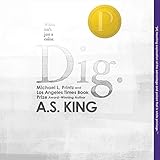
- Audible Audiobook
- A.S. King (Author) - A.S. King, Mike Chamberlain, Tonya Cornelisse (Narrators)
- English (Publication Language)
- 03/26/2019 (Publication Date) - Listening Library (Publisher)
Step-by-Step Plan for Engaging with Dig by A. S. King
1. Initial Immersion: Begin reading, focusing on the establishment of the setting and the initial act of literal digging.
- What to look for: The physical context of the digging and the immediate reactions of the characters involved.
- Mistake to avoid: Dismissing the literal digging as merely a plot device; recognize its immediate symbolic potential.
2. Character Introduction and Observation: As new characters are introduced, note their initial interactions and any hints of their past.
- What to look for: Subtle cues about unspoken family histories and existing tensions between characters.
- Mistake to avoid: Forming rigid judgments about characters too early; their complexities are meant to unfold gradually.
3. Deconstructing Memory Fragments: Pay close attention to how memories are presented – often out of sequence and tinged with emotion.
- What to look for: The emotional tenor and recurring patterns within the characters’ recalled experiences.
- Mistake to avoid: Expecting a clear, linear timeline of past events; the fragmented nature is integral to the storytelling.
4. Identifying Trauma Manifestations: Observe how past traumatic events directly influence present-day behaviors and relationships.
- What to look for: The cause-and-effect links between historical incidents and current interpersonal dynamics.
- Mistake to avoid: Attributing current issues solely to individual flaws without considering the generational context.
5. Analyzing Communication Gaps: Examine how characters communicate, particularly regarding their family histories and emotional states.
- What to look for: The silences, evasions, and outright falsehoods that serve to maintain secrets.
- Mistake to avoid: Underestimating the significance of what is not said; the unspoken often carries the heaviest weight.
6. Connecting Past Actions to Present Consequences: Actively seek to understand how the unearthed histories directly shape the characters’ current lives and choices.
- What to look for: The ways in which the past actively “digs” into the present, influencing decisions and relationships.
- Mistake to avoid: Separating the characters’ present reality from their inherited familial circumstances; they are intrinsically linked.
7. Reflecting on Resolution and Healing: Consider the novel’s approach to concluding the narrative and the characters’ paths toward understanding.
- What to look for: Whether the narrative offers definitive answers or a more ambiguous, ongoing process of coping and healing.
- Mistake to avoid: Anticipating a neat or fully resolved ending; the novel’s strength lies in its realistic portrayal of complex emotional journeys.
Dig by A. S. King: Unearthing Generational Trauma
A. S. King’s novel, Dig, employs a literal excavation as its central, potent metaphor for confronting the buried truths and inherited burdens of family history. The narrative follows a group of young people who become entangled in a physical and figurative digging process, unearthing layers of family secrets that have profoundly shaped their lives. King’s characteristic unflinching honesty and emotional intensity are on full display, making Dig a compelling, albeit challenging, exploration of how ancestral trauma impacts present-day identity and relationships.
The novel excels in its portrayal of how the past continues to haunt the present. Through fragmented narratives and shifting perspectives, King illustrates the cyclical nature of abuse and neglect, demonstrating how unspoken pain can echo through generations. The characters in Dig are not merely passive recipients of their legacies; they are active participants in their own excavation, often driven by an intuitive sense that something is fundamentally unsettled. This agency, coupled with the visceral depiction of their emotional struggles, forms the narrative’s core strength.
However, the novel’s thematic density and the often-unsettling subject matter necessitate a significant emotional investment from the reader. While King’s prose is sharp and evocative, the fragmented structure may prove disorienting for those who prefer a more straightforward, chronological storytelling approach. The effectiveness of Dig hinges on a reader’s willingness to engage with ambiguity and to actively piece together the narrative puzzle, mirroring the characters’ own efforts to understand their histories.
BLOCKQUOTE_0
Common Myths About Dig by A. S. King
- Myth: The “digging” is primarily a literal plot device.
- Why it matters: This interpretation overlooks the novel’s central metaphor for uncovering buried family secrets and inherited trauma.
- Fix: Recognize the digging as a symbolic representation of confronting painful truths and excavating one’s personal and familial past.
- Myth: The characters are solely defined by their traumatic experiences.
- Why it matters: While trauma is a significant influence, the novel also emphasizes the characters’ resilience and their capacity for agency and resistance.
- Fix: Look for instances of character growth, their active choices in response to difficult circumstances, and their internal struggles for self-definition.
- Myth: The novel offers simple answers or clear resolutions to complex family issues.
- Why it matters: Dig is intentionally ambiguous, reflecting the messy, ongoing, and often unresolved nature of healing from generational trauma.
- Fix: Approach the narrative’s conclusion with an understanding that healing is a process, not a destination, and that not all questions will have definitive answers.
Expert Tips for Understanding Dig by A. S. King
- Tip: Pay close attention to recurring symbols and motifs, especially the act of digging and the objects unearthed.
- Actionable Step: Keep a running list of significant objects or discoveries mentioned and consider their potential symbolic meaning within the context of family history.
- Common Mistake to Avoid: Treating these symbols as mere narrative embellishments rather than integral components of the novel’s thematic core.
- Tip: Embrace the fragmented narrative structure as an intentional element that enhances the story’s themes.
- Actionable Step: Do not become discouraged by the non-linear progression; allow the disjointed pieces to coalesce over time to form a larger understanding.
- Common Mistake to Avoid: Attempting to force a rigid, linear timeline onto the story; the disjointedness is a deliberate choice reflecting the characters’ fractured experiences and memories.
- Tip: Consider the intergenerational impact of the secrets and traumas revealed.
- Actionable Step: When a significant family secret or traumatic event is uncovered, actively ask yourself how it might have affected not only the individuals directly involved but also their children and subsequent generations.
- Common Mistake to Avoid: Focusing solely on the immediate impact of a secret without fully exploring its long-term, inherited consequences across family lines.
Dig by A. S. King: A Comparative Look
| Aspect | Dig by A. S. King | Other Works on Generational Trauma |
|---|---|---|
| Primary Metaphor | Literal excavation of the past | Varies; often psychological or symbolic |
| Narrative Style | Fragmented, non-linear | Can be linear or non-linear, depending on author |
| Emotional Tone | Unflinching, intense, raw | Ranges from melancholic to hopeful, depending on author |
| Reader Engagement Required | High; active piecing together of narrative | Moderate to high; depends on complexity |
| Focus | Intergenerational impact of specific family secrets | Broader societal or individual psychological exploration |
Decision Criteria for Reading Dig
- Constraint: Tolerance for ambiguity and non-linear narratives.
- Impact: If you prefer straightforward plots and clear resolutions, Dig by A. S. King may present a significant challenge. However, if you appreciate narratives that mirror the complexities of real-life memory and trauma, this novel’s structure will likely enhance your reading experience.
- Constraint: Sensitivity to mature themes.
- Impact: Readers sensitive to depictions of abuse, neglect, and mental health struggles should proceed with caution. The novel’s strength lies in its honest portrayal, but this can be emotionally demanding.
Decision Rules
- If reliability is your top priority for Dig by A. S. King, choose the option with the strongest long-term track record and support.
- If value matters most, compare total ownership cost instead of headline price alone.
- If your use case is specific, prioritize fit-for-purpose features over generic ‘best overall’ claims.
FAQ
- Q: Is Dig by A. S. King suitable for younger teenagers?
- A: While classified as young adult, Dig tackles mature themes such as abuse and neglect.