Rudyard Kipling’s Novel ‘Kim’ Explained
Rudyard Kipling’s Kim by Rudyard Kipling is a complex narrative set in colonial India, blending elements of espionage, spiritual exploration, and a coming-of-age story. It follows Kimball O’Hara, an orphaned Irish boy navigating the diverse social and geographical landscapes of India, acting as a spy for the British Empire while also accompanying a Buddhist lama on a spiritual journey. The novel’s dense prose, intricate plot, and underlying colonial perspective can present challenges for readers, requiring a thoughtful and contextualized approach.
Who This Is For
- Readers interested in historical fiction, particularly narratives set in colonial India that explore geopolitical intrigue and cultural encounters.
- Students and enthusiasts of literature and history looking to analyze themes of identity, espionage, and the impact of empire.
What to Check First
- The “Great Game”: Understand this term refers to the 19th-century geopolitical rivalry between the British Empire and Russia for influence in Central Asia. This context is vital for the novel’s espionage plot.
- Kipling’s Background: Recognize Rudyard Kipling’s upbringing in India under British rule, which shapes his perspective and influences the novel’s portrayal of society and the imperial project.
- Kim’s Hybridity: Note that Kim is an Anglo-Irish orphan raised in India. His mixed heritage is a key theme, enabling him to traverse different cultural boundaries.
- The Lama’s Role: Identify the Tibetan Buddhist lama as a central figure whose spiritual quest provides a thematic counterpoint to Kim’s involvement in espionage, highlighting themes of detachment and enlightenment.
Step-by-Step Plan for Understanding Kim by Rudyard Kipling
1. Initial Read-Through: Focus on Narrative Flow.
- Action: Read the novel from beginning to end, prioritizing understanding the sequence of events and Kim’s interactions.
- What to Look For: Kim’s relationships with the lama, Mahbub Ali, and Colonel Creighton. Observe his movement across India and his initial engagement with the “Great Game.”
- Mistake: Getting bogged down in deciphering every archaic phrase or obscure reference, which can hinder comprehension of the overall plot and character arcs.
2. Second Pass: Contextualize the “Great Game.”
- Action: Re-read sections involving espionage and intelligence gathering. Conduct brief research on the historical “Great Game.”
- What to Look For: The specific intelligence tasks assigned to Kim, the methods of information gathering, and the geopolitical significance of these actions.
- Mistake: Viewing the espionage elements as mere plot devices without understanding their basis in historical conflicts, leading to a superficial appreciation of the novel’s core tension.
3. Analyze Kim’s Identity Formation.
- Action: Closely examine Kim’s internal thoughts and his reactions to the diverse cultures he encounters.
- What to Look For: How Kim reconciles his Irish heritage with his Indian upbringing, his loyalties, and his evolving sense of self.
- Mistake: Overlooking Kim’s internal struggles and identity crisis in favor of the external adventure, thereby missing the novel’s exploration of belonging and self-discovery.
For those looking to dive into this classic, securing a copy of ‘Kim by Rudyard Kipling’ is the essential first step. This edition will serve as your guide through its intricate plot and rich historical setting.
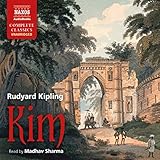
- Audible Audiobook
- Rudyard Kipling (Author) - Madhav Sharma (Narrator)
- English (Publication Language)
- 10/08/2009 (Publication Date) - Naxos AudioBooks (Publisher)
4. Critically Evaluate Kipling’s Portrayal of India.
- Action: Assess Kipling’s descriptions of Indian people, religions, and customs, considering the author’s position within the colonial system.
- What to Look For: Nuances in the depiction of various communities, potential biases, and the author’s underlying assumptions about Indian society and British rule.
- Mistake: Accepting Kipling’s descriptions uncritically without acknowledging the colonial lens, which can lead to a misinterpretation of the novel’s social commentary.
5. Deconstruct Language and Symbolism.
- Action: Revisit passages with complex language and identify recurring motifs and symbols.
- What to Look For: The symbolic significance of the Great Game, the Wheel of Life, the River, and Kim’s journey. Note the use of vernacular terms and their contextual meaning.
- Mistake: Neglecting the literary craftsmanship and symbolic layers, reducing the novel to a straightforward spy story or travelogue.
6. Synthesize Thematic Elements.
- Action: Reflect on how plot, character development, and historical context converge to convey the novel’s overarching themes.
- What to Look For: The interplay between worldly ambition and spiritual seeking, the nature of empire, and the universal search for truth and belonging.
- Mistake: Failing to connect individual elements into a cohesive understanding of the novel’s thematic depth and philosophical implications.
Common Mistakes When Reading Kim by Rudyard Kipling
- Mistake: Assuming a simple adventure or spy story.
- Why it Matters: This overlooks the novel’s intricate layers of cultural commentary, spiritual philosophy, and the complex ethical considerations of colonialism.
- Fix: Approach the reading with an awareness of the historical context of the “Great Game” and the novel’s deeper explorations of identity and human behavior.
- Mistake: Ignoring the colonial perspective and its inherent biases.
- Why it Matters: Kipling wrote from within the framework of the British Empire. Failing to acknowledge this can lead to an uncritical acceptance of his depictions of Indian society and the imperial project.
- Fix: Read with a critical lens, considering the author’s position and comparing his portrayals with historical scholarship and post-colonial critiques.
- Mistake: Struggling with archaic language and unfamiliar cultural references.
- Why it Matters: The density of Kipling’s prose and the specific historical and cultural milieu can be significant barriers to comprehension, potentially causing readers to disengage.
- Fix: Utilize annotated editions, scholarly guides, or online resources to clarify difficult passages, vocabulary, and cultural allusions. Patience and a willingness to seek external information are key.
- Mistake: Focusing exclusively on Kim’s espionage activities.
- Why it Matters: Kim’s spiritual journey with the lama is as integral to the novel’s fabric as his role as a spy. Neglecting this dimension diminishes the novel’s philosophical depth and its exploration of contrasting life paths.
- Fix: Give equal weight to Kim’s interactions with the lama and his quest for spiritual understanding, recognizing the parallel and often conflicting journeys he undertakes.
Understanding Kim by Rudyard Kipling: A Thematic Overview
Rudyard Kipling’s Kim by Rudyard Kipling is a novel that operates on multiple levels, intricately weaving a coming-of-age story with a spy thriller set against the backdrop of colonial India. At its core, the narrative follows Kimball O’Hara, an orphaned son of an Irish soldier and a native woman, who grows up as a street urchin in Lahore. Kim’s life takes a pivotal turn when he encounters a Tibetan Buddhist lama on a pilgrimage. This encounter sets Kim on a path that intertwines his destiny with the clandestine activities of the British Empire’s intelligence network, the “Great Game.”
The novel excels in its vivid portrayal of the Indian subcontinent, offering a broad range of its diverse cultures, religions, and landscapes. Kipling’s prose, while often dense and challenging, is remarkably evocative, immersing the reader in the sights, sounds, and smells of colonial India. The strength of Kim by Rudyard Kipling lies in its exploration of identity. Kim himself is a figure of hybridity, belonging neither fully to the British world nor entirely to the Indian one, a theme that resonates deeply throughout his journey. His relationship with the lama provides a counterpoint to his involvement in the empire’s machinations, introducing a spiritual dimension that questions the ultimate value of worldly pursuits.
However, a significant limitation for contemporary readers is the novel’s inherent colonial perspective. Kipling, having lived much of his life in India under British rule, wrote from within that framework. This means that while the novel offers a detailed depiction of the era, it also reflects the prevailing attitudes and biases of the time regarding race, culture, and imperial power. For readers unfamiliar with the historical context of the “Great Game,” the espionage plot can sometimes feel opaque, requiring supplementary knowledge to fully appreciate its significance.
Kim by Rudyard Kipling: A Study in Identity and Empire
The narrative arc of Kim by Rudyard Kipling is a testament to the author’s skill in character development and thematic layering. Kim’s journey is not merely geographical but also deeply psychological and spiritual. His dual nature—as an Irish orphan and a keen observer of Indian life—allows him unique access and insight into various strata of society. He moves from the dusty streets of Lahore to the foothills of the Himalayas, encountering a spectrum of characters, from Sufi mystics and Hindu priests to British intelligence officers and Afghan traders.
The “Great Game,” the geopolitical struggle for influence in Central Asia, forms the novel’s primary external conflict. Kim is recruited by Colonel Creighton, a British intelligence officer, to act as a spy, leveraging his street smarts and his ability to blend in. This aspect of the story is meticulously detailed, showcasing the intricate network of agents and informants employed by the British. Yet, this pursuit of imperial objectives is constantly juxtaposed with Kim’s spiritual quest alongside the lama, who seeks the “River of the Arrow” to find enlightenment. This juxtaposition highlights a central tension in the novel: the conflict between worldly ambition and spiritual detachment, between the demands of empire and the pursuit of inner peace.
The novel’s enduring power comes from its complex portrayal of these intersecting worlds. It is a story about the formation of identity in a fractured world, the allure and cost of empire, and the universal human search for meaning. For readers willing to engage with its historical context and literary complexities, Kim by Rudyard Kipling offers a profound and unforgettable reading experience.
| Aspect | Description | Significance |
|---|---|---|
| <strong>Protagonist’s Identity</strong> | Kimball O’Hara, an orphaned Anglo-Irish boy living as a street urchin in colonial India. | Embodies hybridity and the complexities of belonging in a multi-cultural, imperial setting; his dual nature is key to his espionage role and personal development. |
| <strong>The “Great Game”</strong> | The late 19th-century geopolitical rivalry between the British Empire and Russia in Central Asia. | Provides the novel’s central espionage plot and historical context, highlighting the strategic importance of the region and the clandestine operations of intelligence agencies. |
| <strong>Spiritual Quest</strong> | Kim’s journey alongside a Tibetan lama seeking enlightenment and the legendary “River of the Arrow.” | Offers a philosophical counterpoint to the material and political pursuits of the “Great Game,” exploring themes of detachment, wisdom, and the search for truth. |
| <strong>Colonial Perspective</strong> | The narrative is told from the viewpoint of a British author living within the colonial system. | Influences the portrayal of Indian society and the imperial project; requires critical engagement from the reader to discern potential biases and understand the historical context of British rule. |
| <strong>Literary Style</strong> | Evocative prose, rich descriptions of India, intricate plotting, and symbolic language. | Creates an immersive reading experience but can also present challenges due to its density and use of period-specific language and cultural references. |
BLOCKQUOTE_0
Decision Rules
- If reliability is your top priority for Kim by Rudyard Kipling, choose the option with the strongest long-term track record and support.
- If value matters most, compare total ownership cost instead of headline price alone.
- If your use case is specific, prioritize fit-for-purpose features over generic ‘best overall’ claims.
FAQ
- Q: Is “Kim by Rudyard Kipling” difficult to read?
- A: Yes, “Kim by Rudyard Kipling” can be challenging due to its intricate plot, rich historical detail, and Kipling’s dense, often archaic prose. A deliberate reading approach is recommended.
- Q: What is the “Great Game” in the context of “Kim”?
- A: The “Great Game” refers to the strategic rivalry and conflict between the British Empire and Russia for supremacy in Central Asia during the late 19th century. Kim becomes an agent in this clandestine struggle.
- Q: What are the main themes explored in “Kim”?
- A: Key themes include identity (especially cultural hybridity), espionage, spirituality and enlightenment, the nature of empire, loyalty, and the search for belonging.
- Q: Should I read “Kim” in chronological order?
- A: Yes, reading “Kim” in the order presented by the author is essential for understanding the development of the plot, characters, and themes. The narrative is designed to unfold sequentially.
Expert Tips for Engaging with Kim by Rudyard Kipling
- Tip: Understand the historical backdrop of the “Great Game.”
- Actionable Step: Before or during your reading, research the geopolitical tensions between Britain and Russia in Central Asia during the late 19th century. Websites like the Encyclopædia Britannica or academic history sites can provide concise overviews.
- Common Mistake to Avoid: Treating the espionage plot as purely fictional without grasping its roots in real historical conflicts, which can make the characters’ motivations and the stakes feel less impactful.
- Tip: Pay attention to Kim’s dual identity and spiritual quest.
- Actionable Step: Actively track Kim’s internal dialogues and his relationship with the lama. Note how his experiences shape his understanding of himself and the world, distinct from his espionage duties.
- Common Mistake to Avoid: Focusing solely on the adventure and spy elements, thereby missing the profound philosophical and personal journey that is central to the novel’s artistic merit.
- Tip: Engage critically with Kipling’s portrayal of India.
- Actionable Step: While reading, consider the author’s position as a British colonial subject. Look for nuances in his descriptions of Indian culture and people, and be aware of potential biases.
- Common Mistake to Avoid: Accepting Kipling’s descriptions unc