Samanta Schweblin’s Short Stories: Good And Evil And Other Stories
Good And Evil And Other Stories by Samanta Schweblin: Quick Answer
- For the Discerning Reader: This collection offers unsettling, meticulously crafted narratives that explore the darker corners of human nature and societal anxieties.
- Proceed with Caution: If you prefer straightforward plots and comforting resolutions, the disorienting and often bleak landscapes of Good And Evil And Other Stories may not align with your reading preferences.
- A Microcosm of Dread: Schweblin excels at building palpable tension through subtle details, making her stories linger long after the final page.
Who This Is For
- Readers who appreciate literary fiction that pushes boundaries and challenges conventional storytelling.
- Those interested in exploring themes of existential dread, societal decay, and the uncanny through precise, unsettling prose.
What to Check First
- Author’s Previous Work: Familiarity with Schweblin’s signature style, particularly her novel Fever Dream, can prepare you for the disquieting atmosphere and thematic preoccupations in Good And Evil And Other Stories.
- Thematic Consistency: This collection is not a series of light reads. Expect to engage with challenging themes that may evoke discomfort.
- Narrative Structure: Be prepared for non-linear narratives and ambiguous endings. The power of these stories often lies in what is left unsaid.
Step-by-Step Plan for Engaging with Good And Evil And Other Stories
1. Initiate with “The Heavy”: Begin with this story to establish Schweblin’s characteristic blend of the mundane and the deeply unsettling.
- Action: Read the story carefully, paying attention to the protagonist’s growing unease and the peculiar nature of the “heavy.”
- What to Look For: The subtle escalation of dread and the breakdown of ordinary logic.
- Mistake: Dismissing the “heavy” as a mere symbolic device without exploring its visceral impact on the character and the reader.
2. Analyze “Mouthful”: This story provides a stark example of body horror and societal complicity.
- Action: Focus on the visceral descriptions and the passive acceptance of the grotesque.
- What to Look For: The normalization of extreme physical and psychological alteration and the implied commentary on consumerism or societal pressures.
- Mistake: Overlooking the underlying social critique in favor of the shock value of the imagery.
3. Deconstruct “The Size of the Dog”: This narrative explores themes of control and the uncanny through a seemingly simple premise.
- Action: Trace the protagonist’s attempts to manage an increasingly bizarre situation.
- What to Look For: The subversion of expectations regarding animal behavior and the psychological toll of an uncontrollable environment.
- Mistake: Assuming the story is solely about pet ownership; it delves into larger anxieties about autonomy.
4. Engage with “Rich and Poor”: This story directly confronts class disparity with unsettling clarity.
- Action: Observe the stark contrast presented and the disturbing interactions between the two unnamed characters.
- What to Look For: The chilling portrayal of privilege and the dehumanizing effects of extreme inequality.
- Mistake: Reading this as a simple allegory without appreciating the specific, unsettling details that make the scenario feel plausible yet nightmarish.
5. Consider “The New Neighbors”: This piece offers a potent exploration of paranoia and the fear of the unknown.
- Action: Note the protagonist’s increasing suspicion and the subtle, invasive actions of the titular neighbors.
- What to Look For: The way ordinary domesticity can become a source of terror and the erosion of personal boundaries.
- Mistake: Looking for overt threats; the power lies in the insidious, almost imperceptible intrusion.
For a quick overview of Samanta Schweblin’s acclaimed collection, this section provides a concise summary. If you’re looking to dive straight into her unsettling narratives, you can find the book here.
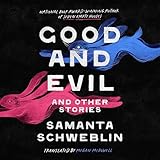
- Audible Audiobook
- Samanta Schweblin (Author) - Frankie Corzo, Alma Cuervo, Jamie K. Brown (Narrators)
- English (Publication Language)
- 09/16/2025 (Publication Date) - Random House Audio (Publisher)
6. Reflect on “Winter Bites”: This story delves into primal fears and the fragility of human connection.
- Action: Pay attention to the isolation of the characters and the encroaching, almost sentient cold.
- What to Look For: The personification of environmental forces and the desperate measures taken for survival, highlighting a bleak view of human resilience.
- Mistake: Interpreting the “winter” as purely meteorological; it functions as an existential threat.
Good And Evil And Other Stories by Samanta Schweblin: Strengths and Limitations
Schweblin’s collection demonstrates a remarkable command of atmosphere and a keen eye for the unsettling undercurrents of modern life. The strengths lie in her precise prose, which builds a palpable sense of dread through meticulous detail and the subversion of the ordinary. Stories like “The Heavy” and “Mouthful” are masterclasses in creating psychological discomfort without resorting to gratuitous gore. The thematic depth, touching upon societal anxieties, existential dread, and the uncanny, makes for a thought-provoking reading experience.
However, the collection’s very strengths can also be perceived as limitations for some readers. The consistent bleakness and lack of clear resolution in many stories can be alienating. If you are seeking comforting narratives or straightforward plotlines, Good And Evil And Other Stories might prove frustrating. The ambiguity, while intentional, means that some readers may feel unsatisfied by the lack of definitive answers or catharsis.
Common Myths About Good And Evil And Other Stories
- Myth: The stories are simply abstract or surreal for the sake of it.
- Why it Matters: This overlooks the grounded anxieties and sharp social commentary woven into each narrative. Schweblin’s surrealism is often a direct response to tangible societal pressures.
- Fix: Approach each story as a commentary on contemporary fears—environmental collapse, consumerism, class disparity, or the breakdown of communication—rendered through a distorted lens.
- Myth: The collection offers clear moral lessons about good and evil.
- Why it Matters: Schweblin rarely presents simple dichotomies. Instead, she explores the ambiguity of human behavior and the often blurry lines between right and wrong, survival and cruelty.
- Fix: Focus on understanding the characters’ motivations and the psychological landscapes they inhabit, rather than searching for explicit moral judgments.
- Myth: The bleakness means the stories lack emotional depth.
- Why it Matters: The emotional impact comes from the intensity of the characters’ fear, desperation, and disorientation, not from sentimentality or conventional emotional arcs.
- Fix: Recognize that the emotional resonance in Schweblin’s work is often derived from the evocation of primal fears and existential unease, which can be deeply affecting.
Expert Tips for Reading Schweblin
BLOCKQUOTE_0
- Tip 1: Embrace the Discomfort.
- Action: Allow yourself to feel unsettled. Schweblin’s stories are designed to provoke a visceral reaction. Do not shy away from the unease they generate.
- Common Mistake: Trying too hard to find logical explanations for illogical events, which can detract from the intended emotional and atmospheric impact.
- Tip 2: Focus on Atmosphere and Sensory Detail.
- Action: Immerse yourself in the descriptive language. Schweblin uses precise sensory details to build her chilling worlds.
- Common Mistake: Skimming over descriptive passages, thereby missing the subtle cues that build tension and contribute to the stories’ psychological weight.
- Tip 3: Consider the Societal Undercurrents.
- Action: Think about what contemporary anxieties each story might be reflecting, whether it’s environmental collapse, social inequality, or the erosion of personal autonomy.
- Common Mistake: Reading the stories in isolation without considering their potential commentary on broader societal issues, which limits their interpretative depth.
Decision Rules
- If reliability is your top priority for Good And Evil And Other Stories by Samanta Schweblin, choose the option with the strongest long-term track record and support.
- If value matters most, compare total ownership cost instead of headline price alone.
- If your use case is specific, prioritize fit-for-purpose features over generic ‘best overall’ claims.
FAQ
- Q: Is Good And Evil And Other Stories a good starting point for new readers of Samanta Schweblin?
- A: While it is a strong collection, readers new to Schweblin might find her novel Fever Dream to be a more accessible entry point due to its more focused narrative. However, if you enjoy challenging short fiction, this collection is certainly viable.
- Q: How does the “evil” in these stories manifest?
- A: The “evil” is rarely overt or cartoonish. It appears as insidious societal pressures, psychological manipulation, the normalization of horror, and the darker impulses that lie beneath seemingly ordinary human behavior.
- Q: What is the primary takeaway from Good And Evil And Other Stories?
- A: The collection’s primary takeaway is a profound sense of unease regarding the fragility of normalcy and the unsettling ways in which human nature and society can distort reality. It prompts reflection on what we accept and what we fear.
- Q: Can I read these stories in any order?
- A: Yes, the stories are independent. However, reading them in the order they appear may provide a gradual immersion into Schweblin’s thematic concerns and stylistic range.
| Story Title | Primary Theme(s) | Notable Technique | Potential Reader Response |
|---|---|---|---|
| The Heavy | Existential dread, the uncanny | Escalating unease, ambiguous threat | Disorientation, fascination |
| Mouthful | Societal complicity, body horror | Visceral description, passive acceptance | Revulsion, critical reflection |
| The Size of the Dog | Control, the uncanny, environmental anxiety | Subverted expectations, psychological strain | Bewilderment, unease |
| Rich and Poor | Class disparity, dehumanization | Stark contrast, chilling interaction | Discomfort, social critique |
| The New Neighbors | Paranoia, invasion of privacy, fear of the unknown | Insidious |