Roxane Gay’s Not That Bad: Essays On Trauma
Quick Answer
- “Not That Bad: Essays on Trauma” is a curated collection of personal narratives, edited by Roxane Gay, that explores experiences of trauma and how society often dismisses their severity.
- The essays are characterized by raw honesty and an unflinching examination of difficult subjects, challenging the reader’s perception of what constitutes significant trauma.
- Readers should approach this collection with emotional preparedness due to its explicit content and the deeply personal nature of the contributors’ accounts.
Who This Is For
- Individuals seeking to understand the complex, often understated, realities of trauma through diverse lived experiences.
- Readers interested in contemporary non-fiction that engages with difficult social and personal issues with significant authorial candor.
What to Check First
- Author’s Curatorial Intent: Roxane Gay’s introduction frames the collection as a necessary exploration of experiences often dismissed as “not that bad.” Understanding this perspective is crucial for interpreting the essays.
- Content Sensitivity: The essays contain explicit descriptions of sexual assault, abuse, and other traumatic events. Readers sensitive to these topics must assess their own emotional readiness.
- Nature of the Anthology: This is not a single author’s work but a compilation of diverse voices, curated by Gay. The strength lies in the varied perspectives on a shared theme.
- Title’s Ironic Function: The title “Not That Bad” is intentionally provocative, highlighting how society often minimizes trauma. Recognizing this irony is key to grasping the collection’s central argument.
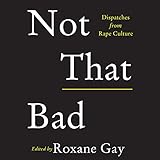
- Audible Audiobook
- Roxane Gay (Author) - Roxane Gay, Gabrielle Union, Ally Sheedy (Narrators)
- English (Publication Language)
- 05/01/2018 (Publication Date) - Harper Perennial (Publisher)
Step-by-Step Plan: Engaging with Not That Bad by Roxane Gay
1. Read Roxane Gay’s Introduction: Begin with Gay’s framing essay.
- Action: Analyze her stated purpose for the collection and her personal connection to the theme of trauma.
- What to look for: Gay’s definition of “not that bad” in the context of trauma and her intention to amplify voices that challenge this minimization.
- Mistake: Skipping the introduction, leading to a misunderstanding of the collection’s critical stance and its focus on the societal dismissal of trauma.
2. Engage with Essays Sequentially: Read the essays in the order presented.
- Action: Observe the thematic progression and the varied narrative styles.
- What to look for: How each essay builds upon or contrasts with the preceding ones, creating a cumulative effect on the reader’s understanding of trauma’s pervasiveness.
- Mistake: Randomly selecting essays, which can diminish the curated flow and the intended impact of the collection’s structure.
3. Identify Shared Themes and Divergent Experiences: Note recurring motifs and individual differences across the essays.
- Action: Track common threads like silence, survival, societal judgment, and the struggle for validation.
- What to look for: The spectrum of traumatic experiences and the diverse coping mechanisms and aftermaths described by different contributors.
- Mistake: Focusing exclusively on similarities and overlooking the unique nuances of each individual’s journey, or vice versa.
4. Analyze the “Not That Bad” Paradox in Each Essay: Consider how each contributor implicitly or explicitly grapples with the title’s premise.
- Action: Reflect on instances where the author’s experience was invalidated or downplayed.
- What to look for: The internal conflict and resilience demonstrated by individuals whose trauma was deemed insignificant by external standards.
- Mistake: Interpreting the title literally without understanding its critical function as a commentary on societal attitudes.
5. Process Emotional and Intellectual Responses: Allow for personal reflection after reading challenging passages or essays.
- Action: Acknowledge and process your own emotional reactions and intellectual insights.
- What to look for: Any personal connections, points of empathy, or shifts in perspective prompted by the narratives.
- Mistake: Suppressing or ignoring emotional responses, which can hinder a deeper comprehension of the material’s impact.
6. Consider the Collection’s Broader Societal Commentary: Evaluate how the essays collectively critique societal norms regarding trauma.
- Action: Synthesize the individual narratives into a broader understanding of how trauma is perceived and addressed.
- What to look for: Evidence of systemic issues, cultural biases, and the collective impact of minimized suffering.
- Mistake: Viewing the essays as isolated incidents rather than part of a larger, interconnected commentary on societal failings.
7. Engage in Post-Reading Reflection or Discussion: Consider the collection’s lasting impact.
- Action: Reflect on how your understanding of trauma, empathy, and validation has been informed by the book.
- What to look for: Any changes in your perception of how trauma is discussed or treated in society.
- Mistake: Moving on from the book without internalizing its themes or considering its implications for personal and societal awareness.
Failure Mode: Intellectual Detachment from Emotional Weight
A significant failure mode readers may encounter with “Not That Bad by Roxane Gay” is the tendency to approach the essays with intellectual detachment, viewing them as case studies rather than deeply personal accounts. This occurs when readers prioritize analytical dissection over empathetic engagement, potentially leading to a superficial understanding of the profound emotional impact of trauma. The explicit and raw nature of the narratives is central to their power; bypassing this emotional connection can render the collection’s critical message less effective.
To detect this early, a reader might notice themselves focusing on the structure or literary merit of an essay without being moved by its content, or summarizing traumatic events clinically. The fix involves consciously pausing after reading particularly intense passages, allowing for emotional processing, and acknowledging the vulnerability inherent in each contribution. This requires a deliberate shift from passive observation to active, empathetic immersion.
Common Mistakes
- Mistake: Expecting a “how-to” guide for overcoming trauma.
- Why it matters: This collection is an exploration and a testament to lived experiences, not a therapeutic manual. Misaligned expectations can lead to disappointment and a misinterpretation of the authors’ intent.
- Fix: Approach the book as a series of personal narratives and reflections, focusing on understanding the diverse ways individuals navigate trauma and its aftermath.
- Mistake: Underestimating the emotional intensity and explicit content.
- Why it matters: The essays contain graphic descriptions of abuse and trauma that can be triggering. Entering the collection unprepared can be detrimental to one’s well-being.
- Fix: Review content warnings, assess your personal emotional state, and consider pacing your reading with breaks to manage potential distress.
- Mistake: Dismissing essays that do not directly align with one’s own experiences.
- Why it matters: The collection’s strength lies in the breadth of experiences and perspectives it encompasses. Each narrative offers a unique insight into the multifaceted nature of trauma.
- Fix: Engage with each essay with an open mind, recognizing that understanding diverse experiences, even those dissimilar to your own, is a valuable outcome.
- Mistake: Focusing solely on the “badness” of the trauma.
- Why it matters: The collection also highlights resilience, survival, and the complex processes of making meaning from traumatic events. Overlooking these aspects provides an incomplete picture.
- Fix: Pay attention to the authors’ demonstrations of strength, survival, and their ongoing journeys of processing and articulating their experiences.
Expert Tips
- Tip 1: Cultivate Empathetic Reading: Approach each essay with a commitment to understanding the author’s lived reality, even if it diverges significantly from your own.
- Actionable Step: After reading an essay, jot down one specific feeling or insight the author’s narrative evoked in you, focusing on their emotional truth.
- Common Mistake to Avoid: Critically evaluating the author’s reactions or choices based on external assumptions or societal expectations of how one “should” respond to trauma.
- Tip 2: Recognize the Collective Critique: Understand that while each essay is a personal account, the collection as a whole serves as a powerful critique of societal attitudes that minimize or dismiss trauma.
- Actionable Step: While reading, mark instances where the author describes their experience being invalidated or overlooked by others or by broader societal norms.
- Common Mistake to Avoid: Isolating each story as an individual event without connecting it to the larger patterns of trauma acknowledgment and denial present in society.
- Tip 3: Integrate Self-Care Practices: Given the sensitive and often disturbing nature of the material, incorporate deliberate self-care into your reading routine.
- Actionable Step: Schedule brief interludes after reading particularly challenging essays to engage in a calming activity, such as mindfulness exercises or listening to soothing music.
- Common Mistake to Avoid: Consuming the content for extended periods without acknowledging or addressing the potential emotional toll, which can lead to distress or emotional fatigue.
Decision Rules for Engaging with Not That Bad by Roxane Gay
- For Deep Understanding: If your goal is to gain a nuanced comprehension of how trauma is perceived and minimized, prioritize reading the collection in its entirety, engaging with Gay’s introduction and the sequential essay order.
- For Emotional Preparedness: If you are sensitive to explicit content, check content warnings and consider your current emotional state before beginning. It is permissible to read selectively or to postpone reading if you are not prepared.
- For Societal Insight: If you are interested in a critique of societal attitudes towards trauma, focus on how each essay implicitly or explicitly challenges the notion that certain traumatic experiences are “not that bad.”
Quick Comparison
| Collection Aspect | Best For | Strengths | Potential Pitfalls |
|---|---|---|---|
| Roxane Gay’s Introduction | Setting context | Provides authorial intent and frames the collection’s critical stance. | Can be skipped, leading to a loss of the overarching thesis. |
| Individual Essays | Experiential understanding | Offer diverse, raw accounts of trauma and its aftermath. | May |