Rick Riordan’s The Lightning Thief
Quick Answer
- Core Concept: The Lightning Thief by Rick Riordan introduces Percy Jackson, a seemingly ordinary boy who discovers he is a demigod, son of Poseidon, and is drawn into a world of Greek gods, monsters, and quests.
- Target Audience: Middle-grade readers and young adults interested in adventure, mythology, and protagonists who navigate challenges related to identity and neurodiversity.
- Key Strengths: Accessible introduction to Greek mythology, engaging first-person narration from a relatable protagonist, and a fast-paced quest narrative.
Who This Is For
- Readers seeking an adventure novel that blends modern-day settings with classic Greek myths in an engaging and digestible format.
- Young readers who appreciate stories where characters with learning differences, such as dyslexia and ADHD, are portrayed as possessing unique strengths.
What to Check First
- Mythological Adaptation: Riordan creatively adapts Greek myths for a contemporary audience. Expect narrative liberties rather than strict adherence to ancient texts.
- Protagonist’s Voice: The story is told from Percy Jackson’s perspective. His voice—a mix of confusion, sarcasm, and burgeoning bravery—is integral to the novel’s appeal.
- Thematic Relevance: Consider the themes of identity, belonging, and how perceived weaknesses, like Percy’s dyslexia and ADHD, are reframed as potential assets.
- Quest Structure: The novel follows a classic quest narrative: a hero called to action, facing trials, and seeking a resolution, all driven by the central conflict of a stolen divine artifact.
Step-by-Step Plan for Understanding The Lightning Thief by Rick Riordan
1. Assess Percy’s Initial State: Observe Percy’s struggles at Yancy Academy, including his dyslexia and ADHD, and his perception of himself as a problematic student.
- Action: Note specific incidents of Percy’s academic and social difficulties.
- What to look for: His confusion, his teachers’ reactions, and his own self-doubt.
- Mistake to avoid: Dismissing these early challenges as mere background detail; they are crucial for understanding Percy’s character arc and the novel’s thematic exploration of neurodiversity.
2. Identify the Catalyst for Change: Pinpoint the moment Percy learns he is a demigod, a son of Poseidon, following the attack by Mrs. Dodds.
- Action: Mark the scene where Percy is attacked by the “Furies” disguised as teachers.
- What to look for: The surreal nature of the attack, Percy’s latent powers manifesting, and his subsequent arrival at Camp Half-Blood.
- Mistake to avoid: Underestimating the impact of this revelation; it is the primary event that propels Percy into the world of Greek mythology and his destiny.
3. Analyze the Call to Adventure: Understand Percy’s assignment to retrieve Zeus’s stolen master bolt to prevent an inter-god war.
- Action: Detail Chiron’s explanation of the situation and the prophecy concerning Percy.
- What to look for: The stakes involved (a potential war among the gods), and the formal decision to send Percy on the quest.
- Mistake to avoid: Viewing the quest as a simple fetch mission; it is a structured trial designed to test Percy and his companions, revealing their capabilities.
4. Examine the Fellowship Dynamics: Observe the interactions and roles of Percy’s companions, Annabeth Chase and Grover Underwood.
- Action: Document the strengths and weaknesses each character brings to the quest.
- What to look for: How their skills complement Percy’s, their contributions during conflicts, and their evolving relationships.
- Mistake to avoid: Considering them mere supporting characters; their presence and actions are vital to Percy’s success and development.
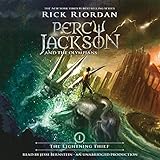
- Audible Audiobook
- Rick Riordan (Author) - Jesse Bernstein (Narrator)
- English (Publication Language)
- 07/01/2005 (Publication Date) - Listening Library (Publisher)
5. Map the Journey and Encounters: Track Percy’s cross-country journey and the mythological challenges he faces, such as encounters with Medusa and the Furies.
- Action: List the significant monsters and challenges Percy overcomes.
- What to look for: The specific monsters encountered and how Percy overcomes them, often by leveraging his burgeoning powers or the help of his friends.
- Mistake to avoid: Focusing solely on the action sequences; analyze how each obstacle forces Percy to confront his fears and adapt his strategies.
6. Evaluate the Confrontation with Ares: Study the pivotal scene where Percy directly confronts the god of war, Ares.
- Action: Analyze the dialogue and physical confrontation between Percy and Ares.
- What to look for: The symbolic meaning of Percy’s defiance and strategic thinking against brute force.
- Mistake to avoid: Interpreting this as a standard “boss battle”; it represents Percy’s growth in understanding power dynamics and his own moral compass.
7. Assess the Resolution and Thematic Resonance: Examine how Percy resolves the immediate conflict and what this means for his understanding of himself and his lineage.
- Action: Review Percy’s decisions regarding the lightning bolt and his interactions with his father, Poseidon.
- What to look for: His return to the mortal world and his acceptance of his dual identity.
- Mistake to avoid: Believing the story concludes definitively; the ending establishes Percy’s ongoing role and sets the stage for future adventures and challenges.
Common Mistakes
- Mistake: Assuming The Lightning Thief is a strictly factual retelling of Greek myths.
- Why it matters: Riordan’s primary objective is narrative entertainment. He uses mythology as a foundation for a modern adventure, adapting and simplifying elements for his story.
- Fix: Approach the mythological content as creative inspiration and plot devices, appreciating the imaginative reinterpretation rather than expecting academic accuracy.
- Mistake: Underestimating the significance of Percy’s neurodivergence.
- Why it matters: Riordan intentionally links Percy’s dyslexia and ADHD to his demigod nature, reframing these traits as potential advantages in a world of ancient magic and divine conflict.
- Fix: Recognize how these characteristics are woven into the fantasy elements, offering a positive and empowering perspective for readers who share similar experiences.
- Mistake: Expecting a complex, adult-oriented narrative structure.
- Why it matters: The novel is written for a middle-grade audience, featuring a direct narrative voice and age-appropriate themes and pacing.
- Fix: Adjust expectations to the intended demographic to fully appreciate the book’s strengths within its specific genre and target readership.
- Mistake: Overlooking the importance of the supporting characters.
- Why it matters: Annabeth and Grover are not merely companions; their distinct skills, knowledge, and personalities are crucial for Percy’s survival and growth throughout the quest.
- Fix: Pay attention to the contributions of each character, noting how their individual strengths and weaknesses impact the group’s progress and decisions.
The Lightning Thief by Rick Riordan: A Contrarian Perspective
While lauded for its accessibility and adventure, a critical lens reveals that The Lightning Thief by Rick Riordan, despite its modern appeal, can inadvertently reinforce certain archetypes without fully deconstructing them. The narrative champions the “chosen one” trope, where an ordinary individual, upon discovering a hidden lineage, is thrust into extraordinary circumstances and destined for greatness. This can, for some readers, present a somewhat deterministic view of heroism, where destiny, rather than solely personal choice and sustained effort, is the primary driver of heroic deeds. The emphasis on Percy’s inherent demigod status as the source of his power, while engaging, might overshadow the nuanced development of his character through consistent, difficult choices and learning.
Expert Tips for Engaging with The Lightning Thief
- Tip: Actively track the mythological creatures and figures Percy encounters.
- Actionable Step: Keep a running list of monsters and gods mentioned, noting their traditional myths versus how Riordan adapts them. For example, compare the myth of Medusa to her portrayal in Chapter 10.
- Common Mistake to Avoid: Treating these figures as mere plot devices without considering their mythological origins or Riordan’s creative liberties.
- Tip: Pay close attention to Percy’s internal monologue and his reactions to discovering his identity.
- Actionable Step: Note specific instances where Percy expresses confusion, fear, or defiance, and how these emotions evolve as he accepts his role. Observe his internal struggle in Chapter 7 when he first learns about Camp Half-Blood.
- Common Mistake to Avoid: Focusing solely on the external action and overlooking the psychological development of the protagonist.
- Tip: Analyze how Riordan uses Percy’s dyslexia and ADHD as narrative strengths.
- Actionable Step: Identify scenes where Percy’s “disabilities” are directly linked to his demigod abilities, such as his ability to read Ancient Greek or his ADHD aiding in combat reflexes. Consider his experience in Chapter 15 during the capture the flag game.
- Common Mistake to Avoid: Viewing these traits as purely character flaws without recognizing their integration into the fantasy elements and their positive framing.
BLOCKQUOTE_0
The Lightning Thief by Rick Riordan: A Comparative Analysis
The Lightning Thief by Rick Riordan has established itself as a foundational text in modern middle-grade fantasy, distinguished by its clever integration of Greek mythology into a contemporary American setting. Unlike series that build entirely new magical systems from scratch, Riordan leverages existing, widely recognized mythological frameworks, making his world immediately accessible. This approach allows readers to engage with familiar figures and concepts through a fresh, adventurous lens.
| Feature | The Lightning Thief by Rick Riordan | Percy Jackson: Sea of Monsters | The Kane Chronicles: The Red Pyramid |
|---|---|---|---|
| Mythological Source | Greek |
Decision Rules
- If reliability is your top priority for The Lightning Thief by Rick Riordan, choose the option with the strongest long-term track record and support.
- If value matters most, compare total ownership cost instead of headline price alone.
- If your use case is specific, prioritize fit-for-purpose features over generic ‘best overall’ claims.