Geoff Dyer’s But Beautiful
But Beautiful by Geoff Dyer: Quick Answer
- But Beautiful by Geoff Dyer offers an impressionistic, literary exploration of jazz legends, prioritizing mood and subjective experience over strict biographical fact.
- It excels at evoking the spirit and emotional depth of jazz and its creators, but its unconventional structure and speculative nature may not suit readers seeking traditional biographies.
- Recommended for those who appreciate experimental non-fiction and have an existing interest in jazz history.
Who This Is For
- Readers who enjoy literary non-fiction that blends biography, criticism, and personal reflection, and who value style and mood.
- Jazz enthusiasts looking for an evocative, alternative perspective on iconic musicians, focusing on the feeling and essence of their lives and music.
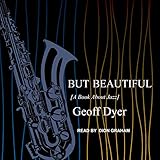
- Audible Audiobook
- Geoff Dyer (Author) - Dion Graham (Narrator)
- English (Publication Language)
- 04/09/2019 (Publication Date) - Tantor Media (Publisher)
What to Check First
- Authorial Intent: Geoff Dyer explicitly states his aim is not to write conventional biographies but rather to explore the “state of being” of these musicians, often through imaginative reconstruction.
- Narrative Style: The book is structured around individual musicians (Lester Young, Thelonious Monk, Charles Mingus, Billie Holiday, Bud Powell, Duke Ellington, John Coltrane), but each section is a mosaic of anecdotes, observations, and imagined moments rather than a chronological account.
- Factual Basis: Be aware that Dyer deliberately blurs the lines between fact and fiction, incorporating imagined dialogues and scenarios. He is not aiming for strict historical accuracy, but rather for a form of literary truth.
- Musical Context: While not a musicology text, an appreciation for the music of the featured artists will significantly enhance the reading experience.
Step-by-Step Plan for Engaging with But Beautiful
This plan provides a structured approach to appreciating Geoff Dyer’s unique work, But Beautiful by Geoff Dyer.
1. Set Realistic Expectations: Understand that But Beautiful is not a traditional biography.
- Action: Read the introduction or early pages with an awareness that Dyer prioritizes atmosphere and subjective interpretation over factual reporting.
- What to Look For: Notice Dyer’s descriptive language and his focus on emotional resonance rather than a timeline of events. For instance, in the section on Lester Young, Dyer focuses on the musician’s aura and sonic presence rather than his career milestones.
- Mistake: Approaching the book expecting verifiable facts, dates, and a linear life story. This will lead to frustration when Dyer chooses to invent dialogue or scenes.
2. Engage with Each Musician’s Portrait: Treat each section as an impressionistic study.
- Action: Read each chapter focusing on the mood, imagery, and Dyer’s unique perspective on the musician.
- What to Look For: Recurring themes such as the relationship between music and personal struggle, the nature of performance, and the elusive quality of genius. Observe how Dyer connects the musicians’ inner lives to the sounds they produced.
- Mistake: Attempting to fact-check every anecdote or piece of dialogue presented. Dyer himself admits to inventing much of the content, making this approach futile.
3. Acknowledge the Blend of Fact and Fiction: Appreciate Dyer’s deliberate use of speculation.
- Action: Identify instances where Dyer might be extrapolating from known biographical details or creating entirely imagined scenes and conversations.
- What to Look For: Phrases that signal conjecture, such as “I imagine,” “It seems,” or descriptive passages that feel more like invented moments than reported events. For example, Dyer might describe a musician’s thoughts during a performance that are not recorded in any biography.
- Mistake: Dismissing the book because it contains imagined elements; these are integral to Dyer’s artistic method of capturing a spirit rather than a factual record.
4. Integrate the Music: Connect the prose with the actual sound.
- Action: Play recordings of the featured musicians (e.g., Lester Young, Thelonious Monk, Charles Mingus) while reading their respective sections.
- What to Look For: How Dyer’s descriptions resonate with or reframe your listening experience, and how the music itself seems to inspire his prose. For example, listening to Monk’s dissonant chords might illuminate Dyer’s descriptions of his eccentric genius.
- Mistake: Reading the book in isolation from the music it celebrates, thereby missing a crucial dimension of the work. The book is a companion to the music, not a replacement for it.
5. Embrace Subjectivity: Accept the personal and interpretive nature of the text.
- Action: Reflect on your own emotional and intellectual responses to Dyer’s portrayal and how they align with or diverge from your own understanding of the musicians.
- What to Look For: Moments that particularly strike a chord or offer a new way of thinking about the artist or their music. Dyer aims to provoke thought and feeling, not to present objective truths.
- Mistake: Judging the book solely on its adherence to established biographical facts or expecting universal agreement with Dyer’s interpretations.
6. Consider Re-reading: Allow the impressions to deepen.
- Action: Return to sections that particularly resonated with you after finishing the book.
- What to Look For: New layers of meaning or connections between the various musicians’ portraits that may have been missed on a first read. Dyer’s prose is dense and layered, often revealing more on subsequent readings.
- Mistake: Believing that a single reading is sufficient to grasp all the nuances of Dyer’s layered prose.
But Beautiful by Geoff Dyer: A Contrarian Perspective
Geoff Dyer’s But Beautiful is often lauded for its lyrical, impressionistic approach to the lives of jazz musicians. However, a contrarian viewpoint invites scrutiny of whether this stylistic choice truly serves the reader or the subjects. While the book is undeniably a work of literary merit, its deliberate departure from biographical convention raises questions about its informational value and the potential for romanticizing or oversimplifying complex lives.
The book’s primary strength—its evocative, subjective prose—also represents its most significant limitation from a critical standpoint. Dyer eschews chronological narrative and factual reporting in favor of mood, atmosphere, and imagined scenes. For example, his depiction of Lester Young, while rich in melancholy and sonic description, offers less insight into Young’s career trajectory or personal challenges than a traditional biography might. This can lead to a powerful emotional experience but risks reducing individuals to thematic archetypes, where the feeling of their music overshadows the concrete realities of their existence.
Furthermore, the book’s structure, while offering a collection of distinct portraits, can feel fragmented. The transitions between musicians are not always seamless, and the absence of a unifying, factual through-line beyond the general subject of jazz can leave readers feeling untethered. This approach assumes a degree of familiarity with the musicians and the jazz canon, functioning more as a series of meditations for the already initiated rather than a comprehensive introduction for newcomers.
BLOCKQUOTE_0
This statement, while articulating Dyer’s artistic intention, highlights a potential pitfall: if the music is presented as the life, what remains for the biography? The book prioritizes the subjective experience of listening and imagining over the verifiable facts of existence. For readers who value factual accuracy, chronological development, and concrete biographical details, But Beautiful may prove less satisfying. It offers a highly personal and selective lens, which, while aesthetically compelling, is not necessarily comprehensive or objective.
Common Myths About But Beautiful
- Myth: But Beautiful provides definitive biographical facts about the musicians.
- Correction: Geoff Dyer intentionally blurs the lines between fact and fiction, employing speculative dialogue and imagined scenarios. The book is an impressionistic exploration, not a factual record. This is evident in passages where Dyer uses phrases like “I imagine” or constructs conversations that are not historically documented, such as the imagined interactions between Billie Holiday and her mother.
- Myth: The book is a comprehensive overview of jazz history.
- Correction: While it features significant jazz figures, But Beautiful is not a historical survey. It is a literary work that uses jazz musicians as subjects for exploring themes of art, life, and perception. Its focus is on subjective experience rather than historical completeness, and it omits many key figures and periods in jazz history.
- Myth: The book can be read without prior knowledge of jazz.
- Correction: While not strictly required, a basic familiarity with the featured musicians and their music significantly enhances comprehension and appreciation. Dyer’s prose often assumes the reader can connect his descriptions to the sounds and context of the music, for example, his descriptions of Bud Powell’s frantic piano playing are richer if one has heard his recordings.
Expert Tips for Reading But Beautiful
This section offers practical guidance for readers engaging with Geoff Dyer’s distinctive literary style.
- Tip 1: Embrace the “Non-Fiction Novel” Approach.
- Action: Read each chapter as a self-contained impressionistic piece, focusing on the mood, atmosphere, and emotional resonance rather than expecting a complete, linear life story.
- Common Mistake to Avoid: Trying to construct a chronological biography from the individual sections. Dyer is not providing a factual timeline but rather a series of evocative portraits. For instance, the section on Charles Mingus might jump between different periods of his life without explicit markers, prioritizing a thematic exploration of his tumultuous spirit.
- Tip 2: Curate Your Listening Experience.
- Action: Have recordings of the specific musicians featured in each chapter readily available and play them concurrently. For example, listen to Lester Young while reading his section to better appreciate Dyer’s descriptions of his sound and melancholic demeanor.
- Common Mistake to Avoid: Reading the book in silence without engaging with the music.
Quick Comparison
| Option | Best for | Pros | Watch out |
|---|---|---|---|
| But Beautiful by Geoff Dyer Quick Answer | General use | But Beautiful by Geoff Dyer offers an impressionistic, literary exploration… | Mistake: Approaching the book expecting verifiable facts, dates, and a linear… |
| Who This Is For | General use | It excels at evoking the spirit and emotional depth of jazz and its creators,… | Mistake: Attempting to fact-check every anecdote or piece of dialogue present… |
| What to Check First | General use | Recommended for those who appreciate experimental non-fiction and have an exi… | Mistake: Dismissing the book because it contains imagined elements; these are… |
| Step-by-Step Plan for Engaging with But Beautiful | General use | Readers who enjoy literary non-fiction that blends biography, criticism, and… | Mistake: Reading the book in isolation from the music it celebrates, thereby… |
Decision Rules
- If reliability is your top priority for But Beautiful by Geoff Dyer, choose the option with the strongest long-term track record and support.
- If value matters most, compare total ownership cost instead of headline price alone.
- If your use case is specific, prioritize fit-for-purpose features over generic ‘best overall’ claims.