Nervous Conditions: A Look at Dangarembga’s Powerful Novel
Nervous Conditions by Tsitsi Dangarembga: Quick Answer
- Nervous Conditions by Tsitsi Dangarembga offers a profound examination of the psychological and social fractures caused by British colonialism in Rhodesia, particularly for women navigating intersecting patriarchal and colonial power structures.
- The novel dissects the complex interplay of race, class, gender, and education, revealing how colonial legacies continue to shape individual identity and societal well-being.
- It is a foundational text for understanding the internal conflicts and subtle resistances that arise from cultural assimilation and oppression.
Who This Is For
- Readers interested in postcolonial literature and the enduring impacts of colonial rule on individual psychology and societal structures.
- Those seeking to analyze the nuanced portrayal of female identity, agency, and resistance within oppressive historical and cultural contexts.
What to Check First
- Historical Context: Familiarize yourself with Rhodesia during the mid-20th century. Understanding the specific socio-political climate under British rule is crucial for grasping the novel’s setting and conflicts.
- Author’s Background: Tsitsi Dangarembga’s own experiences and observations of Zimbabwe post-independence inform the novel’s critical lens on colonial mentalities and patriarchal traditions.
- Intersectional Themes: Identify how race, class, gender, and education are not isolated elements but are deeply intertwined, creating a complex web of oppression and aspiration.
- Narrative Perspective: Recognize that the story is filtered through the evolving consciousness of Tambudzai, whose understanding of her world shifts as she encounters different social strata and values.
- The “Nervousness” Metaphor: Understand that the titular “nervousness” is not merely individual anxiety but a collective symptom of systemic trauma and internalized oppression.
Step-by-Step Plan for Understanding Nervous Conditions
1. Follow Tambudzai’s Educational Journey: Trace Tambudzai’s progression from her rural village to the mission school and subsequently to her aunt’s more affluent home.
- Action: Observe her initial aspirations for education and how they are molded by the perceived benefits of Western schooling and assimilation.
- What to Look For: Note the subtle shift in her desires, moving from a pure pursuit of knowledge to an aspiration for material comfort and social status that aligns with colonial ideals.
- Mistake: Assuming Tambudzai’s drive is solely academic or personal, without acknowledging the systemic pressures that frame assimilation as the primary route to advancement.
2. Analyze the Manifestations of “Nervousness”: Identify and interpret the instances of psychological distress experienced by the female characters.
- Action: Note the specific behaviors and symptoms described for characters like Nyasha and Tambudzai’s mother.
- What to Look For: Understand “nervousness” as a collective symptom of trauma, internalized oppression, and the psychic toll of navigating contradictory social expectations, rather than an individual failing.
- Mistake: Attempting to diagnose characters with modern psychological disorders without considering the historical context and the novel’s metaphorical use of the term.
3. Examine Education as a Double-Edged Sword: Assess how formal education functions within the novel’s context.
- Action: Contrast the knowledge imparted by colonial institutions with traditional Shona knowledge and values.
- What to Look For: Observe how Western education offers avenues for social mobility but also risks alienating individuals from their cultural heritage and fostering self-doubt.
- Mistake: Viewing education solely as a positive force for liberation, overlooking its capacity to serve as a tool for cultural assimilation and control.
4. Deconstruct Patriarchal and Colonial Power Dynamics: Map how male authority figures and colonial structures influence the lives of women.
- Action: Identify instances where characters’ choices and freedoms are restricted by gender roles and colonial policies.
- What to Look For: Observe how both traditional Shona patriarchy and the imposed British colonial system create parallel and often reinforcing systems of oppression for women.
- Mistake: Separating the critique of patriarchy from the critique of colonialism, rather than recognizing them as intertwined forces shaping the characters’ experiences.
5. Identify Subtle Forms of Resistance: Look beyond overt rebellion for less visible acts of defiance and self-preservation.
- Action: Note moments of questioning, critical observation, or internal dissent, even when not publicly expressed.
- What to Look For: Recognize that resistance can take the form of maintaining cultural knowledge, questioning imposed values, or simply enduring and observing.
- Mistake: Dismissing acts of quiet endurance or internal questioning as passive, thus underestimating the pervasive nature of resistance within oppressive systems.
6. Analyze the Significance of Language: Consider the implications of the novel being written in English.
- Action: Reflect on the choice of language and its relationship to the colonial experience and the dissemination of ideas.
- What to Look For: Observe how Tambudzai’s narrative voice evolves, mirroring her growing awareness and critical perspective on her surroundings and the values she encounters.
- Mistake: Overlooking the significance of language as a cultural artifact and a tool of power in the colonial context, and how its adoption can signify both assimilation and agency.
For those looking to delve into the core of postcolonial literature, Tsitsi Dangarembga’s ‘Nervous Conditions’ is an essential read. This powerful novel offers a profound examination of the psychological and social fractures caused by British colonialism in Rhodesia.
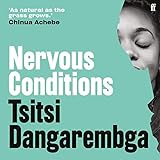
- Audible Audiobook
- Tsitsi Dangarembga (Author) - Chipo Chung (Narrator)
- English (Publication Language)
- 03/11/2021 (Publication Date) - Faber & Faber (Publisher)
Nervous Conditions by Tsitsi Dangarembga: Themes and Impact
Nervous Conditions by Tsitsi Dangarembga is a seminal work that intricately dissects the psychological and social ramifications of British colonialism in Rhodesia. The novel masterfully illustrates how colonial education and missionary endeavors function not merely as institutions of learning but as instruments of cultural subjugation. This process fosters a profound sense of alienation and internalized self-doubt among the colonized populace. The protagonist, Tambudzai, exemplifies this struggle, as her initial aspiration for education becomes entangled with the allure of Western assimilation. This path promises upward mobility but at the steep cost of severing ties with indigenous customs and identity. The narrative unflinchingly portrays the pressure to conform and the resulting psychological conflict, a struggle vividly embodied by Nyasha’s defiant resistance against these imposed values.
The titular concept of “nervousness” serves as a central metaphor, representing the collective psychological trauma and distress inflicted by systemic oppression. It is depicted not as an individual failing but as a direct consequence of the untenable positions women occupy within both the patriarchal Shona society and the superimposed colonial hierarchy. The novel underscores the precarious existence of women, caught between traditional expectations and the destabilizing forces of colonialism, which often exacerbates existing gender inequalities. The enduring strength of Nervous Conditions by Tsitsi Dangarembga lies in its nuanced and unflinching portrayal of these intersecting oppressions.
BLOCKQUOTE_0
This observation highlights the novel’s core argument: that the personal struggles of its characters are inextricably linked to the broader political and social structures of colonialism and patriarchy. A key takeaway is the necessity of examining systemic forces when understanding individual distress.
Common Mistakes
- Mistake: Focusing exclusively on Tambudzai’s personal ambition for upward mobility.
- Why it matters: This perspective risks simplifying the novel into a standard success narrative, overlooking the pervasive systemic pressures and the complex socio-historical context that shape her choices and desires.
- Fix: Analyze Tambudzai’s aspirations within the framework of postcolonial Rhodesia, acknowledging the limited agency afforded to women and the powerful allure of colonial ideals as perceived pathways to advancement.
- Mistake: Interpreting “nervousness” as a sign of individual weakness or mental instability.
- Why it matters: This misinterprets the novel’s central thesis, which presents “nervousness” as a collective psychological response to the trauma and systemic oppression inherent in the colonial and patriarchal structures.
- Fix: Understand “nervousness” as a symptom of internalized colonialism and patriarchal control, a condition that affects multiple characters in diverse and interconnected ways.
- Mistake: Underestimating or dismissing subtle forms of resistance.
- Why it matters: The novel showcases resistance not only through overt acts of rebellion but also through endurance, critical questioning, and the quiet preservation of cultural memory.
- Fix: Actively seek out and consider acts of agency, however small or internal, recognizing their cumulative impact in challenging dominant oppressive structures.
- Mistake: Treating the critique of patriarchy and the critique of colonialism as separate issues.
- Why it matters: The novel intricately weaves together the impacts of both colonial and patriarchal systems, demonstrating how they intersect, reinforce each other, and create compound disadvantages for women.
- Fix: Analyze how gender roles and expectations are manipulated, reinforced, and exploited by both colonial administrators and traditional Shona society, recognizing their symbiotic relationship in maintaining power structures.
Expert Tips for Engaging with Nervous Conditions
- Tip 1: Trace the Intergenerational Transmission of Trauma.
- Actionable Step: Construct a basic family tree or character relationship map. Detail how the experiences, beliefs, and coping mechanisms of the older generation (e.g., Tambudzai’s mother, her aunts) directly influence the perceptions, opportunities, and internal conflicts of the younger generation.
- Common Mistake to Avoid: Treating each character’s struggles as isolated incidents of personal misfortune, rather than recognizing them as part of a continuum of psychological and social impacts inherited from the colonial era and entrenched patriarchal traditions.
- Tip 2: Monitor the Shifting Definition of “Success.”
- Actionable Step: Maintain a running log or notes on what constitutes “success” for different characters at various stages of the novel. This could range from rural self-sufficiency to academic achievement, marriage into wealth, or intellectual independence.
- Common Mistake to Avoid: Applying a single, static definition of success across all characters and narrative moments. This fails to recognize how colonial values actively redefine and often distort aspirations, leading to internalized conflict.
- Tip 3: Pay Attention to the Unspoken and the Silences.
- Actionable Step: Cultivate an awareness of what characters do not say, what is deliberately omitted from the narrative, or what remains unarticulated. These silences often reveal underlying tensions, repressed desires, societal taboos, or unspoken criticisms.
- Common Mistake to Avoid: Focusing exclusively on explicit dialogue and overt actions, thereby missing the nuanced implications and subtext conveyed through withheld information or the characters’ internal monologues of unspoken thoughts and feelings.
Comparison Table: Understanding Your Reading Approach
| Aspect | Focus | Strengths | Limitations | Reading Context |
|---|---|---|---|---|
| <strong>Quick Answer</strong> | Core premise and significance | Concise overview, immediate understanding of the novel’s import. | Lacks depth, may oversimplify complex themes. | Useful for initial orientation or quick reference. |
| <strong>Who This Is For</strong> | Target audience identification | Helps readers assess their own interest and relevance. | Generic; doesn’t detail specific reader outcomes. | Good for self-selection before diving into the text. |
| <strong>What to Check First</strong> | Foundational knowledge | Provides essential background for deeper comprehension. | Assumes prior engagement with some historical/literary concepts. | Crucial for readers who want to contextualize their reading. |
| <strong>Step-by-Step Plan</strong> | Analytical reading process | Offers a structured method for engaging with the text’s complexities. | Can feel prescriptive; may limit organic discovery for some readers. | Ideal for students or those seeking a guided analytical approach. |
| <strong>Themes and Impact</strong> | Thematic depth and literary significance | Explains the novel’s thematic richness and its place in literature. | Can be dense; requires careful reading to fully absorb. | Best read after a first pass through the novel for deeper insight. |
| <strong>Common Mistakes</strong> | Pitfalls in interpretation | Highlights potential misreadings and offers corrections. | Focuses on errors; may not proactively guide positive interpretation. | Useful for self-correction and refining understanding. |
| <strong>Expert Tips</strong> | Advanced reading strategies | Provides practical advice for a more nuanced analysis. | Requires active application; tips are guidance, not guarantees. | Beneficial for readers aiming for a sophisticated engagement with the text. |
Decision Rules
- If your primary goal is to grasp the core message of Nervous Conditions by Tsitsi Dangarembga quickly, begin with the “Quick Answer” and “Who This Is For” sections.
- If you intend to conduct a detailed analysis, prioritize the “Step-by-Step Plan” and “Themes and Impact” sections, using “What to Check First” and “Common Mistakes” as supplementary resources.
- For a deeper, more critical engagement, integrate the “Expert Tips” into your reading process to refine your analytical framework.
FAQ
- Q: Is “Nervous Conditions” autobiographical?
- A: While Tsitsi Dangarembga drew inspiration from her experiences and observations of Zimbabwean society, “Nervous Conditions” is a work of fiction. It uses fictional characters and narratives to explore broader themes relevant to the postcolonial condition.
- Q: What does the term “nervous conditions” refer to in the novel?
- A: The title refers to the psychological and emotional distress experienced by individuals, particularly women, as a direct consequence of the oppressive social, political, and economic structures imposed by British colonialism and reinforced by patriarchal traditions. It’s a societal ailment, not merely personal anxiety.
- Q: How does the novel address the intersection of gender and colonialism?
- A: The novel vividly illustrates how colonial policies and the imposition of Western values exacerbate existing patriarchal structures, creating unique challenges and limited opportunities for women. It shows how women are caught between traditional expectations and the disruptive forces of colonial modernity.
- Q: Is the novel critical of African traditions as well as colonialism?
- A: Yes, the novel offers a nuanced critique. It critiques the damaging aspects of patriarchal traditions within Shona society while simultaneously highlighting how colonialism often exploited and reinforced these existing power imbalances, leading to a more complex form of oppression.
- Q: Why is “Nervous Conditions” considered a significant work of postcolonial literature?
- A: Its profound exploration of the psychological impact of colonialism, its nuanced portrayal of female agency and resistance, and its intricate examination of the intersection of race, class, and gender have established it as a seminal text in understanding the complexities of postcolonial identity and societal transformation.