Mickey Spillane’s I, The Jury: The First Mike Hammer Novel
Quick Answer
- I, The Jury by Mickey Spillane is the foundational novel introducing the hard-boiled detective Mike Hammer, characterized by its raw violence and morally ambiguous protagonist.
- It is best suited for readers interested in the evolution of the crime fiction genre and those who appreciate unfiltered, pulpy narratives.
- Readers should be prepared for dated social attitudes and explicit content that reflects its 1947 publication date.
Who This Is For
- Individuals seeking to understand the origins of iconic hard-boiled detective archetypes and their impact on popular culture.
- Readers who prefer direct, unadorned prose and protagonists who operate outside conventional ethical frameworks.
What to Check First
- Author’s Signature Style: Mickey Spillane’s writing is known for its bluntness, visceral action, and cynical worldview, often pushing the boundaries of pulp fiction.
- Publication Era: As a novel from 1947, it mirrors the societal norms, language, and prevailing attitudes of post-war America, which may differ significantly from contemporary expectations.
- Protagonist’s Morality: Mike Hammer is not a law-abiding hero; his justice is personal, often brutal, and driven by vengeance rather than due process.
- Content Intensity: Be aware of graphic depictions of violence, mature themes, and strong language that are integral to the novel’s atmosphere and impact.
Step-by-Step Plan for Reading I, The Jury by Mickey Spillane
1. Frame the Historical Context: Begin by acknowledging that I, The Jury by Mickey Spillane was published in 1947. This historical lens is critical for interpreting its narrative, character motivations, and societal commentary without anachronistic judgment.
- What to look for: Observe how the dialogue and plot reflect the social mores and common perceptions of the mid-20th century.
- Mistake to avoid: Applying 21st-century social standards and expectations to the characters and their actions.
2. Engage with Mike Hammer’s Persona: Approach Mike Hammer as a complex, often violent, anti-hero. Analyze his internal monologues and his adherence to a personal code of justice, which frequently supersedes legal or moral norms.
- What to look for: Track Hammer’s reactions to perceived injustices and his justifications for his often extreme methods.
- Mistake to avoid: Expecting Hammer to exhibit restraint or follow standard investigative procedures; his effectiveness is derived from his willingness to bend or break rules.
3. Analyze Spillane’s Narrative Technique: Pay close attention to Spillane’s characteristic terse prose and relentless pacing. The narrative is designed for immediate impact and visceral engagement.
- What to look for: Identify how short sentences, direct action, and vivid, often brutal, imagery contribute to the novel’s gritty atmosphere.
- Mistake to avoid: Dismissing the style as simplistic; its power lies in its directness and efficiency in conveying tension and brutality.
4. Examine the Depiction of Violence: Understand that the violence in I, The Jury by Mickey Spillane is not gratuitous but serves to illustrate the harsh reality of the world Hammer inhabits and the extremity of his methods.
- What to look for: Note how violence functions as a thematic element, reflecting the characters’ desperation and the breakdown of order.
- Mistake to avoid: Being solely repelled by the graphic nature of the violence without considering its role in establishing the novel’s tone and thematic concerns.
5. Consider the Plot’s Climactic Revelation: The novel is renowned for its shocking twist ending. Trace the narrative threads and character interactions that build towards this pivotal moment.
- What to look for: Identify subtle foreshadowing or seemingly minor details that gain significance in light of the final reveal.
- Mistake to avoid: Overlooking earlier plot points as mere filler; the ending often recontextualizes much of the preceding narrative.
For those eager to dive into the gritty world of Mike Hammer, the original novel, I, The Jury by Mickey Spillane, is an essential starting point. It perfectly encapsulates the hard-boiled detective genre’s raw energy.
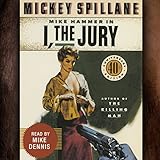
- Audible Audiobook
- Mickey Spillane (Author) - Mike Dennis (Narrator)
- English (Publication Language)
- 07/28/2015 (Publication Date) - Simon & Schuster Audio (Publisher)
6. Evaluate Gender Representation: Be mindful of the portrayal of female characters and the gender dynamics prevalent in the era. The novel reflects mid-20th-century pulp fiction conventions.
- What to look for: Observe the roles assigned to female characters and their level of agency within the story’s framework.
- Mistake to avoid: Expecting contemporary feminist perspectives or characterizations in a novel written over seventy years ago.
Common Mistakes When Reading I, The Jury by Mickey Spillane
- Mistake: Expecting a conventional hero.
- Why it matters: Mike Hammer operates on a personal, often violent, code of justice. His methods are far from those of a traditional, morally upright detective, which can be a significant departure for readers.
- Fix: Adjust expectations to view Hammer as an anti-hero, a force of retribution in a corrupt world, rather than a law-and-order figure.
- Mistake: Ignoring the historical context.
- Why it matters: Published in 1947, the novel contains social attitudes, language, and depictions that are products of its time. Applying modern sensibilities without this context can lead to misinterpretation.
- Fix: Read the book with an awareness of its publication date and the cultural milieu it represents, understanding it as a reflection of past societal norms.
- Mistake: Focusing solely on explicit content.
- Why it matters: While the violence and mature themes are prominent, they are integral to establishing the novel’s gritty atmosphere, the danger of Hammer’s world, and the extremity of his responses.
- Fix: Analyze how the explicit elements serve the narrative purpose of building tension, defining character, and underscoring the novel’s thematic concerns.
- Mistake: Underestimating Spillane’s narrative impact.
- Why it matters: Spillane’s direct, often stark, prose is designed for maximum impact. Its perceived simplicity can mask its effectiveness in creating a visceral and propulsive reading experience.
- Fix: Appreciate the raw power and efficiency of Spillane’s writing style, recognizing its deliberate construction for emotional and psychological effect.
Expert Tips for Engaging with I, The Jury by Mickey Spillane
- Tip: Anticipate a Character-Driven Narrative: Recognize that Mike Hammer’s personality and methods are central to the story’s appeal.
- Actionable Step: Pay close attention to Hammer’s internal monologues and his justifications for his actions, as these reveal his unique moral compass.
- Common Mistake to Avoid: Judging Hammer solely by his actions without considering his internal reasoning or the context of his world.
- Tip: Note the Genre Evolution: Understand that I, The Jury by Mickey Spillane was groundbreaking for its time in terms of explicitness and protagonist portrayal.
- Actionable Step: Compare Hammer’s character and Spillane’s narrative style to earlier detective fiction to appreciate its genre-defining impact.
- Common Mistake to Avoid: Reading the novel as if it were a contemporary work, thus missing its historical significance and the evolution it represented.
- Tip: Prepare for a Stark Moral Landscape: The novel presents a world where clear lines between good and evil are blurred, and justice is often served through brutal, extralegal means.
- Actionable Step: Focus on the themes of justice versus vengeance and the corrupting influence of crime, rather than searching for conventional heroism.
- Common Mistake to Avoid: Becoming overly distressed by the lack of clear moral heroes or expecting a neat resolution that aligns with contemporary ethical standards.
Common Myths Debunked
- Myth: Mike Hammer is a typical detective hero.
- Correction: Mike Hammer is an anti-hero, a vigilante who operates on a personal code of vengeance. His methods are often brutal, and he frequently bypasses legal procedures. His “justice” is a personal retribution, not law enforcement.
- Myth: Spillane’s writing is simple and lacks depth.
- Correction: While Spillane’s prose is direct and unadorned, its strength lies in its impact and efficiency. This style was revolutionary for its time, delivering a visceral and propulsive narrative that resonated deeply with readers, pushing the boundaries of pulp fiction.
Reading Context and Verdict
I, The Jury by Mickey Spillane stands as a pivotal work in the hard-boiled detective genre. Its long-term relevance lies in its raw energy, its unforgettable protagonist, and its unflinching portrayal of violence and corruption. However, readers must approach it with an understanding of its historical context, recognizing that its depictions of society and its explicit content reflect the sensibilities of 1947. For those interested in the roots of gritty crime fiction and the evolution of the detective archetype, this novel offers a potent and influential experience.
BLOCKQUOTE_0
Verdict: Essential for enthusiasts of classic hard-boiled fiction and those studying genre development. Readers sensitive to graphic violence or dated social attitudes should proceed with informed caution.
Quick Comparison
| Option | Best for | Pros | Watch out |
|---|---|---|---|
| Quick Answer | General use | I, The Jury by Mickey Spillane is the foundational novel introducing the hard… | Mistake to avoid: Applying 21st-century social standards and expectations to… |
| Who This Is For | General use | It is best suited for readers interested in the evolution of the crime fictio… | Mistake to avoid: Expecting Hammer to exhibit restraint or follow standard in… |
| What to Check First | General use | Readers should be prepared for dated social attitudes and explicit content th… | Mistake to avoid: Dismissing the style as simplistic; its power lies in its d… |
| Step-by-Step Plan for Reading I The Jury by Mickey Spillane | General use | Individuals seeking to understand the origins of iconic hard-boiled detective… | Mistake to avoid: Being solely repelled by the graphic nature of the violence… |
Decision Rules
- If reliability is your top priority for I, The Jury by Mickey Spillane, choose the option with the strongest long-term track record and support.
- If value matters most, compare total ownership cost instead of headline price alone.
- If your use case is specific, prioritize fit-for-purpose features over generic ‘best overall’ claims.
FAQ
- Q: Is I, The Jury a good starting point for new Mickey Spillane readers?
- A: Yes, as the first Mike Hammer novel, I, The Jury serves as an ideal introduction to Spillane’s distinctive style, the character of Mike Hammer, and the universe he inhabits.
- Q: How does the violence in I, The Jury compare to modern crime novels?
- A: While modern crime fiction can be graphic, Spillane’s violence in I, The Jury is often more blunt and less psychologically nuanced, designed for immediate shock and impact, reflecting the pulp tradition of its era.
- Q: What are the primary themes explored in I, The Jury?
- A: Key themes include the nature of justice versus vengeance, the pervasive corruption within society, the moral compromises of detective work, and the psychological toll of violence.
- Q: Should I be concerned about the novel’s portrayal of women?
- A: It is advisable to be aware that the novel reflects the gender roles and stereotypes prevalent in 1947. Female characters are often depicted in ways that may be considered outdated or problematic by contemporary standards.