Exploring the World of The Witcher by Andrzej Sapkowski
Quick Answer
- “The Witcher by Andrzej Sapkowski” is a mature dark fantasy saga renowned for its morally complex characters, intricate world-building, and philosophical depth.
- It deliberately subverts traditional fantasy tropes, focusing on prejudice, political intrigue, and the blurred lines between good and evil.
- Recommended for readers who appreciate sophisticated storytelling that challenges conventional heroism and explores the darker aspects of human nature.
Who This Is For
- Readers seeking dark fantasy narratives that delve into mature themes, ethical dilemmas, and societal commentary.
- Individuals looking for an alternative to typical heroic fantasy, preferring flawed protagonists and ambiguous morality.
What To Check First
- Author’s Voice: Andrzej Sapkowski’s prose is often gritty, cynical, and philosophical. Familiarize yourself with this distinct narrative style.
- Publication Order: The short story collections, “The Last Wish” and “Sword of Destiny,” chronologically precede the main novel saga. Understanding this order is crucial for plot comprehension.
- Thematic Focus: Be prepared for deep explorations of prejudice, political machinations, and the nature of monstrosity, which are central to the series’ narrative.
- Protagonist’s Role: Geralt of Rivia is a professional monster hunter, not a traditional hero. His character is defined by pragmatism and navigation of a morally ambiguous world.
Step-by-Step Plan: Engaging With The Witcher by Andrzej Sapkowski
1. Initiate with the Short Stories: Begin your journey with “The Last Wish” and “Sword of Destiny.”
- Action: Read these collections in their published order.
- What to Look For: Understand Geralt’s character development, the mechanics of the witcher profession, the diverse array of monsters, and foundational relationships. These stories establish essential lore and character arcs.
- Mistake: Skipping the short stories and commencing with the novels, which can lead to confusion regarding character backstories, world context, and plot continuity.
2. Recognize the Narrative Evolution: Differentiate between the episodic nature of the short stories and the overarching saga of the novels.
- Action: Observe how the narrative structure evolves from standalone tales to a continuous, interconnected plot.
- What to Look For: Track the development of characters and plot threads introduced in the short stories as they are integrated into the novels.
- Mistake: Expecting the novels to maintain the same episodic format as the short stories, potentially leading to a misapprehension of plot progression and character arcs.
3. Analyze Character Motivations and Morality: Examine the actions and underlying reasons of key characters, particularly Geralt, Yennefer, and Ciri.
- Action: Pay close attention to dialogue, internal monologues, and situational context that reveal character depth and complexity.
- What to Look For: Identify instances of moral compromise, the justifications characters provide for their choices, and the consequences of those decisions.
- Mistake: Judging characters solely by their immediate actions without considering the intricate circumstances, ethical gray areas, and Sapkowski’s nuanced portrayal of human nature.
4. Deconstruct Societal Commentary: Identify and analyze the allegorical elements embedded within the narrative’s conflicts and character interactions.
- Action: Consider how themes of prejudice, xenophobia, power dynamics, and the treatment of minorities are depicted within the fantasy setting.
- What to Look For: Observe the parallels between the conflicts in the Continent and real-world societal issues, recognizing monsters as symbolic representations.
- Mistake: Treating the story purely as a monster-slaying adventure, thereby overlooking its deeper thematic layers and critical commentary on society.
5. Acknowledge the Mature and Grim Tone: Understand that “The Witcher by Andrzej Sapkowski” is not a lighthearted or simplistic fantasy narrative.
- Action: Prepare for mature themes, graphic violence, political intrigue, and often bleak or ambiguous outcomes.
- What to Look For: Notice how the narrative consistently subverts optimistic fantasy tropes and presents a world where survival often necessitates difficult choices.
- Mistake: Expecting a classic hero’s journey with a clear-cut happy ending, which is antithetical to Sapkowski’s established style and thematic concerns.
If you’re looking for a dark fantasy saga with complex characters and deep world-building, Andrzej Sapkowski’s ‘The Witcher’ series is an excellent choice. It masterfully subverts traditional fantasy tropes.
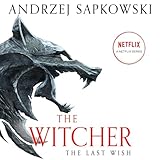
- Audible Audiobook
- Andrzej Sapkowski (Author) - Peter Kenny (Narrator)
- English (Publication Language)
- 05/05/2015 (Publication Date) - Orbit (Publisher)
6. Engage with Philosophical Inquiries: Reflect on the series’ exploration of the nature of humanity, monstrosity, and free will.
- Action: Consider the ethical questions posed by Geralt’s profession, the societal structures of the Continent, and the choices characters make under duress.
- What to Look For: Evaluate instances where the definition of “monster” is challenged, or where human actions prove more barbaric than those of literal beasts.
- Mistake: Dismissing the philosophical aspects as secondary to the plot, thereby missing a significant dimension of the series’ impact and Sapkowski’s authorial intent.
Common Mistakes
- Mistake: Reading the novels before the short stories.
- Why it Matters: This leads to a fragmented understanding of character origins, world mechanics, and plot continuity, as key relationships and lore are established in the initial collections.
- Fix: Always begin with “The Last Wish” and “Sword of Destiny” to build a solid foundational understanding of the world and its inhabitants.
- Mistake: Expecting a traditional heroic narrative.
- Why it Matters: Geralt is a professional, often cynical, and morally ambiguous character operating in a world where good and evil are rarely distinct. This expectation can lead to disappointment or misinterpretation of his character.
- Fix: Approach the series with an open mind, prepared for flawed protagonists, complex ethical landscapes, and a pragmatic approach to heroism.
- Mistake: Overlooking the allegorical nature of the “monsters.”
- Why it Matters: Sapkowski frequently uses monsters to represent societal fears, prejudices, and the darker aspects of humanity. Failing to recognize this symbolic layer misses a core thematic element of “The Witcher by Andrzej Sapkowski.”
- Fix: Analyze the context of each monster encounter; consider what societal ill, human failing, or fear it might symbolize within the narrative.
- Mistake: Focusing solely on plot progression without in-depth character analysis.
- Why it Matters: The enduring strength of “The Witcher by Andrzej Sapkowski” lies in its character development, the intricate relationships between its protagonists, and their personal growth amidst chaos.
- Fix: Dedicate time to understanding each character’s motivations, internal conflicts, and evolution throughout the saga, as this is central to the narrative’s impact.
- Mistake: Underestimating the series’ mature themes.
- Why it Matters: The books contain significant elements of violence, sexual content, and complex moral quandaries that may not be suitable for all readers.
- Fix: Be aware of the mature content and approach the series with an understanding of its adult orientation.
The Witcher by Andrzej Sapkowski: A Contrarian Perspective
When evaluating “The Witcher by Andrzej Sapkowski,” it is imperative to move beyond surface-level genre expectations. Many approach this saga seeking straightforward heroism or predictable fantasy arcs. However, the series’ true strength lies in its deliberate subversion of these tropes, presenting a world steeped in moral ambiguity and consequence.
BLOCKQUOTE_0
This quote encapsulates the pragmatic, often bleak, outlook that permeates Sapkowski’s work. It serves as a constant reminder that simplistic solutions and clear-cut morality are rarely found within the Continent. The series challenges the reader to question the nature of monstrosity—is it the beast with fangs and claws, or the human driven by greed, prejudice, and fear?
Core Principles of The Witcher by Andrzej Sapkowski
The narrative engine of “The Witcher by Andrzej Sapkowski” is built upon several foundational principles that distinguish it from more conventional fantasy:
- Moral Relativism: Good and evil are not absolutes. Characters are forced to make difficult choices with no easy answers, and their actions often have unforeseen, negative consequences.
- Consequences of Prejudice: The series deeply explores themes of racism and xenophobia, particularly through the treatment of non-humans like elves and dwarves by humans. This is not a peripheral element but a driving force behind many conflicts.
- The Nature of Monsters: Sapkowski frequently blurs the lines between literal monsters and the “monstrous” behavior of humans. Geralt’s profession forces him to confront this duality repeatedly.
- Subversion of Tropes: Traditional fantasy archetypes are often twisted or deconstructed. The protagonist is a professional, not a chosen one destined for glory, and happy endings are rare.
A Decision Criterion: The Value of Ambiguity
A key decision criterion that differentiates readers’ reception of “The Witcher by Andrzej Sapkowski” is their tolerance for narrative ambiguity.
- For readers who value clear resolutions and traditional hero narratives: The series may prove frustrating. Its strength lies in its refusal to provide easy answers, its exploration of grey areas, and its often-unsettling conclusions.
- For readers who appreciate complex character studies and philosophical depth: The series offers immense rewards. Its exploration of moral compromise, the impact of societal structures, and the multifaceted nature of humanity provides a rich and thought-provoking experience.
This tolerance for ambiguity is perhaps the most significant factor in determining whether “The Witcher by Andrzej Sapkowski” will resonate positively or negatively with an individual reader.
Expert Tips for Engaging with The Witcher Lore
To fully appreciate the intricate world of “The Witcher by Andrzej Sapkowski,” consider these practical insights:
- Tip 1: Embrace the Cynicism, But Look for Humanity.
- Actionable Step: When reading, acknowledge Geralt’s often jaded perspective and his professional detachment. Then, actively seek out moments of empathy, loyalty, and unexpected kindness that reveal his underlying humanity.
- Common Mistake to Avoid: Dismissing
Quick Comparison
| Option | Best for | Pros | Watch out |
|---|---|---|---|
| Quick Answer | General use | “The Witcher by Andrzej Sapkowski” is a mature dark fantasy saga renowned for… | Mistake: Skipping the short stories and commencing with the novels, which can… |
| Who This Is For | General use | It deliberately subverts traditional fantasy tropes, focusing on prejudice, p… | Mistake: Expecting the novels to maintain the same episodic format as the sho… |
| What To Check First | General use | Recommended for readers who appreciate sophisticated storytelling that challe… | Mistake: Judging characters solely by their immediate actions without conside… |
| Step-by-Step Plan Engaging With The Witcher by Andrzej Sapkowski | General use | Readers seeking dark fantasy narratives that delve into mature themes, ethica… | Mistake: Treating the story purely as a monster-slaying adventure, thereby ov… |
Decision Rules
- If reliability is your top priority for The Witcher by Andrzej Sapkowski, choose the option with the strongest long-term track record and support.
- If value matters most, compare total ownership cost instead of headline price alone.
- If your use case is specific, prioritize fit-for-purpose features over generic ‘best overall’ claims.