Maja Lunde’s The History Of Bees: A Global Story
The History Of Bees by Maja Lunde: Quick Answer
- “The History Of Bees” by Maja Lunde is a literary novel that interweaves three distinct timelines to explore humanity’s complex and often fraught relationship with the natural world, using the fate of bees as a central metaphor.
- The novel functions as a cautionary exploration of ecological interconnectedness and the potential consequences of human actions, rather than a scientific treatise on apiculture.
- Readers who appreciate character-driven narratives with philosophical and environmental undertones will find this book compelling; those seeking empirical data on bees or straightforward ecological solutions may find it falls short of those specific expectations.
Who This Is For
- Readers who enjoy literary fiction that uses speculative elements to examine contemporary issues, particularly environmental concerns and human responsibility.
- Those interested in narratives that explore themes of legacy, connection, loss, and the delicate balance of ecosystems through interconnected character journeys.
What to Check First
- Authorial Intent: Maja Lunde frames “The History Of Bees” as a story about humanity’s connection to nature, with bees serving as a potent symbol. It is not intended as a factual guide to beekeeping or a scientific exposé.
- Narrative Structure: The novel employs a non-linear, multi-timeline approach, connecting stories from 1852, 2015, and 2098. Understanding this structure is key to appreciating the thematic development.
- Thematic Core: The primary focus is on the interconnectedness of life, the fragility of ecosystems, and the consequences of human impact, with the decline of bee populations serving as a potent catalyst for these explorations.
- Genre Expectations: This is a work of literary fiction with speculative elements. It prioritizes narrative and thematic resonance over strict scientific realism or a prescriptive environmental agenda.
Step-by-Step Reading Plan
1. Initiate with William’s Past: Begin with the 1852 timeline, focusing on William.
- Action: Read the chapters detailing William’s life and his early, scientific fascination with bees in 19th-century England.
- What to look for: Observe William’s attempts to understand bee colonies through observation and experimentation, establishing a baseline for the narrative’s exploration of humanity’s relationship with these insects.
- Mistake: Overlooking William’s scientific curiosity as a mere historical detail; his endeavors lay the groundwork for the novel’s central metaphor and foreshadow future ecological concerns.
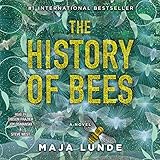
- Audible Audiobook
- Maja Lunde (Author) - Joy Osmanski, Steve West, Gibson Frazier (Narrators)
- English (Publication Language)
- 08/22/2017 (Publication Date) - Simon & Schuster Audio (Publisher)
2. Engage with Bee’s Future: Transition to the 2098 timeline, focusing on Bee.
- Action: Read the sections depicting Bee’s life in a future where natural pollination is scarce and largely replaced by artificial methods.
- What to look for: Note the stark contrast between the natural world William inhabited and Bee’s sterile, technology-dependent existence, highlighting the speculative and cautionary aspects of the novel.
- Mistake: Underestimating the significance of Bee’s future world as a narrative device; it serves as a potent allegorical extension of present-day trends, designed to evoke a sense of urgency.
3. Explore George’s Present: Focus on the 2015 timeline, featuring George.
- Action: Read the chapters detailing George’s struggles as a contemporary American beekeeper confronting modern ecological challenges.
- What to look for: Identify the real-world issues impacting bee populations, such as pesticide use and habitat loss, which act as a bridge between the historical and speculative narratives.
- Mistake: Dismissing George’s storyline as purely plot-driven; his narrative grounds the novel in current ecological realities and provides a crucial link to the broader thematic concerns.
4. Analyze Interconnections: Actively seek thematic links across timelines.
- Action: Pay close attention to recurring motifs, character parallels, and the thematic echoes that resonate across William’s, George’s, and Bee’s stories.
- What to look for: Recognize how Lunde uses the past to inform the present and the present to foreshadow the future, creating a cohesive, layered narrative.
- Mistake: Treating each timeline as an independent story; their collective power and impact are derived from their interwoven nature and the cumulative effect of shared themes.
5. Evaluate the Symbolic Weight: Consider the role of bees beyond their literal function.
- Action: Reflect on how bees function not just as biological entities but as potent symbols of fragility, interconnectedness, and the consequences of human actions on the environment.
- What to look for: Note instances where the state of the bee populations mirrors the state of human relationships, societal structures, or ecological health.
- Mistake: Focusing solely on the biological aspects of bees and missing their deeper metaphorical significance within the narrative’s broader commentary.
6. Track Character Arcs: Observe the emotional and personal journeys of the protagonists.
- Action: Follow the individual growth, losses, and evolving perspectives of William, George, and Bee throughout their respective timelines.
- What to look for: Understand how their personal struggles and their relationships contribute to the novel’s larger exploration of humanity’s place within the natural world.
- Mistake: Overlooking the character development in favor of the environmental message; the human element is integral to the novel’s emotional impact and thematic resonance.
The History Of Bees by Maja Lunde: A Contrarian Perspective
While “The History Of Bees” by Maja Lunde is widely lauded for its literary merit and thematic exploration, a contrarian viewpoint suggests a common failure mode for readers: over-interpreting the speculative future as a direct ecological prediction rather than a narrative device. Lunde constructs a compelling, albeit bleak, future in 2098 where artificial pollination is the norm. However, this future primarily functions as an allegorical extension of present-day anxieties, designed to amplify the emotional impact of ecological concerns.
- Detection: This failure mode is often evident when readers express disappointment that the future depicted lacks detailed scientific mechanisms or a clear, step-by-step societal evolution. They might question the plausibility of specific technological or social shifts, failing to recognize them as narrative tools rather than scientific forecasts.
- Correction: To mitigate this, readers should approach the 2098 timeline as a literary thought experiment about consequence, not a literal prediction. The novel’s power lies in its emotional resonance and its ability to provoke contemplation on our current trajectory, rather than its predictive accuracy regarding future technologies or societal structures.
Common Mistakes
- Approaching as a Non-Fiction Account:
- Why it matters: Expecting scientific data, detailed beekeeping techniques, or a comprehensive guide to bee biology will lead to unmet expectations. The novel uses bees as a central metaphor for ecological interconnectedness and fragility, not as the sole subject of scientific inquiry.
- Fix: Read “The History Of Bees” as a work of literary fiction. Focus on the narrative, character development, and the symbolic weight of the bees within the broader thematic framework.
- Underestimating the Multi-Timeline Structure:
- Why it matters: Treating the three distinct timelines (1852, 2015, 2098) as separate stories can result in a disjointed reading experience. The novel’s strength lies in the thematic connections and echoes between these eras.
- Fix: Actively look for recurring motifs, character parallels, and thematic resonances that link William’s historical endeavors, George’s contemporary struggles, and Bee’s future existence.
- Prioritizing Plot over Character Development:
- Why it matters: The novel’s emotional impact is deeply rooted in the personal journeys and relationships of its characters. Overlooking their internal struggles and growth diminishes the overall resonance of the story.
- Fix: Engage with the characters’ motivations, their losses, and their evolving perspectives. Their individual arcs are crucial to understanding the broader commentary on humanity’s relationship with nature.
- Seeking Definitive Solutions to Ecological Problems:
- Why it matters: Maja Lunde presents a cautionary tale designed to provoke thought and raise awareness, rather than a prescriptive guide. Readers seeking clear-cut answers or actionable solutions to environmental issues may find the novel’s open-ended nature frustrating.
- Fix: Appreciate the novel for its ability to pose critical questions about our ecological responsibilities and the potential consequences of our actions, rather than for providing definitive answers.
Expert Tips
1. Embrace the Metaphorical Core:
- Actionable Step: Read the novel with the understanding that bees are a central metaphor for interconnectedness, fragility, and the delicate balance of ecosystems. Consider what their decline signifies beyond the literal biological context.
- Common Mistake to Avoid: Focusing exclusively on the biological aspects of bees and overlooking their symbolic role in the narrative’s broader themes of human impact and environmental loss.
2. Map the Thematic Cross-Connections:
- Actionable Step: As you read, actively note recurring ideas, imagery, or character archetypes that appear across the different timelines (1852, 2015, 2098).
- Common Mistake to Avoid: Treating each timeline as an isolated story. The power of “The History Of Bees” lies in how these disparate narratives inform and echo one another, building a cumulative thematic impact.
3. Prioritize Emotional and Relational Resonance:
- Actionable Step: Pay close attention to the emotional journeys of William, George, and Bee. Their personal struggles, hopes, and losses are the primary vehicle for the novel’s commentary on humanity’s place in the world.
- Common Mistake to Avoid: Dismissing character development as secondary to the environmental plot. The human element is essential for making the ecological concerns resonate on a deeper, more personal level.
A Comparative Framework
| Aspect | “The History Of Bees” by M
Quick Comparison
| Option | Best for | Pros | Watch out |
|---|---|---|---|
| The History Of Bees by Maja Lunde Quick Answer | General use | “The History Of Bees” by Maja Lunde is a literary novel that interweaves thre… | Mistake: Overlooking William’s scientific curiosity as a mere historical deta… |
| Who This Is For | General use | The novel functions as a cautionary exploration of ecological interconnectedn… | Mistake: Underestimating the significance of Bee’s future world as a narrativ… |
| What to Check First | General use | Readers who appreciate character-driven narratives with philosophical and env… | Mistake: Dismissing George’s storyline as purely plot-driven; his narrative g… |
| Step-by-Step Reading Plan | General use | Readers who enjoy literary fiction that uses speculative elements to examine… | Mistake: Treating each timeline as an independent story; their collective pow… |
Decision Rules
- If reliability is your top priority for The History Of Bees by Maja Lunde, choose the option with the strongest long-term track record and support.
- If value matters most, compare total ownership cost instead of headline price alone.
- If your use case is specific, prioritize fit-for-purpose features over generic ‘best overall’ claims.